Roofing guide
North Texas storm season, month by month
Spring is the season everyone knows, but North Texas roofs take damage in every part of the year. Here is what each stretch of the calendar usually brings, and what to do about the roof in each.
- We answer 24/7
- Dallas service office
Quick answer
North Texas severe weather season runs from about March through June, peaking in April and May, when most of the region's hail and tornadoes occur. A smaller second season arrives in late fall, and tornadoes have been recorded in every month. Summer brings heat and wind from pop-up storms, and winter brings occasional ice. Inspect before spring, after every storm, and plan replacements for calmer months.
By Cyril Cross, Roofing Guides Editor · Updated September 2026
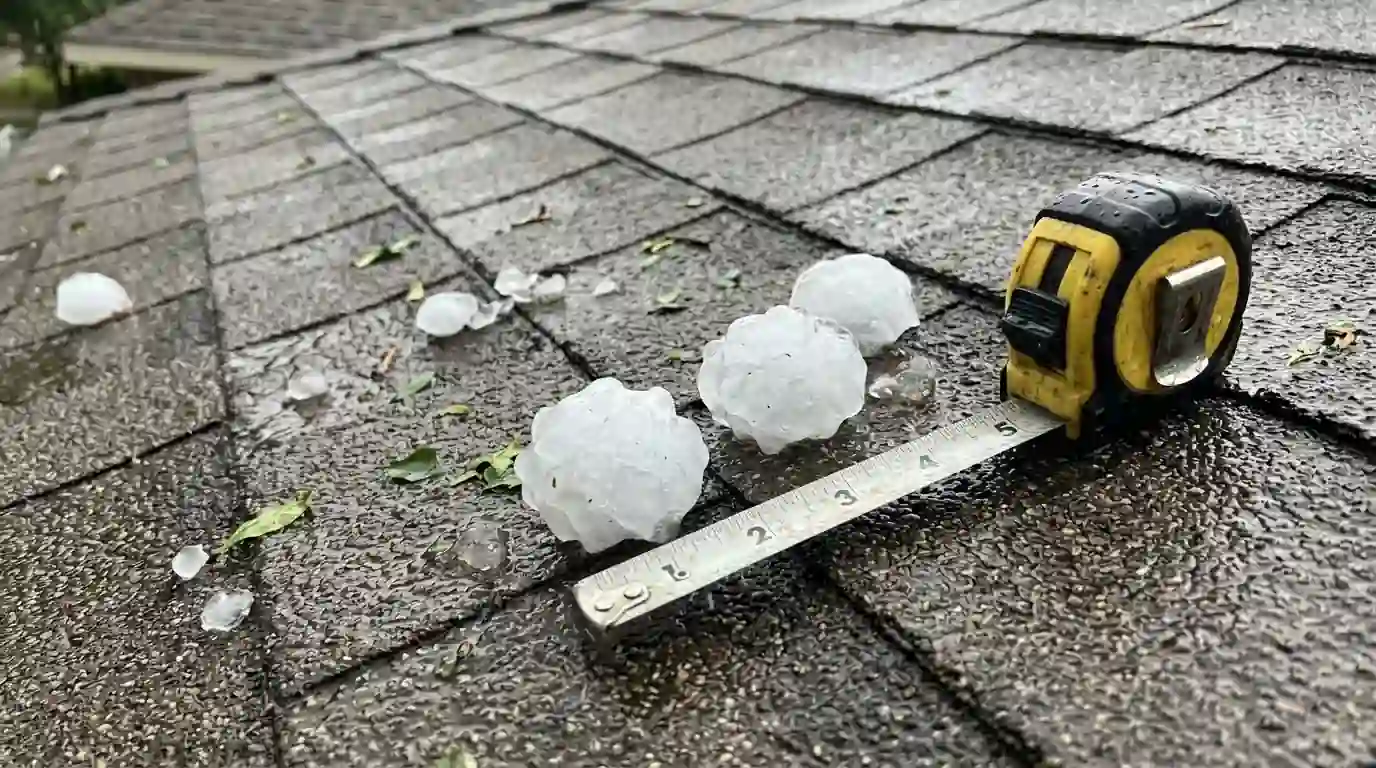
January and February: quiet, mostly
Winter is the calmest stretch for roofs, but not a dead one. Ice storms and hard freezes come through in some years, loading gutters, cracking brittle shingles and bringing down limbs. Tornadoes have been recorded in North Texas in every month of the year. Late winter is the best time for a roof inspection: repairs are easy to schedule, and the roof goes into spring sealed.
March: the season opens
The National Weather Service counts North Texas severe weather season from March to June, and March storms can be serious. On March 8, 2025, supercells tore the roof off a hotel along I-45 in Ennis and knocked out power to 6,000 Ellis County residents. If your roof has open repair items from the fall, finish them in March.
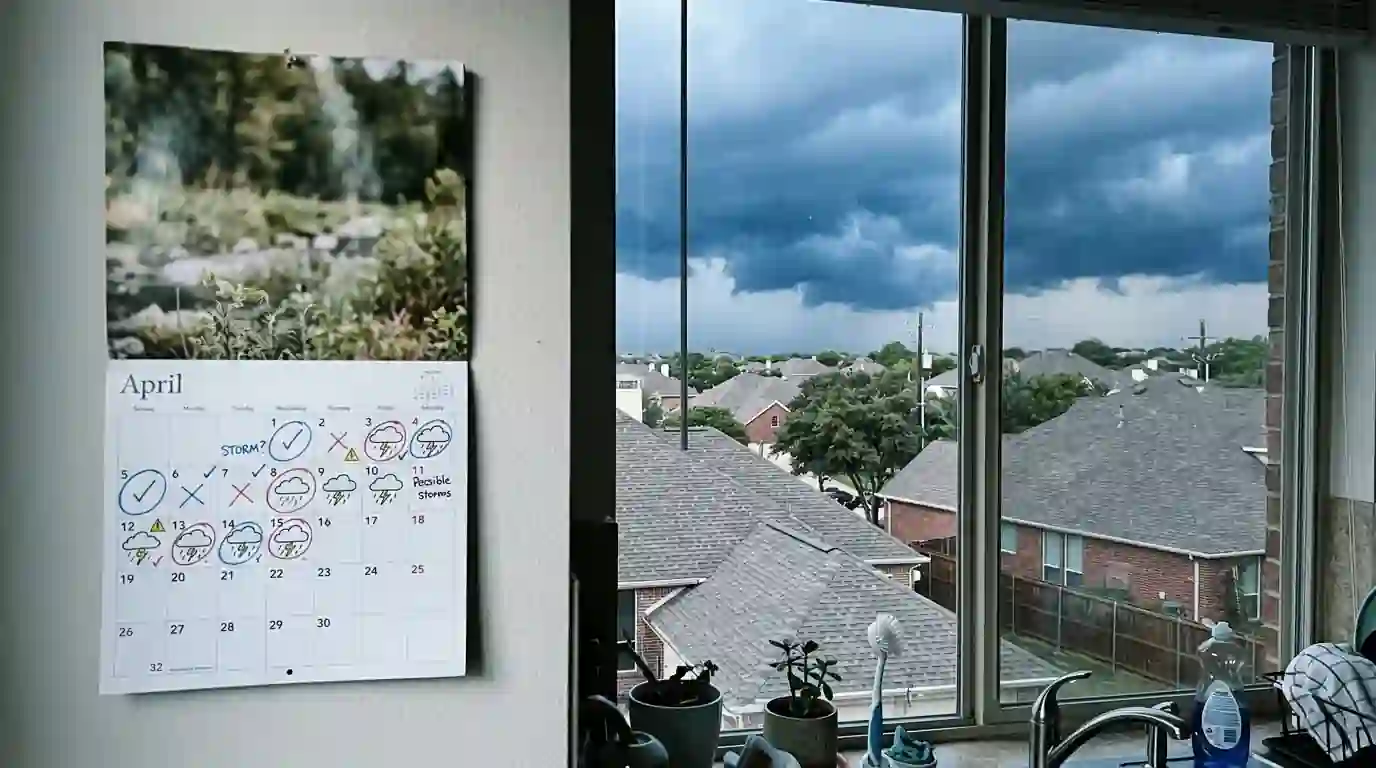
April and May: the peak
These are the most dangerous months. Of the roughly 2,000 tornadoes recorded in North Texas since 1880, about 575 came in April and 528 in May, and most of the region's damaging hail falls in the same weeks. In 2026, supercells on April 26 and 27 dropped hail up to hockey-puck size around Arlington and Grand Prairie and teacup-size hail in northeast Dallas County. Storms most often turn severe in the late afternoon and early evening, as the day's heat peaks.
After each storm, check gutters, vents and the AC unit for dents, and get the roof walked before filing. Our guide to what to do after hail has the order of steps, and the Arlington and Rockwall pages describe what those 2026 storms did locally.
Talk to a Dallas roofer now
Describe the leak or the damage, and we will tell you whether it needs a tarp tonight or a scheduled visit this week.
(214) 429-4542June to August: wind and heat
The hail season tapers in June, but wind does not. On May 28, 2024, straight-line winds over 80 mph and baseball-size hail crossed the Metroplex, leaving more than 600,000 Oncor customers without power and bringing a disaster declaration for Dallas County. Summer pop-up storms can do the same on a smaller scale. Then comes the heat: a shingle roof bakes far above the air temperature, drying out sealants and boots. Wind damage found early is usually a repair, not a replacement.
September to November: the second season
Forecasters treat late fall as a secondary severe season, when the ingredients for storms return. On October 20, 2019, an EF3 tornado crossed north Dallas. Fall is also the best time for a planned roof replacement: the weather is mild, crews are less stretched than after a spring storm, and the new roof is in place before the next March.
December: not off the hook
On December 26, 2015, an EF4 tornado crossed Garland and Rowlett, damaging well over a thousand homes. December storms are rare, but they happen, and a roof with open items from the year goes into winter vulnerable. The Garland and Rowlett pages cover that storm and what it taught about roof edges.
Keep reading
More guides on this
Questions we get
Storm season questions
Mainly March through June, with the peak in April and May.
April, followed closely by May.
Yes, a smaller secondary season in late fall.
Late afternoon and early evening, when the day's heat peaks.
Late winter before the season, and after every storm.
Fall and winter, when weather is mild and crews are less stretched.
Yes; straight-line wind can strip shingles even without hail.
Get the roof ready before the next season
A late-winter inspection finds the small items while they are still small and cheap to fix.