Commercial roofing
Spray foam roofing in Dallas
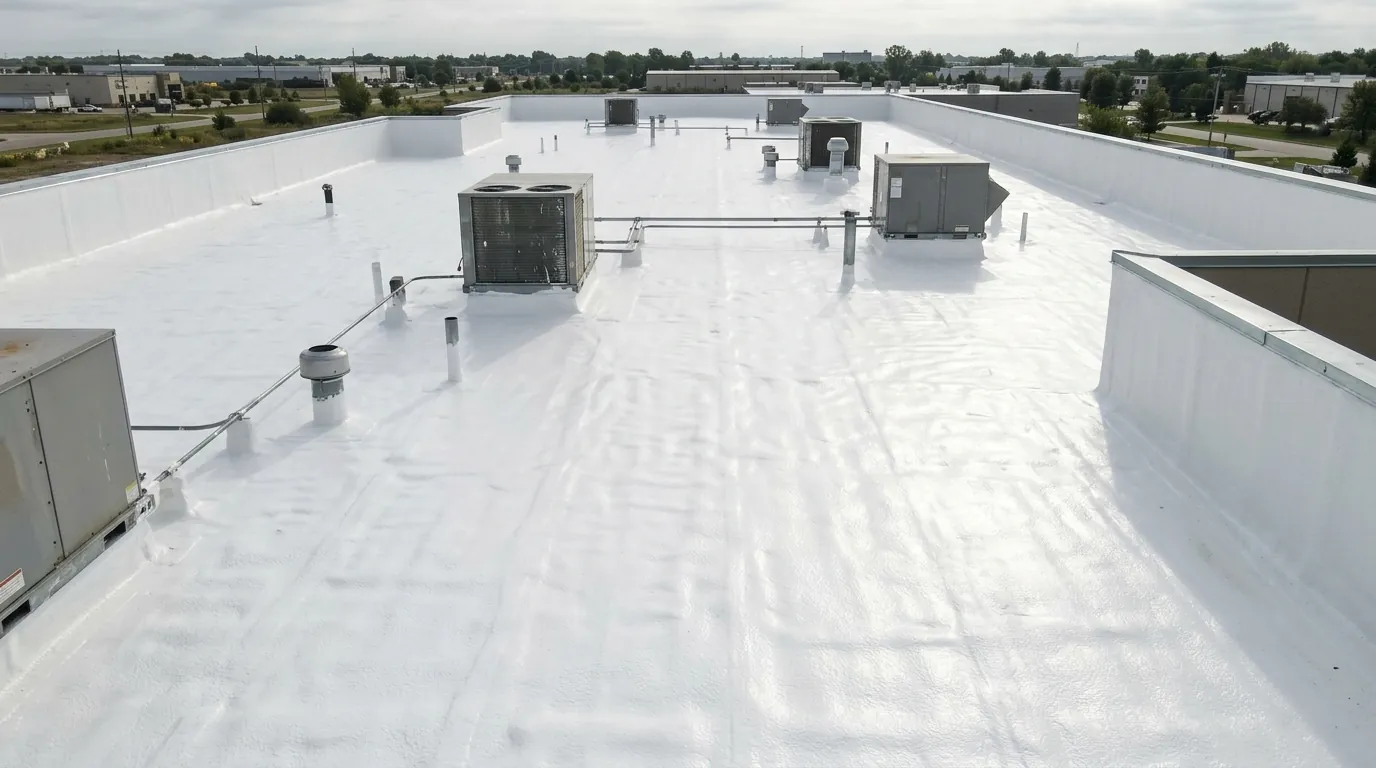
A spray foam roof is applied as a liquid that expands into one continuous, insulating layer with no seams to fail. It can be built up thicker where water ponds, and it lasts for decades if the topcoat that protects it is kept up.
- We answer 24/7
- Dallas service office
- Moisture survey first
- 24/7Calls answered
- DallasService office
- EnnisHead office
- PhasedAround your tenants
Quick answer
Spray polyurethane foam (SPF) roofing is closed-cell foam sprayed onto a clean roof deck or an existing dry roof, where it expands into a continuous, insulating layer, then covered with a silicone or acrylic topcoat that blocks UV light. In Dallas it suits flat and low-slope commercial roofs, especially ones with ponding or many penetrations. We survey for moisture first, because wet insulation under foam fails.
The job
Why foam, and where it fits
Foam does three jobs at once. It waterproofs, it insulates, and because it is sprayed, it can be applied thicker in low areas to give the roof slope toward the drains. It also wraps around pipes, curbs and rooftop units without the seams and flashings a membrane needs at every penetration.
Its weakness is sunlight. Foam that is left exposed breaks down, so every foam roof depends on its topcoat, and the topcoat has to be inspected and renewed over the roof's life.
Updated September 2026
Budget
What moves the price of a foam roof
We do not use a published Dallas range for foam roofing; the survey and the roof's condition set the scope.
- Roof area
Priced per square foot of roof.
- Foam thickness
Thicker foam adds insulation and cost.
- Slope correction
Extra foam built up in low areas.
- Wet insulation
Cut out and replaced before spraying.
- Topcoat type
Silicone and acrylic differ in cost.
- Granules
Added for traffic and hail resistance.
- Overspray protection
Masking and wind control around the building.
Your options
Spray foam or single-ply
Two common ways to roof a flat Dallas building, compared.
| Compare | Spray foam | Single-ply membrane |
|---|---|---|
| Seams | None; one continuous layer | Heat-welded or glued seams |
| Ponding | Corrected by spraying extra foam | Needs tapered insulation |
| Upkeep | Topcoat inspected and renewed | Seams and flashings checked |
How a foam roof goes on
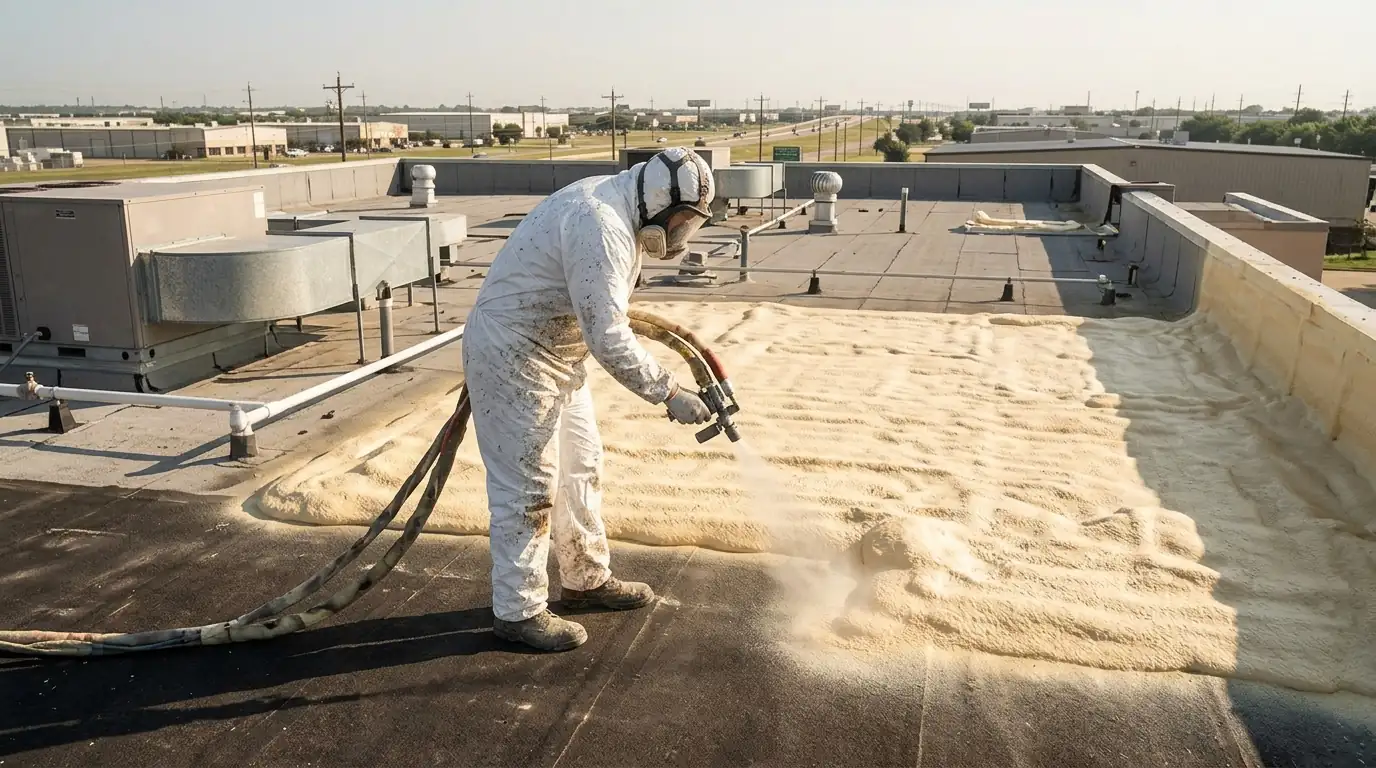
The roof is cleaned, loose material is removed, and any wet insulation found in the survey is cut out and replaced. Edges, drains and penetrations are prepared, then two-part polyurethane is sprayed in passes, expanding into closed-cell foam that bonds to the substrate. We spray to a minimum thickness across the roof and add foam in low areas to correct ponding, checking the depth with probes as we go. Foam needs dry surfaces and the right temperature and wind conditions, so spray days are picked carefully, and overspray protection goes up around the building first. The foam is then topcoated the same day or the next, before UV can reach it.
Silicone and acrylic topcoats
The topcoat is what actually faces the weather. Silicone handles standing water well and holds up a long time under UV, which makes it the usual choice on Dallas foam roofs. Acrylic is cheaper and stays whiter but needs good drainage. Both go on to a specified dry thickness measured as we work, and on roofs with foot traffic or hail exposure we broadcast roofing granules into the wet topcoat for extra protection. The same coating chemistry is covered on our roof coatings page, because recoating a foam roof and coating a membrane roof use similar products.
Foam over an existing roof
Foam is often applied over an existing roof instead of tearing it off: over built-up and gravel roofs, modified bitumen, and metal roofs, where it also seals the fasteners and seams. That only works if the existing roof is dry and sound. We take core samples and moisture readings across the roof, remove wet areas, fasten down anything loose and confirm the building code allows another layer. A roof that already has two layers usually has to come off first. On metal roofs, foam adds the insulation those buildings often lack, along with the waterproofing, and it can quiet the rain noise inside.
Recoating and hail repair
A foam roof is maintained, not just installed. Each spring and fall, someone should walk it for cracks, blisters, bird damage and worn areas, and after hail, for punctures. Small hail damage is repaired by cleaning the area, filling it with sealant or fresh foam and topcoating over it. When the topcoat has worn thin across the roof, the whole surface is cleaned and recoated, which renews the roof for far less than replacement. Our maintenance visits track topcoat condition so recoating happens before the foam itself is exposed.
Roofing in Dallas
What we see on Dallas roofs
Dallas summers put flat roofs under intense sun for months, and a dark roof can run far hotter than the air, pushing heat into the building below. A white topcoat over foam reflects much of that sunlight, and the foam itself insulates, so the building gains less heat through the roof. Dallas spring hail is the other test: foam with a granule-surfaced topcoat resists small hail well, and any punctures are found and sealed on the next inspection.
Flat roof ponding after every rain?
Ask for a survey. Foam can build slope into the roof as it goes on.
(214) 429-4542What happens after you call
How a foam roof job runs
Survey
Moisture readings and core samples across the roof.
Recommendation
Foam, coating, repair or replacement, with evidence.
Preparation
Clean, remove wet areas, fasten and prime.
Spray
Foam sprayed in passes to a measured thickness.
Slope
Extra foam in low areas so water drains.
Topcoat
Silicone or acrylic, with granules where needed.
Verify
Thickness readings, photos and a maintenance schedule.
Timeline
How long a foam roof takes
Spraying itself goes quickly; a mid-size roof is foamed and topcoated in a few days. What sets the schedule is preparation and weather: wet areas have to be replaced, the roof has to be dry, and spray days need calm wind and the right temperature, so we plan around the forecast and keep the building watertight in between.
Questions we get
Spray foam roofing questions
Closed-cell polyurethane foam sprayed into one continuous layer and protected by a topcoat.
Often, if the existing roof is dry and sound.
It can, because extra foam is sprayed in low areas to create slope.
Decades, if the topcoat is inspected and renewed when it wears.
Large hail can puncture it; punctures are cleaned, filled and recoated.
Yes; closed-cell foam adds insulation along with the waterproofing.
Yes, after loose fasteners are tightened and the panels are cleaned.
Spring and fall walks, small repairs and a recoat when the topcoat wears.
Same category
Related commercial roofing work
Ponding, leaks and a hot building?
A moisture survey tells you whether foam is the right fix for the roof you have.