Commercial roofing
Commercial roofing for Dallas buildings
Most commercial roofs in Dallas are flat or low-slope, and most of them fail the same way: slowly, at the seams, drains and edges, long before the field of the roof is worn out. The right answer is often a repair or a restoration, and the core samples decide.
- We answer 24/7
- Dallas service office
- Core-tested recommendations
- 24/7Calls answered
- DallasService office
- EnnisHead office
- PhasedAround your tenants
Quick answer
Penfold Construction repairs, restores and replaces commercial roofs across Dallas: TPO, PVC and EPDM single-ply membranes, modified bitumen and built-up roofs, metal roofs and spray foam. Every recommendation starts with a roof survey and core samples, so you know whether the building needs a repair, a coating over a sound roof, or a full replacement, with photos to show the evidence.
The work
One roofer for every roof on the property
Property managers rarely have one kind of roof. A retail center may carry a TPO membrane over the anchor store, modified bitumen on the older wing, a metal canopy over the walkway and a built-up roof nobody has looked at since it was installed. We work on all of them, so one survey covers the whole property.
Each roof gets a written condition report with photos, core results and a recommendation ranked by urgency.
Updated September 2026
Budget
What moves the price of commercial roofing
We do not publish a single Dallas range for commercial work; the survey and core samples set the scope, and you get it in writing.
- Roof area and shape
Priced per square foot, with corners and edges adding labor.
- System chosen
Membrane, metal, foam and coatings differ widely in cost.
- Wet insulation
Found in cores and replaced before anything goes on top.
- Tear-off or recover
Removing old layers costs more but is sometimes required.
- Penetrations and units
Each curb, pipe and rooftop unit needs its own flashing.
- Drainage corrections
Tapered insulation or crickets where water ponds.
- Access and occupancy
Crane lifts, night work and phasing around tenants.
Your options
Repair, restore or replace
Three ways to deal with a tired commercial roof, and what each depends on.
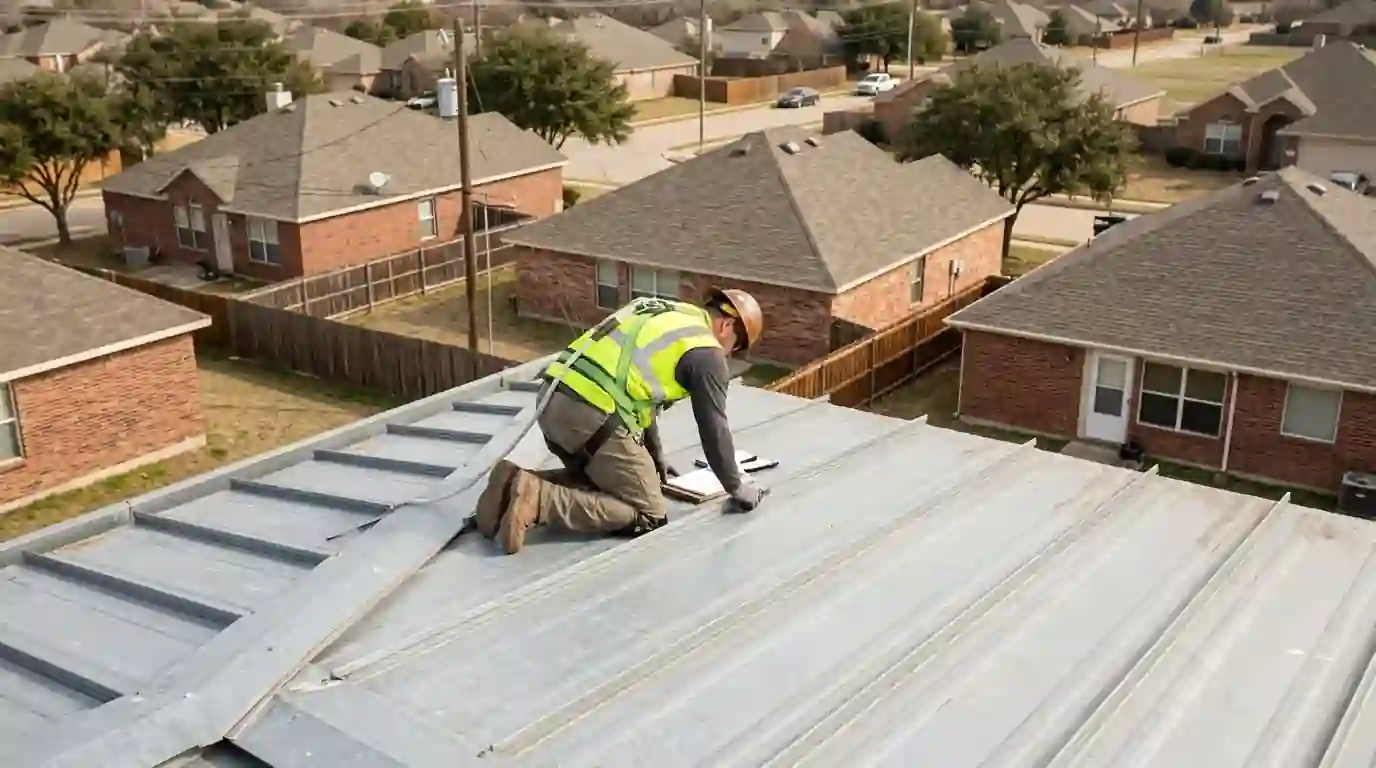
| Compare | Repair | Restore | Replace |
|---|---|---|---|
| When it fits | A few failed seams or details | Weathered surface, dry insulation | Wet insulation or a damaged deck |
| Disruption | Hours to a day or two | Days, building stays open | Longest, phased around tenants |
| What it buys | Stops the leak | Years of added life | A new roof and a new warranty |
Single-ply roofs: TPO, PVC and EPDM
Single-ply membranes cover most newer low-slope roofs in Dallas. TPO is the common white membrane, heat-welded at the seams and reflective under the Texas sun. PVC is welded the same way and holds up better where grease or chemicals reach the roof, which makes it the usual choice over restaurants. EPDM is black rubber, glued or taped at the seams, durable but hot in summer. We repair all three, and when one has reached the end, our commercial replacement page explains tear-off versus recover and how insulation and drainage are corrected on the way.
Metal, spray foam and coatings
Not every commercial roof is a membrane. Warehouses, shops and many newer retail buildings carry metal roofs, either exposed-fastener panels or standing seam. Some buildings are covered with spray polyurethane foam, which insulates and waterproofs in one layer. And many tired roofs of every kind can be renewed with a silicone or acrylic coating instead of being torn off. What they share is the first step: find out whether the insulation underneath is dry, because that decides almost everything that follows.
Repair, restore or replace
The decision comes from evidence, not from the age on the warranty. A roof with a few failed seams and dry insulation is a repair. A roof that is weathered across the surface but dry underneath is usually a restoration candidate: clean, repair, coat, and add years for a fraction of replacement cost. A roof with wet insulation across a large share of its area, a damaged deck, or two layers already on it is a replacement. We take core samples and moisture readings, mark them on a roof plan and show you the photos, so the recommendation can be checked by anyone on your side, including an owner who never goes on the roof.
Maintenance and warranties
Most commercial roof warranties require the owner to keep the roof maintained, clear drains and report problems promptly, and a claim can be denied where that was not done. Our maintenance program inspects each roof in spring and fall, clears drains and scuppers, checks seams and flashings, fixes small items on the spot and leaves a dated report with photos. That record is what a warranty claim or an insurance claim after hail depends on, and most leaks start at a detail a visit would catch.
Roofing in Dallas
What we see on Dallas roofs
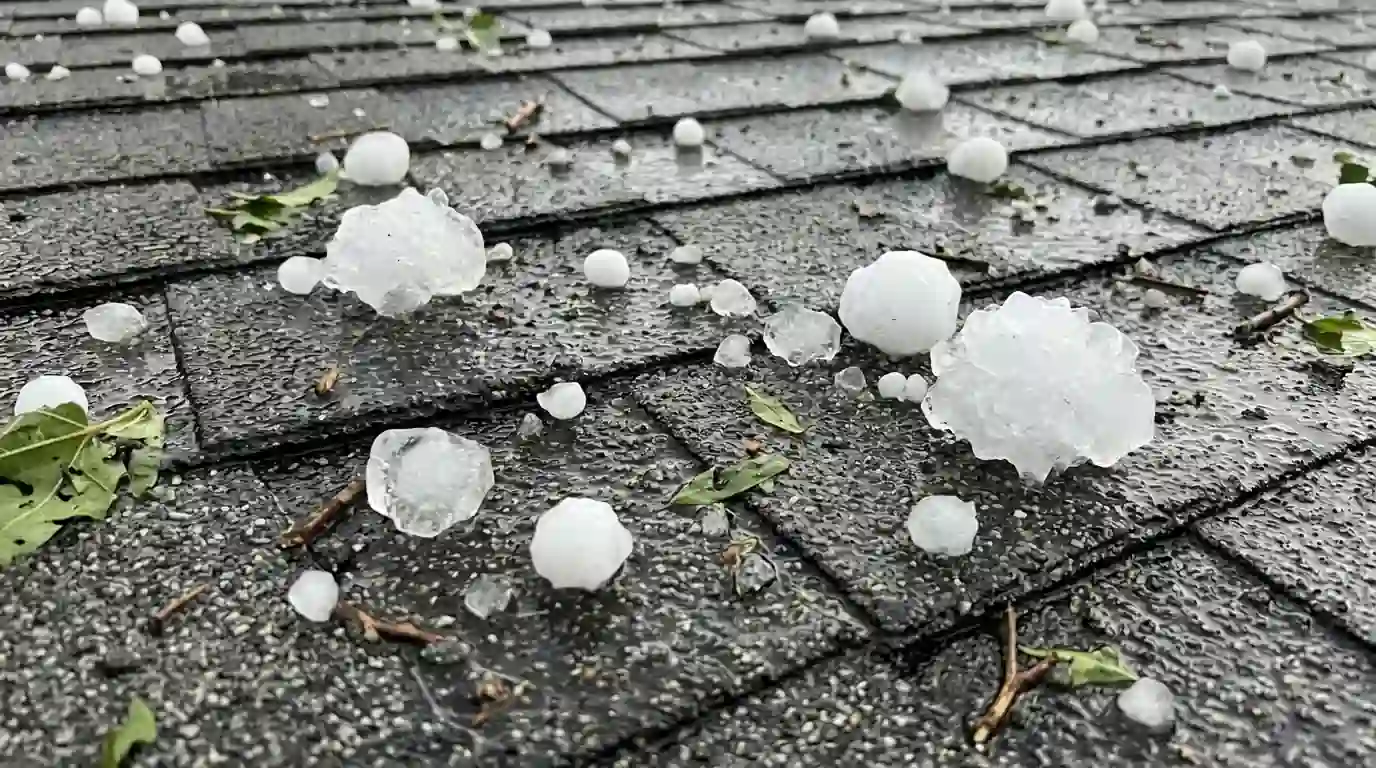
Dallas commercial roofs sit in the same hail and wind corridor as the homes around them, and a large flat roof catches every storm across its whole area. The March 2025 storms showed what wind does to a building that is not tied down, tearing the roof off a hotel along I-45 in Ennis. Southern Dallas County still has the most room for new industrial buildings, so new warehouse roofs keep arriving beside older ones that need repair or restoration.
Leak over the sales floor?
Call any hour. We stop the water first and find the cause on the next dry day.
(214) 429-4542What happens after you call
How a commercial roofing job runs
Call and walk
We meet you on site and walk every roof on the property.
Survey and cores
Moisture readings, core samples and photos of every defect.
Written report
Condition, recommendation and price, ranked by urgency.
Scheduling
Work planned around tenants, deliveries and weather.
The work
Repair, restore or replace, with daily cleanup.
Inspection
Seams probed, details checked, photos of the finished roof.
Hand-off
Warranty paperwork and a maintenance schedule if you want one.
Brands we install and service
Questions we get
Commercial roofing questions
TPO, PVC, EPDM, modified bitumen, built-up, metal and spray foam, including membranes from GAF, Carlisle SynTec and Firestone.
Yes; dry or wet insulation decides repair, restore or replace.
Often, when the roof is sound and the insulation is dry.
Yes; we phase work around tenants and schedule noisy work when it suits you.
Yes; each has its own page under commercial roofing.
Yes, with cores, photos and a roof plan.
Yes, spring and fall visits with a written report each time.
Call any hour; active leaks go to the front of the schedule.
One survey for every roof on the property
Call and we will walk the building, take cores where they matter and give you a written recommendation you can take to the owner.