Roofing guide
Repair or replace after a Dallas hail storm?
Two houses on the same street can take the same storm and get different answers. Here is how the decision usually gets made, and what you can influence.
- We answer 24/7
- Dallas service office
Quick answer
After hail in Dallas, a roof is usually repaired when damage is limited to a few shingles on one slope of a newer roof, and replaced when hits are spread across slopes, damage covers a quarter or more of a slope, the shingles are too brittle to lift, or the color cannot be matched. Roof age and policy type then decide who pays for what.
By Cyril Cross, Roofing Guides Editor · Updated September 2026
How damage is counted
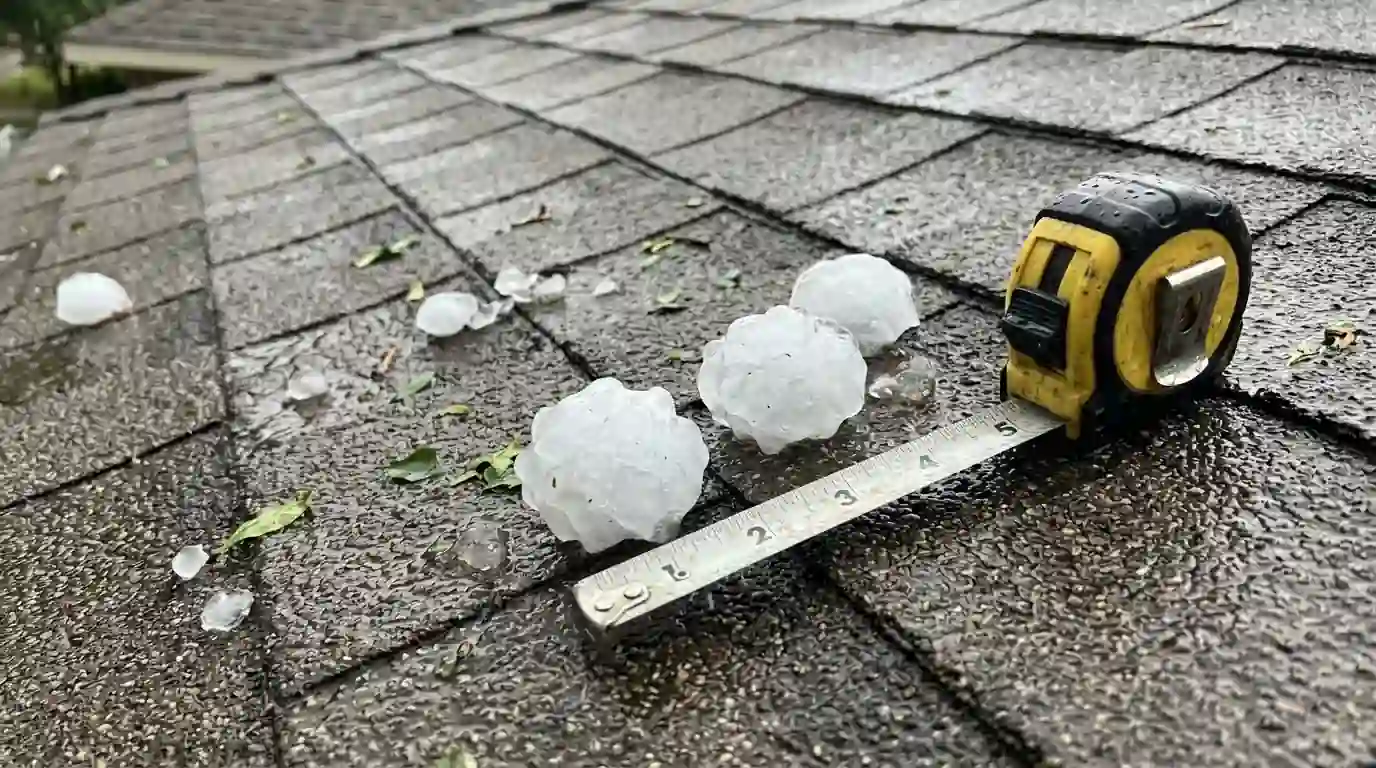
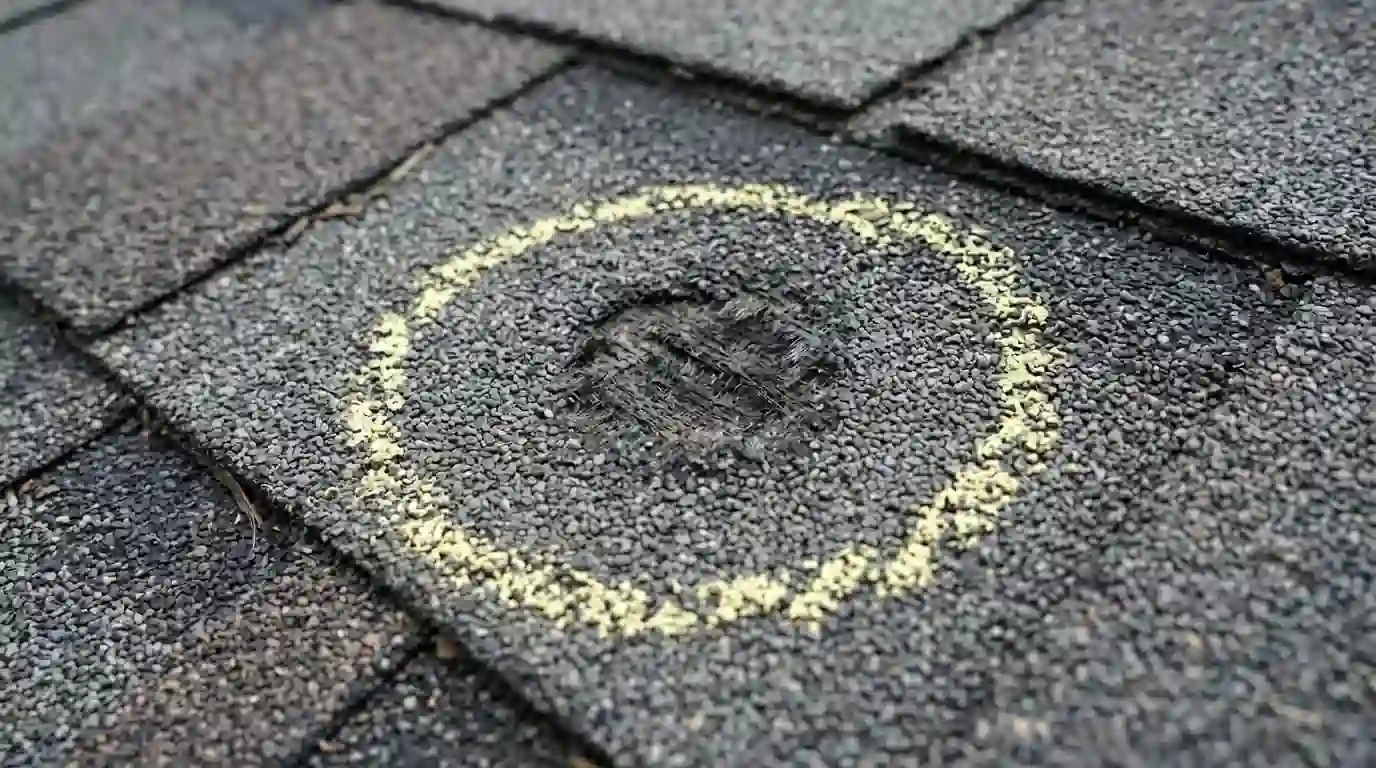
Adjusters and roofers count hail hits inside a ten-foot by ten-foot test square on each slope, circling each bruise or crack with chalk. The count per square, slope by slope, is the evidence the whole decision rests on. A hit counts when the mat is bruised or fractured, not when a granule or two is missing.
Soft metals tell the rest of the story: dented vents, pipe boots and gutters confirm the storm's size and direction. That is why our hail inspections photograph every piece of metal on the roof as well as the shingles.
The 25 percent rule
A common guideline in Texas is that when storm damage affects roughly a quarter or more of one roof slope, many carriers and codes treat that as justification for replacing the whole slope rather than patching it. It is not a law and carriers apply it differently, but it explains a lot of outcomes.
Below that line, a repair is common: damaged shingles are cut out and new ones woven in. Above it, the slope is replaced, and if several slopes cross it, the roof is.
When a repair is not possible even with little damage
Three things push a lightly damaged roof into replacement anyway:
- Brittle shingles. Older asphalt shingles crack when lifted to weave in a new one, so every repair creates more damage.
- Discontinued colors. If the shingle can no longer be matched, many policies pay for the slope or roof to avoid a patchwork.
- Failed seal strips. If shingles near the damage no longer bond, a repair will not hold through the next wind.
Your inspection report should say which, if any, of these applies, with photos.
Talk to a Dallas roofer now
Describe the leak or the damage, and we will tell you whether it needs a tarp tonight or a scheduled visit this week.
(214) 429-4542Roof age and your policy
Many Texas insurers still cover storm damage on a roof around twenty years old, but older roofs are often paid at actual cash value, meaning depreciation is subtracted from the payout. Some carriers cap coverage or decline new policies past a certain roof age. Replacement cost policies hold back depreciation until the work is finished and then release it.
Check which you have before the adjuster visits. It changes what you receive, not what the roof needs. The cost guide covers deductibles and upgrades.
A worked example
Take a hypothetical 25-square gable roof, eighteen years old, after a spring storm. The west slope shows a dense pattern of bruises in its test square, the east slope a handful. The west slope is past the point most carriers would patch, so it is written for replacement. The east slope could be repaired in theory, but the shingles crack when lifted and the color has been discontinued.
In that situation a full replacement is the likely outcome, because a repaired east slope would neither hold nor match. If the policy is actual cash value, the payout subtracts depreciation for an eighteen-year-old roof; if it is replacement cost, the held-back depreciation is released once the work is done. The same roof, two very different checks.
The example is there to show the logic, not to predict your claim. The documentation of your own roof is what decides it.
What you can influence
You cannot change the damage, but you can make sure it is fully documented: an inspection before the adjuster comes, your roofer on the roof during the adjuster's visit, and supplements filed for items the first estimate missed, such as drip edge, starter strip or code-required underlayment. We handle that on storm replacements.
If you are replacing, consider upgrading to Class 4 shingles, paying only the difference, so the next storm is less likely to repeat the process.
Questions we get
Repair or replace questions
There is no single number; carriers look at hits per test square on each slope, and the pattern across slopes.
A common guideline that damage on about a quarter of a slope justifies replacing that slope.
Different slope exposure, roof age, shingle condition or policy terms.
Yes. Supply the photos and counts from your own inspection.
A payout that subtracts depreciation for the roof's age.
Not when done correctly with matching materials; check your shingle warranty terms.
Class 4 shingles often pay back through premium discounts.
Want to know which side of the line your roof is on?
A slope-by-slope inspection with test squares answers it in writing before the adjuster arrives.