Maintenance and upgrades
Attic insulation and radiant barrier in Dallas
The roof keeps the rain out. What keeps the July heat out of the bedrooms is the attic floor under it, and in a lot of older Dallas homes that floor has a few settled inches of insulation and nothing else.
- We answer 24/7
- Dallas service office
- Done with or without a re-roof
- 24/7Calls answered
- DallasService office
- EnnisHead office
- 1 to 2Days, most re-roofs
Quick answer
Attic insulation in Dallas usually means topping up to R-38 or better with blown fiberglass or cellulose, air sealing the top plates and penetrations first, and stapling a foil radiant barrier to the underside of the rafters so the deck stops radiating heat down. Done with a re-roof, the barrier can go on as radiant-barrier decking instead. Most homes are finished in a day.
The job
Insulation, air sealing and radiant barrier do three different jobs
Insulation slows heat moving through the attic floor. Air sealing stops conditioned air leaking up through gaps around lights, pipes and wall tops, which is often the bigger loss. A radiant barrier reflects the heat the hot roof deck throws down, before it ever reaches the insulation.
In Dallas, where the roof deck bakes for five months a year, the radiant barrier and the air sealing do more per dollar than piling on insulation alone. We check all three before quoting any of them.
Updated September 2026
Budget
What an insulation job costs
There is no reliable published Dallas range for attic insulation alone. These factors set the number on your estimate.
- Attic floor area
Priced per square foot of attic floor.
- Target depth
Topping up to R-38 or R-49 changes the material quantity.
- Existing insulation
Wet or contaminated material has to come out first.
- Air sealing
Number of penetrations and wall tops to seal.
- Radiant barrier
Stapled foil per square foot, or decking during a re-roof.
- Access
Low or cramped attics slow every part of the job.
- Timing
Bundled with a re-roof it shares setup and cleanup.
Scope
What an insulation job includes
The same scope goes on every estimate so it can be compared line by line.
- Existing depth and condition recorded
- Top plates and penetrations air sealed
- Contact-rated light housings checked
- Baffles at every eave
- Radiant barrier with an air gap
- Depth rulers stapled to the joists
- Blown to the target R-value
- Insulated, weatherstripped attic hatch
- Photos of the finished depth
Blown-in insulation
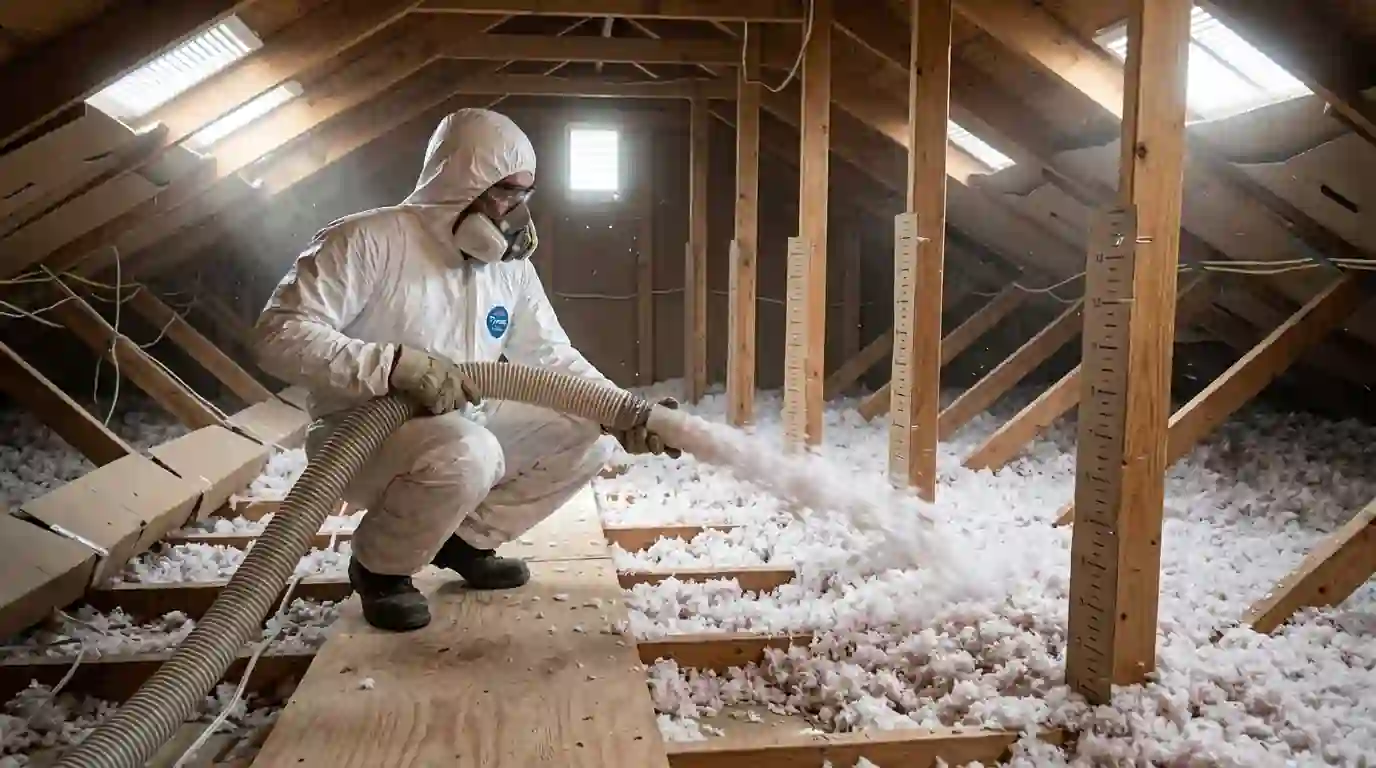
Loose-fill fiberglass from Owens Corning, CertainTeed or Johns Manville, or treated cellulose, is blown across the attic floor to a marked depth, using rulers stapled to the joists so you can see what was installed. We blow over sound existing insulation and remove it only when it is wet, moldy or contaminated. Baffles go in at every eave first so the new material cannot block the soffit vents, and the attic hatch gets an insulated cover so it stops being the weak spot.
Radiant barrier
A radiant barrier is a perforated aluminum foil sheet, from makers like Innovative Insulation or Fi-Foil, stapled to the underside of the rafters with the foil facing the air gap. It reflects most of the radiant heat from the roof deck, which can drop attic temperature noticeably on a sunny afternoon. It needs an air gap and working ventilation to do its job, so we check the vents before we staple anything, and we never lay foil flat on the insulation where dust ruins it.
Air sealing at the attic floor
Before any insulation goes down, we seal the holes: top plates of interior walls, plumbing and wiring penetrations, recessed light housings rated for contact, chases around ducts and the gap around the chimney with fire-rated material. Air sealing stops the stack effect that pulls conditioned air up into the attic, and it is the part most insulation crews skip. On older Dallas homes it is often worth more than the insulation itself. We photograph each sealed penetration so the work that disappears under insulation is still on record.
Insulation after a roof replacement
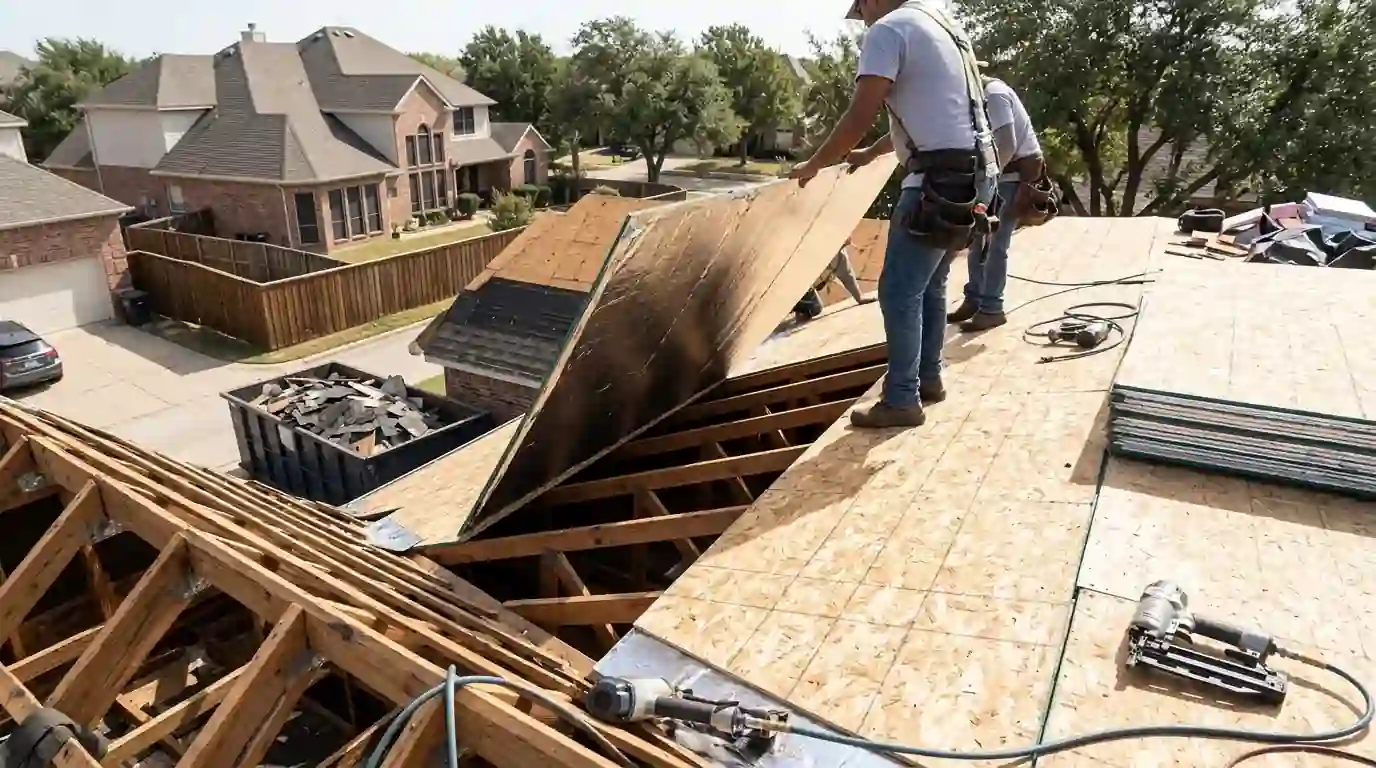
A tear-off is the one time the deck is open, so it is the best moment to go further. We can install LP TechShield radiant-barrier decking in place of plain sheathing on the replaced sheets, add baffles at every eave while the roof edge is exposed, and blow in the attic floor the day after the shingles go on. One mobilization, one mess, and a roof and attic that work together instead of against each other. It also means the attic is checked by the same crew that just closed the roof above it.
Roofing in Dallas
What we see on Dallas roofs
Many of the early-1960s homes around Lake Highlands and White Rock Lake still have the attic floor they were built with: a few inches of settled batts, open top plates and no radiant barrier. Add the long, low roofs those ranch houses were built with and the attic becomes a heat store over every bedroom. On those homes the order is always air seal, baffle, then blow, and radiant barrier if the vents can support it.
What happens after you call
How an attic insulation job runs
Attic assessment
Depth, condition, air leaks and ventilation recorded.
Written scope
Target R-value, air sealing list and barrier plan.
Protect the house
Drop cloths at the hatch and along the path.
Air seal
Top plates and penetrations sealed before any blowing.
Baffles and barrier
Eave baffles in; radiant barrier stapled to rafters.
Blow to depth
Material blown to the rulers; hatch insulated.
Final check
Depth photographed and vents confirmed clear.
Timeline
How long the job takes
Air sealing and blowing a typical single-story attic is one day. Adding a stapled radiant barrier to the rafters adds most of a second day, because it is careful overhead work in a hot attic. During a re-roof, radiant-barrier decking adds nothing to the schedule; it simply replaces the sheathing that was going on anyway.
Brands we install and service
Questions we get
Insulation questions from Dallas homeowners
Most energy guidance for this climate points to R-38 or more on the attic floor.
On a sunny roof with working ventilation it reflects much of the deck's heat.
Both work; fiberglass settles less, cellulose air-seals a little better.
Only when it is wet, moldy or contaminated. Sound material stays.
Yes. It is often the larger energy loss and the part other crews skip.
Yes. The whole job is done from inside the attic in about a day.
Not with baffles, which go in before any material is blown.
Owens Corning, CertainTeed and Johns Manville fill, foil barriers from Innovative Insulation or Fi-Foil, and LP TechShield decking.
Upstairs never cools down? Start with the attic floor
One attic check tells you the insulation depth, the air leaks and whether a radiant barrier will pay off on your roof.