Replacement and new roofs
Wood and cedar shake roofing in Dallas
Wood shake roofs were once a status symbol in parts of North Texas, and many are still up there, weathered, cupped and coming to the end. Whether yours is repaired, replaced in treated cedar or converted to something else depends on its condition, your city's rules and your insurer.
- We answer 24/7
- Dallas service office
- Repair, replace or convert
- 24/7Calls answered
- DallasService office
- EnnisHead office
- 1 to 2Days, most re-roofs
Quick answer
Penfold Construction repairs and replaces wood and cedar shake roofs around Dallas and converts them to synthetic shake or Class 4 shingles. Small areas of split or missing shakes can be repaired; a worn roof can be replaced with fire-retardant-treated cedar where the city allows it; and most owners now convert, which means adding solid decking over the spaced boards shakes are nailed to.
The job
What is going on with an older shake roof
Cedar shakes weather to gray, then split, cup and curl as they dry out in the Texas sun. Debris holds water in the keyways, nails rust through, and once the felt interlay between courses fails, leaks follow.
The first visit tells you which situation you are in: a roof with years left that needs repairs, or a roof at the end where the decision is what to replace it with.
Updated September 2026
Budget
What moves the price of shake work
We do not use a published Dallas range for shake roofs; the roof's condition and the material you choose set the scope.
- Repair or replace
Spot repairs cost a fraction of a full roof.
- Material chosen
Treated cedar, synthetic shake and Class 4 shingles differ widely.
- Solid decking
Plywood or OSB over spaced boards for a conversion.
- Roof size and pitch
Steep roofs need more safety setup and labor.
- Flashing
Chimney, wall and valley flashing often replaced.
- Tear-off and disposal
Shakes are bulky and heavy to haul away.
- Ventilation
Ridge and soffit vents matched to the new roof.
Your options
Cedar or synthetic shake
The two ways to keep a shake look, compared.
| Compare | Treated cedar | Synthetic shake |
|---|---|---|
| Fire rating | Class B or A in a tested assembly | Commonly Class A |
| Hail | Splits under large hail | Many products rated Class 4 |
| Upkeep | Keyways and gutters kept clear | Little routine upkeep |
Repairing a shake roof
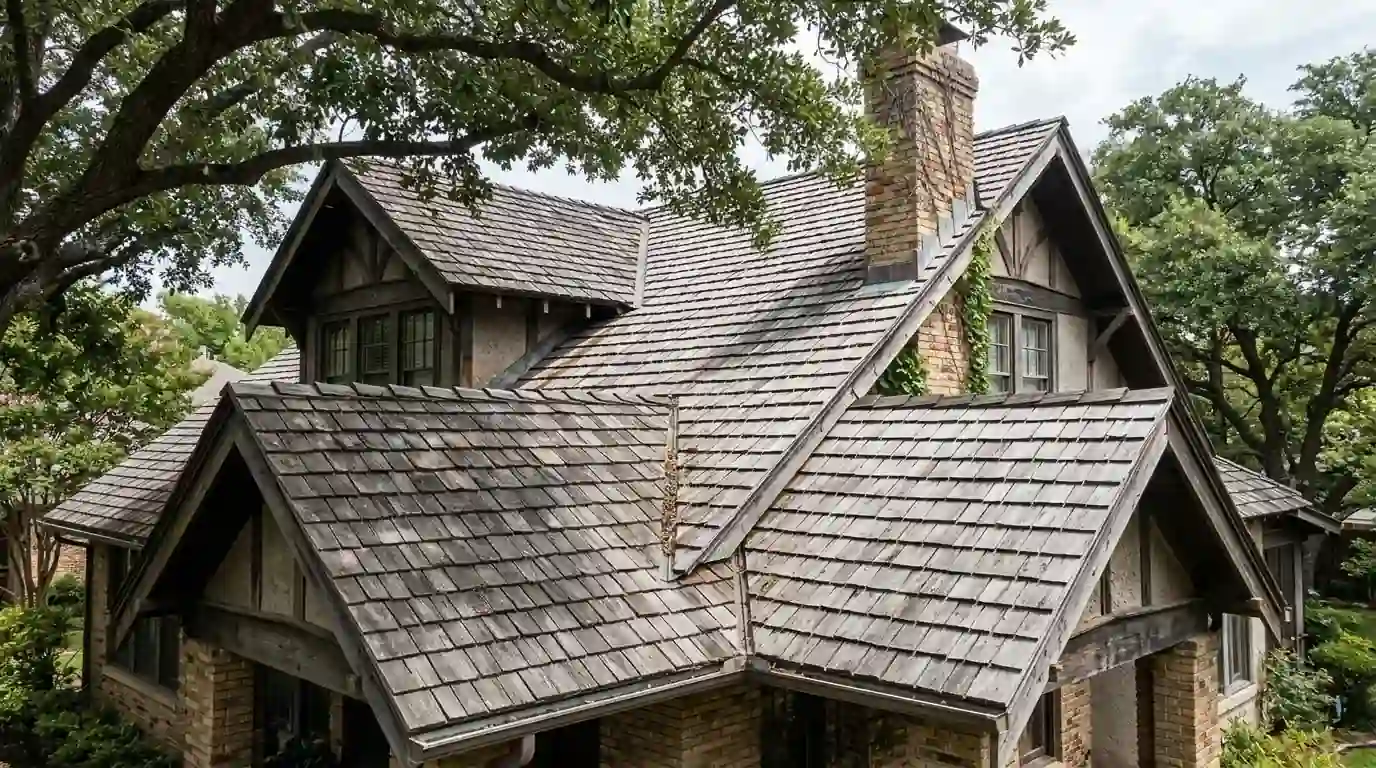
Shake repairs are slower than shingle repairs because each shake is fitted by hand. Split, missing and badly cupped shakes are removed by cutting the nails, new shakes are slipped in to match the exposure, and the felt interlay is replaced where it has failed. Flashings at chimneys, walls and valleys are checked, because on many older shake roofs the flashing fails first. New shakes stand out for a season or two before they gray. Repairs make sense when the damage is local and the rest of the roof is sound, and we tell you plainly when it no longer is.
Replacing with treated cedar
Owners who want to keep the look can replace with new cedar shakes, but the product matters. Untreated wood has no fire rating, so we install pressure-treated, fire-retardant cedar, which can reach a Class B or Class A rating as part of a tested assembly with the right underlayment. Before quoting we check what your city allows, since North Texas cities set their own rules on wood roofs, and whether your HOA requires a particular look. Keeping debris out of keyways and gutters adds years to a cedar roof's life.
Converting to synthetic shake or shingles
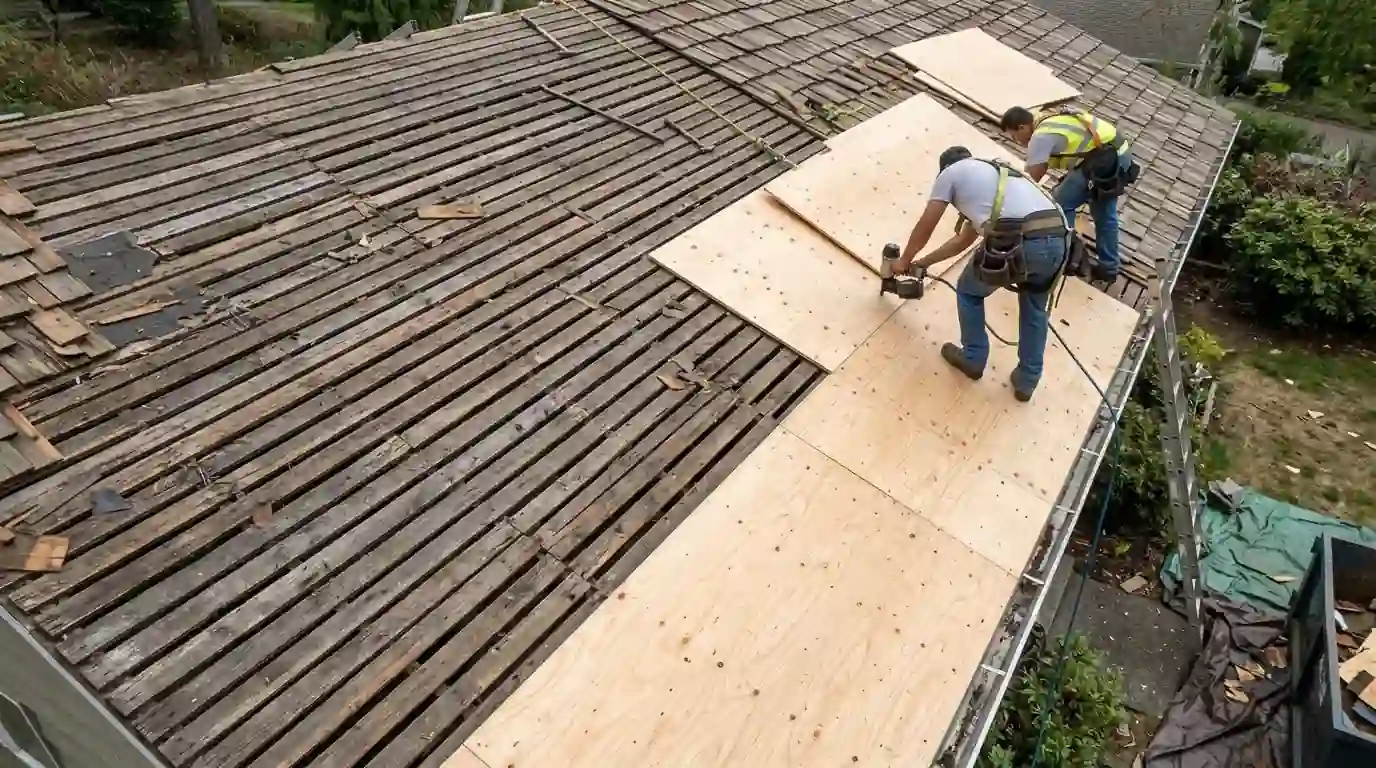
Most shake owners we see now convert. Synthetic shake made from composite materials gives a similar look with a Class A fire rating, and many products carry a Class 4 impact rating as well. Class 4 architectural shingles are the lower-cost option. Either way, the decking has to change: shakes are nailed to spaced boards with gaps between them, and shingles or synthetic shakes need solid sheathing. We tear off the shakes, keep sound spaced boards in place, lay new plywood or OSB over them, and then install the new roof. That decking work is the main reason conversion quotes run higher than an ordinary re-roof.
Fire ratings and insurance
Wood roofs carry two practical questions besides the look. One is fire: untreated cedar has no rating, and older wood roofs are dry fuel for embers from nearby fires. The other is insurance: some carriers charge more for wood roofs or limit coverage on older ones, and a conversion to a Class 4 roof can change that. Before you decide, ask your agent what each option does to your premium, and ask us for a roof inspection report with photos you can share with them. We will price repair, cedar and conversion side by side so the comparison is on paper.
Roofing in Dallas
What we see on Dallas roofs
Wood roofs had been a status symbol in some North Texas neighborhoods since the 1970s, and by the mid-1990s they had a fire problem: D Magazine reported four major wood-roof fires in two years, including one that October in which sparks destroyed five Plano homes. Several cities responded with bans or treatment requirements on new wood roofs. That history is why so many of the shake roofs still on Dallas-area homes are old, and why conversions are common.
Shake roof shedding pieces?
Call and we will check whether it needs repairs or a plan for replacement.
(214) 429-4542What happens after you call
How a shake roof job runs
Inspection
Shakes, interlay, flashing and decking checked, with photos.
Options
Repair, treated cedar or conversion, priced side by side.
Code and HOA check
City rules and HOA requirements confirmed.
Tear-off
Shakes removed and spaced boards checked.
Decking
Solid sheathing added for a conversion.
New roof
Underlayment, flashing and the new roof installed.
Walkthrough
Final photos and warranty paperwork.
Timeline
How long shake work takes
Repairs take a day or two, since each shake is fitted by hand. A full replacement or conversion on a typical home takes about two to four days, longer on large or steep roofs, and conversion adds the decking day. Material lead times for treated cedar and some synthetic products can add a week or two before work starts.
Questions we get
Wood and cedar shake roofing questions
Yes, if the damage is local and the rest of the roof is sound.
Rules vary by city; we check yours before quoting.
Shakes sit on spaced boards; shingles need solid sheathing.
Most synthetic shake products carry a Class A fire rating.
Often; ask your agent to price each option.
It depends on treatment, ventilation and maintenance; sun and debris shorten it.
Yes, and across the Dallas area.
Yes, as part of a tested assembly with the right underlayment.
Old shake roof? Get the options on paper
We inspect it, then price repair, treated cedar and conversion side by side so you can decide with your insurer.