Maintenance and upgrades
Roof and attic ventilation in Dallas
Shingles in Dallas get cooked from both sides: the sun on top and a trapped attic underneath. Balanced ventilation is how the underside cools off, and it is cheap compared to the roof it protects.
- We answer 24/7
- Dallas service office
- Intake and exhaust balanced
- 24/7Calls answered
- DallasService office
- EnnisHead office
- 1 to 2Days, most re-roofs
Quick answer
Roof ventilation in Dallas works by letting cooler air in at the soffits and hot air out at the ridge, so the attic stays close to outdoor temperature instead of baking. We measure the attic, calculate the vent area code calls for, and balance intake against exhaust with ridge vent, soffit vents, and where needed solar attic fans. Mixing exhaust types is a common mistake we fix.
The job
Why ventilation shows up on the roof bill
An attic with too little airflow runs far hotter than the air outside on a July afternoon. That heat bakes the shingles from underneath, shortens their life, and pushes heat through the ceiling into the rooms below, so the AC runs longer. In winter the same attic traps moisture and wets the deck.
Most attics we open have plenty of exhaust and almost no intake, because soffit vents were painted over or blocked by insulation. Exhaust without intake pulls air from the house instead of from outside.
Updated September 2026
Ridge vents
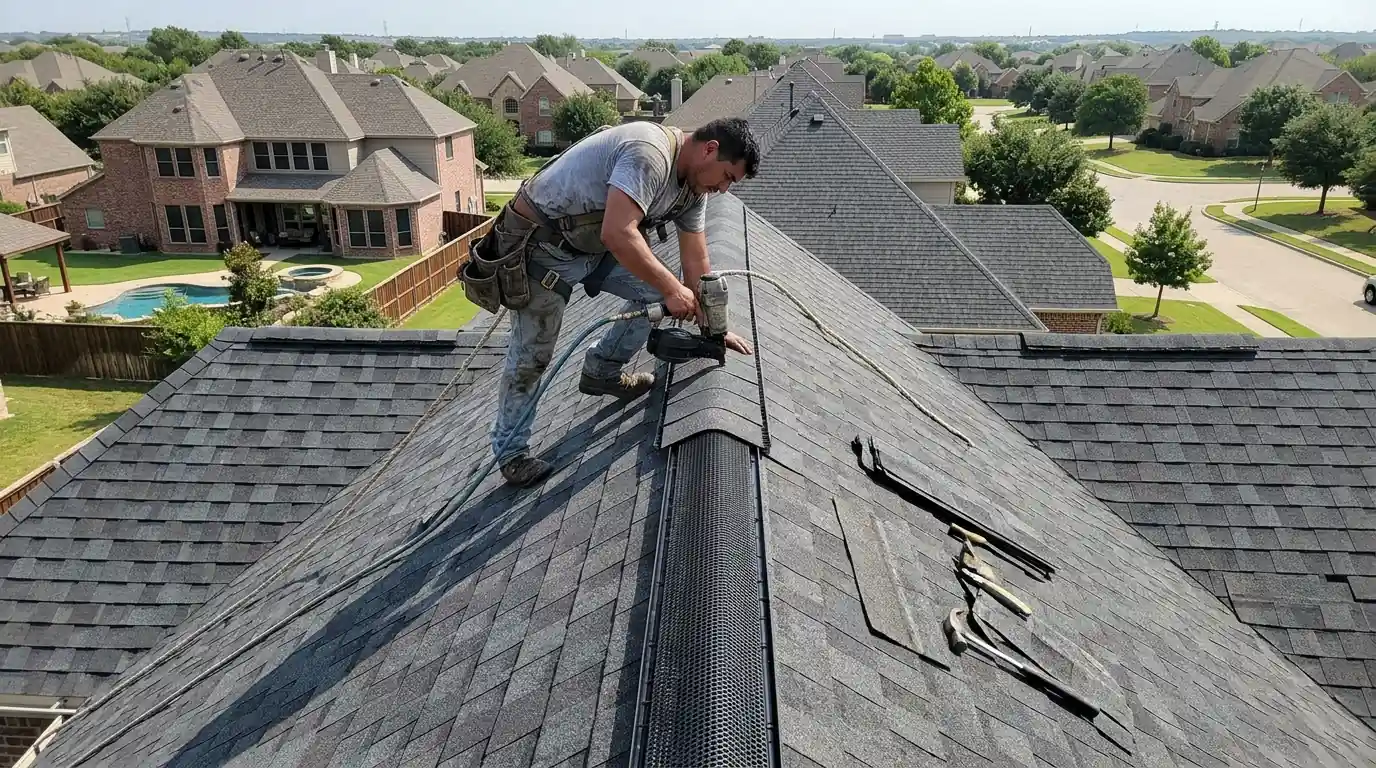
A continuous ridge vent runs the length of the peak under the ridge cap, letting hot air rise out along the highest line of the roof. We cut the deck back an inch each side of the ridge, install an externally baffled vent that keeps wind-driven rain out, and cap it with matching shingles. It is the quietest, least visible exhaust there is. On a hip roof with little ridge length we add off-ridge vents to make up the area.
Soffit intake vents
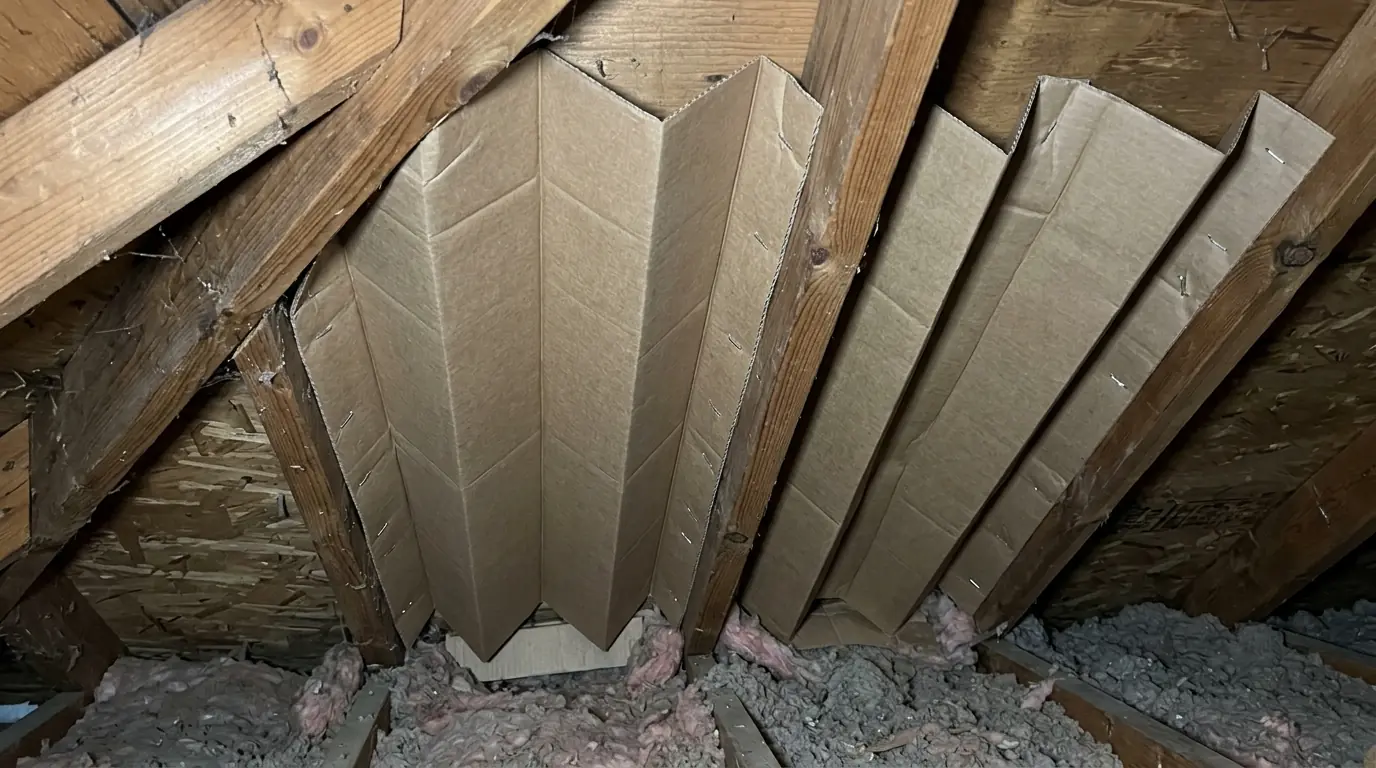
Intake is the half most Dallas homes are missing. We replace solid soffit panels with vented ones or cut in continuous vent strip, then install baffles between the rafters so blown insulation cannot fall into the airway. Without baffles, new insulation simply plugs the new vents. The goal is intake area equal to or slightly above the exhaust, so the attic draws outside air rather than conditioned air from the house. On homes with boxed eaves and no soffit at all we use a drip-edge intake vent.
Attic fans and turbines
Turbines and powered attic fans move a lot of air but can backfire: with weak intake they depressurize the attic and pull cooled air up through ceiling gaps. We use them only when the roof geometry cannot fit enough ridge vent, and only with matched intake. Solar attic fans are a good choice on hip roofs. Mixing a ridge vent with a turbine short-circuits both, so we pick one exhaust type per attic. The written plan names the one we chose and why.
Balancing intake and exhaust
Code sets a minimum of one square foot of net free vent area per 150 square feet of attic floor, or one per 300 with balanced high and low vents. We measure the attic, total the existing vents from their stamped ratings, and write down what to add or close. Old gable vents and box vents sitting next to a new ridge vent get blocked off, because a second exhaust path lets the ridge pull from the gable instead of the soffit.
Scope
What the ventilation visit covers
Every attic we check gets the same measurements, written down.
- Attic floor area measured
- Existing vents identified and rated
- Net free area calculated against code
- Intake and exhaust balance checked
- Insulation clearance at the eaves
- Baffles installed where missing
- Competing exhaust closed off
- Deck and rafters checked for moisture
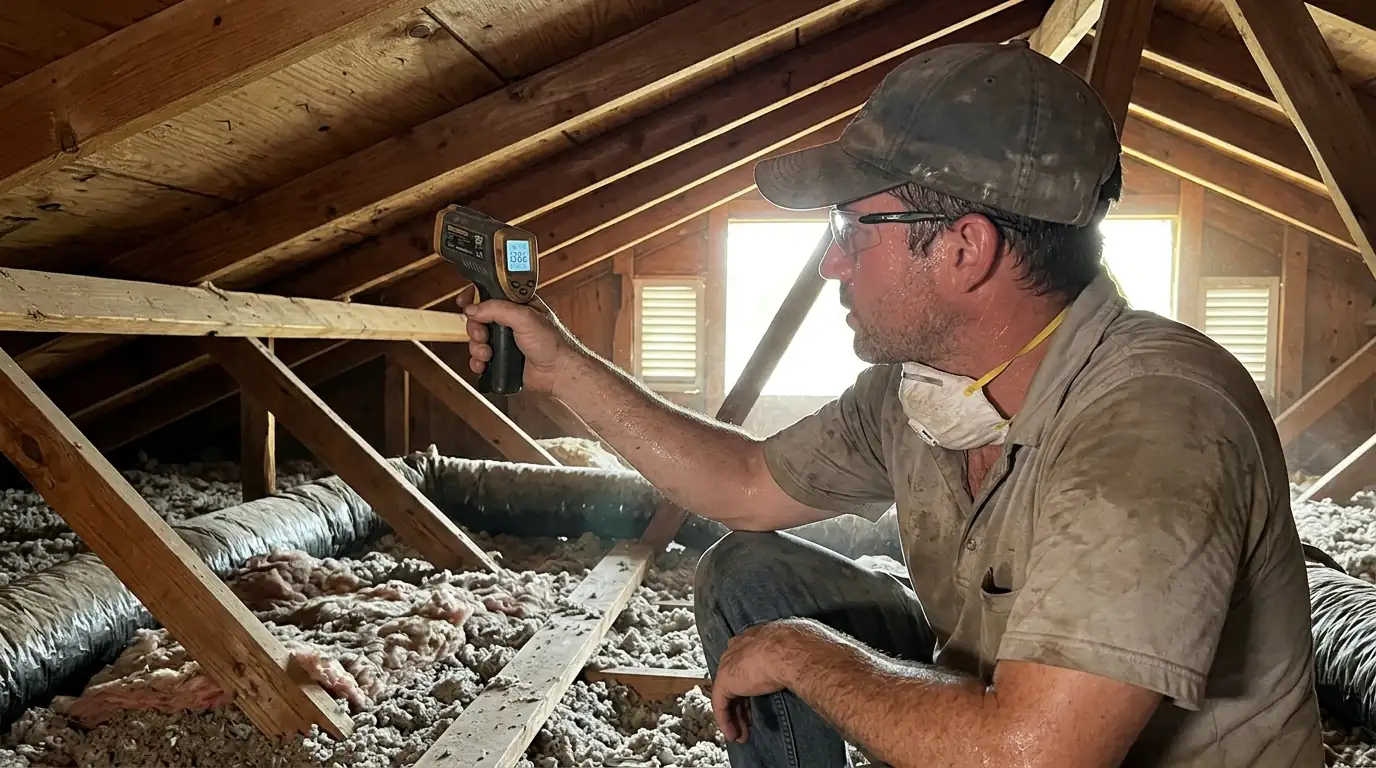
- Before and after temperature reading
What happens after you call
How a ventilation job runs
Attic check
Temperature, moisture, insulation depth and existing vents recorded.
Calculation
Attic floor area and required net free vent area worked out.
Written plan
What to add, what to close, and why.
Intake first
Soffit vents opened and baffles installed.
Exhaust
Ridge cut and vented, or fans installed.
Old vents closed
Competing exhaust blocked off and sealed.
Follow-up reading
Attic temperature compared on a hot afternoon.
Roofing in Dallas
What we see on Dallas roofs
Around 160 degrees is how hot a Dallas shingle roof surface runs in summer, and those same surfaces lose granules quickly under that heat. The attic under that roof is where the damage compounds: with no intake at the soffits, the heat has nowhere to go but down through the decking and into the house. That is why ventilation gets checked on every roof inspection we do in this city, and why a re-roof here is the cheapest moment to fix it.
Budget
What a ventilation upgrade costs
Ventilation is usually a small line inside a re-roof, or a one-day job on its own. There is no published Dallas range; these factors set it.
- Ridge length
Ridge vent is priced per foot of ridge.
- Soffit condition
Vented panels versus cutting in strip vent.
- Baffles
One per rafter bay at every intake.
- Fans
Powered or solar fans add unit and wiring cost.
- Closing old vents
Gable and box vents blocked off and patched.
- Timing
During a re-roof the deck is already open.
- Attic access
Tight or low attics take longer to baffle.
Warning signs
Signs your attic is not breathing
Upstairs rooms that never cool
Heat radiating down through the ceiling.
Curling or blistered shingles
Cooked from underneath.
Painted-over soffit vents
Intake blocked for years.
Insulation packed against the eave
Airway closed off.
Musty smell or damp decking
Moisture trapped in winter.
Turbines next to a ridge vent
Competing exhaust.
Ice-cold AC air, hot ceiling
The system is fighting the attic.
Questions we get
Ventilation questions from Dallas homeowners
A very hot attic, rooms under it that never cool, curling shingles, and frost or damp in winter.
Usually, when there is enough ridge. It is passive, quiet and does not backfire.
Too much exhaust without intake, yes. Balance matters more than volume.
It reduces the heat load on the ceiling, which shortens AC run time.
Yes, on roofs that cannot fit enough ridge vent, with matched intake.
They short-circuit a ridge vent, pulling air from the gable instead of the soffit.
Yes, a minimum net free area based on attic floor size.
That is the best time. The ridge is already open.
Attic hotter than the street? Let us measure it
One attic check tells you what vent area you have, what the code wants, and what to add or close.