Replacement and new roofs
Roofing for historic homes in Dallas
A century-old roof in a Dallas landmark district is not replaced the way a subdivision roof is. The material, the profile and the flashing all have to match what the house was built with, and the city reviews it.
- We answer 24/7
- Dallas service office
- Original materials matched
- 24/7Calls answered
- DallasService office
- EnnisHead office
- 1 to 2Days, most re-roofs
Quick answer
Historic home roofing in Dallas means repairing or replacing roofs on older homes, especially in landmark districts like Swiss Avenue and Munger Place, with materials and details that match the original: natural slate, clay tile or period shingles, copper flashing and gutters, and the original eave and ridge profiles. Work on visible roofs in a designated district is reviewed for appearance before it starts.
The job
What makes a historic roof different
Old roofs were built with materials that last longer than modern ones, slate, clay tile and copper, and with framing and plank decking that behave differently from plywood. They also carry details that define the house: the slope of a Prairie eave, the scale of a Tudor slate, a copper valley that has turned green.
The job is to keep what is sound, replace what has failed with matching material, and get the landmark review done before any tear-off.
Updated September 2026
Budget
What decides the cost of historic roofing
Historic work is priced from a survey; there is no published Dallas range for it. These factors set the number.
- Material
Natural slate and clay tile cost more than any shingle.
- Salvage matching
Hard-to-find profiles take time to source.
- Copper work
Hand-fabricated valleys, flashing and gutters.
- Review
Landmark documentation and scheduling.
- Framing repairs
Rot at eaves and chimneys; sistered rafters.
- Access
Tall, steep roofs need staging and roof hooks.
- What stays
Sound original material re-hung costs less than new.
Scope
What a historic roof survey covers
Written up with photos before anything is ordered.
- Original material identified
- Condition of every slope
- Flashing and valley metal
- Chimney crowns and counterflashing
- Gutters and downspouts
- Decking and rafter condition
- Salvage potential of sound material
- District review requirements
- Written specification to match the original
Landmark district review
Dallas designates historic districts where changes to visible exterior features are reviewed for appearance. Before we order anything for a roof in one, we document the existing roof with photos, identify the original material and profile, and prepare the specification so the review is straightforward. Changing from slate or tile to a different material usually needs approval, and a like-for-like repair often goes quickly. We build the review time into the schedule rather than finding out partway through. The survey photos go with the application.
Matching original materials
Natural slate is matched by quarry color and size, often from salvage stock for older profiles. Clay tile is matched by profile and color, again often from salvage. Where the original was a period shingle that is no longer made, we choose the closest current product, or a DaVinci, Brava or CertainTeed synthetic where the district allows it, and show it against the roof. Sound original material is kept and re-hung wherever possible, because nothing new matches a century of weathering. Samples are shown against the roof before anything is ordered, and the salvage stock is photographed so you know what is going back on.
Copper and custom flashing
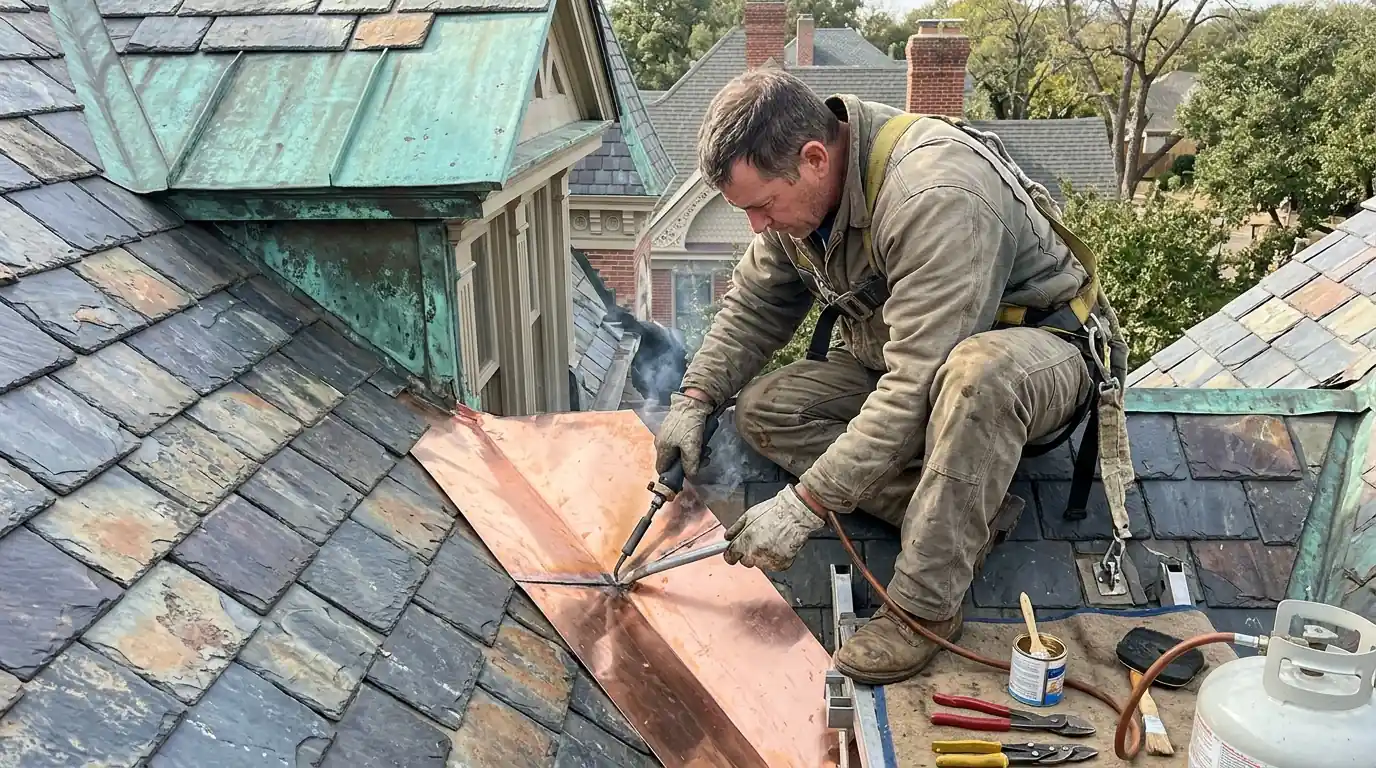
Historic roofs were flashed in copper or terne-coated metal, bent and soldered by hand, and much of it is still sound. Where it has failed, we fabricate matching pieces on site: copper valleys, step flashing, counterflashing set into mortar joints, and soldered cricket pans behind chimneys. Half-round copper gutters and downspouts are replaced in kind rather than swapped for modern K-style, which would change the look of the eave. Downspout straps are matched to the originals, so even small details stay true to the house.
Old framing and plank decking
Older homes were decked with 1x6 or 1x8 boards rather than plywood, over full-dimension rafters that are often in good shape. We keep sound plank decking and add a layer of new sheathing only where the roof material needs a solid substrate, repair rot at the eaves and around chimneys, and sister rafters that were cut decades ago for a skylight or a flue. Ventilation is added carefully so it does not change the roofline. The attic is photographed before and after the work.
Roofing in Dallas
What we see on Dallas roofs
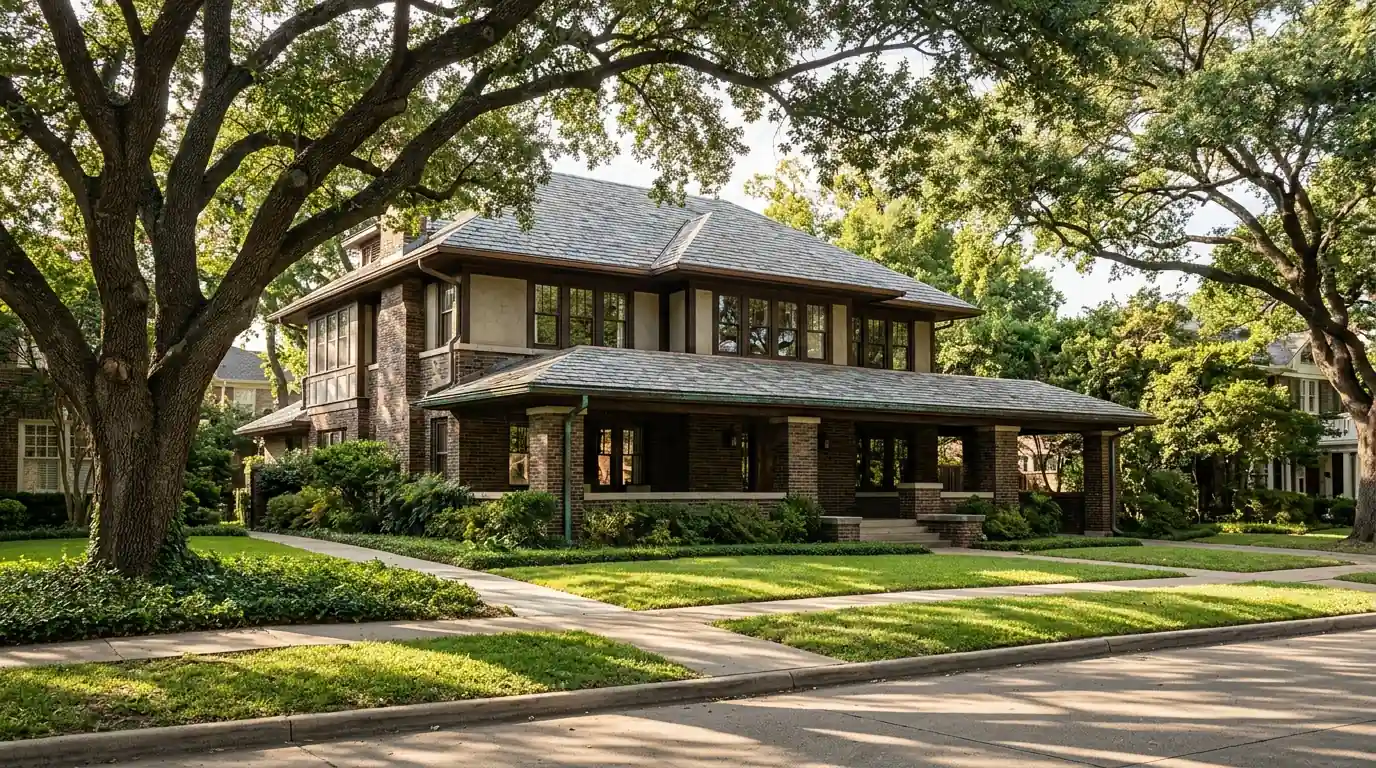
The Swiss Avenue Historic District, the first local historic district designated in Dallas, holds about 200 homes in Prairie, Colonial Revival and Tudor styles, and neighboring Munger Place was laid out in 1905 as one of the city's first suburbs with full two-story homes. Many of those houses still carry original slate, tile or copper, and a century of heat has worn the flashings long before the stone. That combination, sound material over failing metal, is the most common historic job we see.
What happens after you call
How a historic roof job runs
Survey
Every slope, flashing and chimney photographed and documented.
Specification
Materials and details matched to the original.
Review
Landmark review where the district requires it.
Source materials
New or salvage slate, tile and copper ordered.
Careful removal
Sound material salvaged; flashings removed.
Rebuild
Deck repaired, metal fabricated, roof re-laid.
Record
Final photos for your file and the district.
Timeline
How long a historic job takes
The survey is a single visit. District review and sourcing salvage material set the lead time, which can run weeks. The roof work itself takes longer than a modern re-roof because slate and tile are laid by hand and the copper is fabricated on site; a typical historic home takes one to three weeks on the roof.
Brands we install and service
Questions we get
Historic roofing questions
Visible roof changes in designated districts are reviewed; like-for-like repairs are usually simpler.
Often; sound slate is re-hung with new fasteners and flashing.
Sometimes, with approval; synthetic slate is often the option considered.
Yes, including valleys, flashing, cricket pans and half-round gutters.
By profile and color, often from salvage stock.
Not if it is sound; we repair rot and add sheathing only where needed.
Longer than a modern roof, with review and sourcing time up front.
Yes, on any older home, including porch roof rebuilds.
Own an older Dallas home? Keep its roof original
A survey tells you what is sound, what has failed, and what the district will need to see.