Commercial roofing
Commercial roof coatings in Dallas
A roof coating is not paint. Applied over a sound roof, it becomes one continuous waterproof layer that reflects the sun and adds years to a membrane or metal roof, without tearing anything off. Applied over a wet one, it traps the problem.
- We answer 24/7
- Dallas service office
- Core-tested before coating
- 24/7Calls answered
- DallasService office
- EnnisHead office
- PhasedAround your tenants
Quick answer
A commercial roof coating in Dallas is a liquid-applied silicone or acrylic membrane rolled or sprayed over an existing roof that is structurally sound and dry, after cleaning, seam repair and primer. It restores waterproofing, reflects most of the sun's heat, and extends the roof's life at a fraction of replacement cost. We core-test the roof first, because coating over wet insulation fails.
The job
When coating is the right call, and when it is not
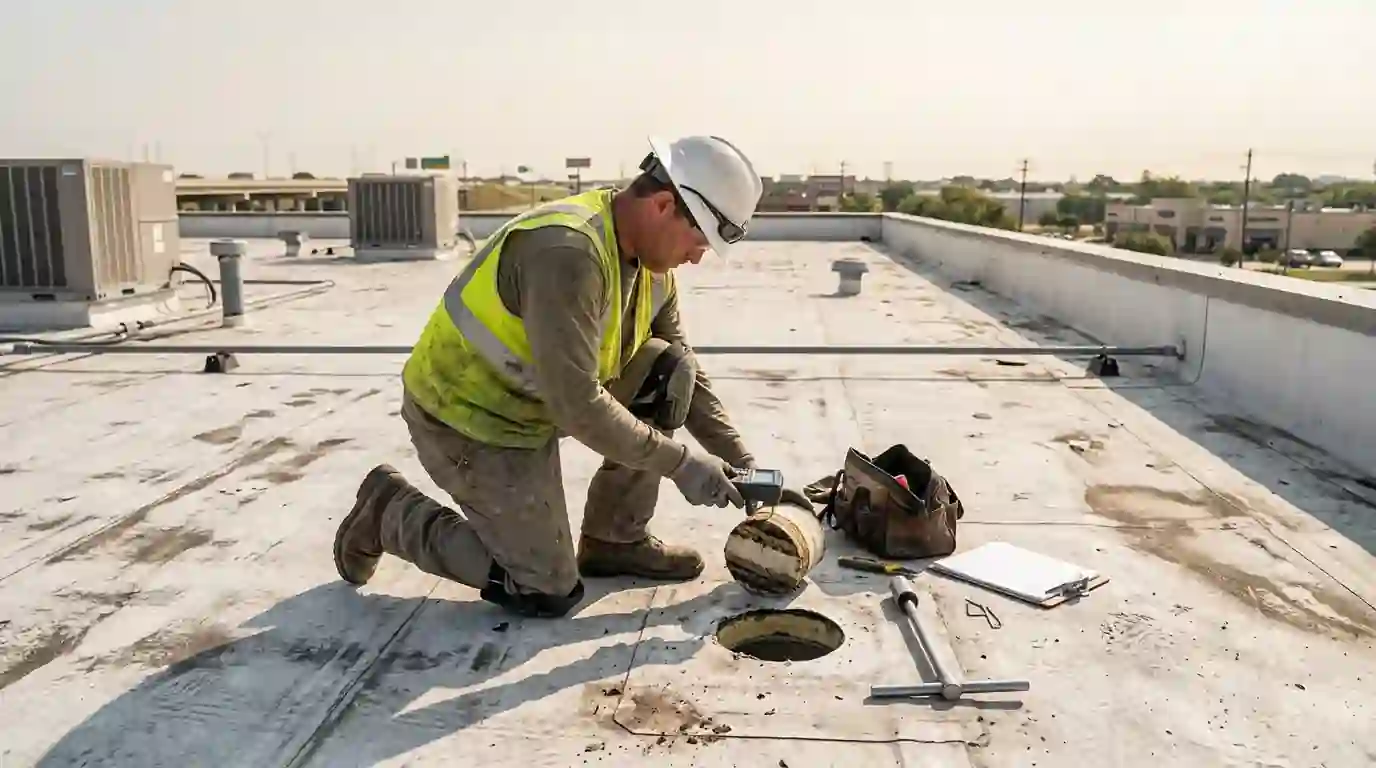
Coatings work on roofs that are tired on the surface but sound underneath: an aging TPO or EPDM membrane, a modified bitumen roof losing granules, a metal roof with rust and failing fasteners. The coating renews the waterproofing layer and the reflectivity; it does not fix a rotten deck or saturated insulation.
So every coating job starts with core samples and moisture readings. If more than a small share of the insulation is wet, we tell you it is a replacement, not a coating.
Updated September 2026
Budget
What moves the price of a roof coating
We do not use a published Dallas range for coatings; the core test and the roof type set the scope.
- Roof area
Priced per square foot of coated roof.
- Coating type
Silicone and acrylic differ in material cost.
- Dry thickness
Thicker systems cost more and last longer.
- Wet insulation
Found in cores, replaced before coating.
- Seam and fastener prep
Metal and old membranes need the most.
- Details
Drains, curbs and walls reinforced with fabric.
- Access and scheduling
Occupied buildings and weather windows.
Your options
Silicone or acrylic
Two common coating chemistries, compared for Dallas roofs.
| Compare | Silicone | Acrylic |
|---|---|---|
| Ponding water | Handles standing water well | Needs good drainage |
| Cleanliness and reflectivity | Attracts dirt over time | Stays whiter and cleaner |
| Recoating | Recoat only with silicone | Recoats easily |
Silicone coatings
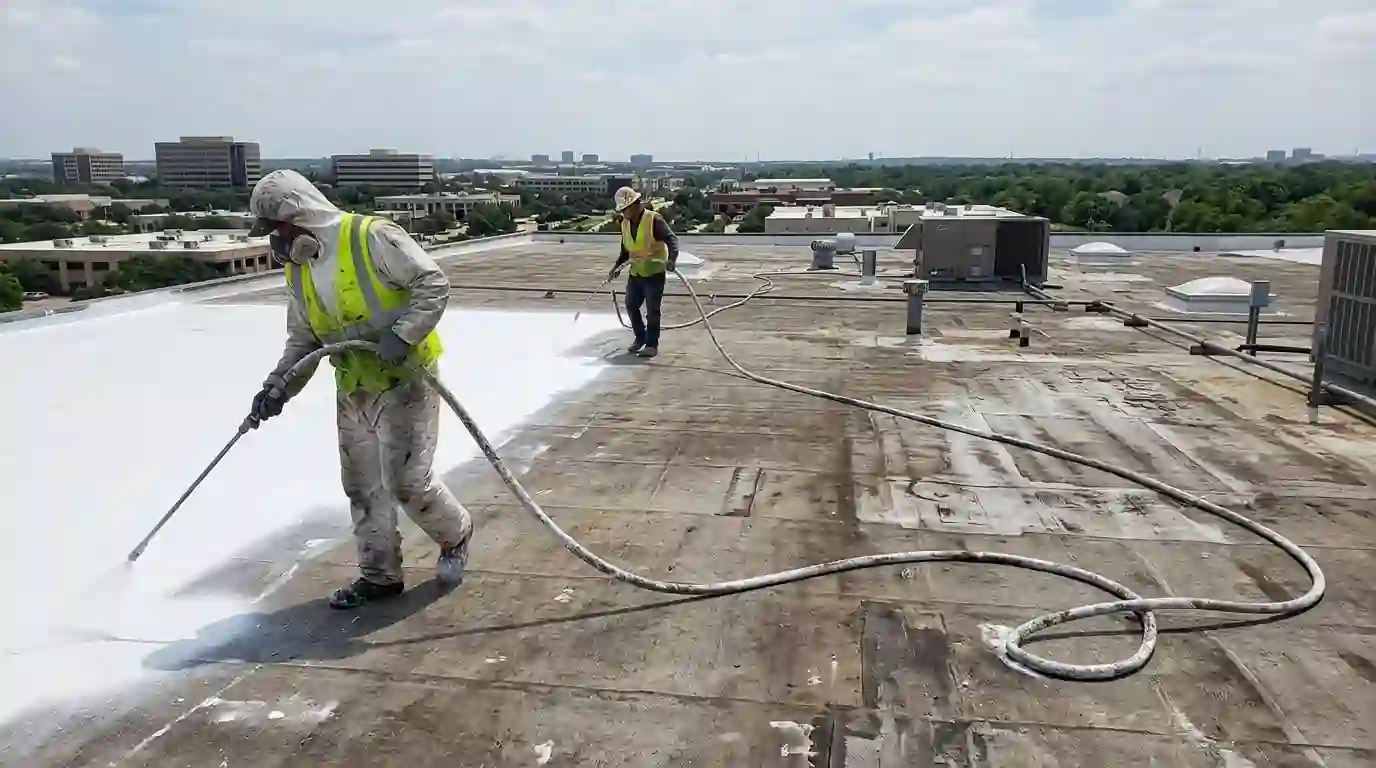
Silicone coatings resist ponding water better than any other coating type, hold up under UV for a long time, and stay flexible through temperature swings. That makes silicone the usual choice on flat Dallas roofs where some ponding is unavoidable. The trade-off is that silicone attracts dirt over time and is harder to recoat with anything except more silicone. We apply it in one or two passes to a specified dry thickness, measured with a wet-film gauge as we go.
Acrylic coatings
Acrylic coatings are water-based, bright white, and stay cleaner and more reflective than silicone, which helps cooling costs. They cost less and recoat easily. Their weakness is standing water, so we use acrylic on roofs with good drainage, on sloped metal roofs, and over roofs where tapered insulation has already corrected the ponding. Acrylics need dry weather above a minimum temperature to cure, so we schedule them for the right part of the Dallas year. On a roof with a few low spots, we fix the slope first.
Metal roof coatings
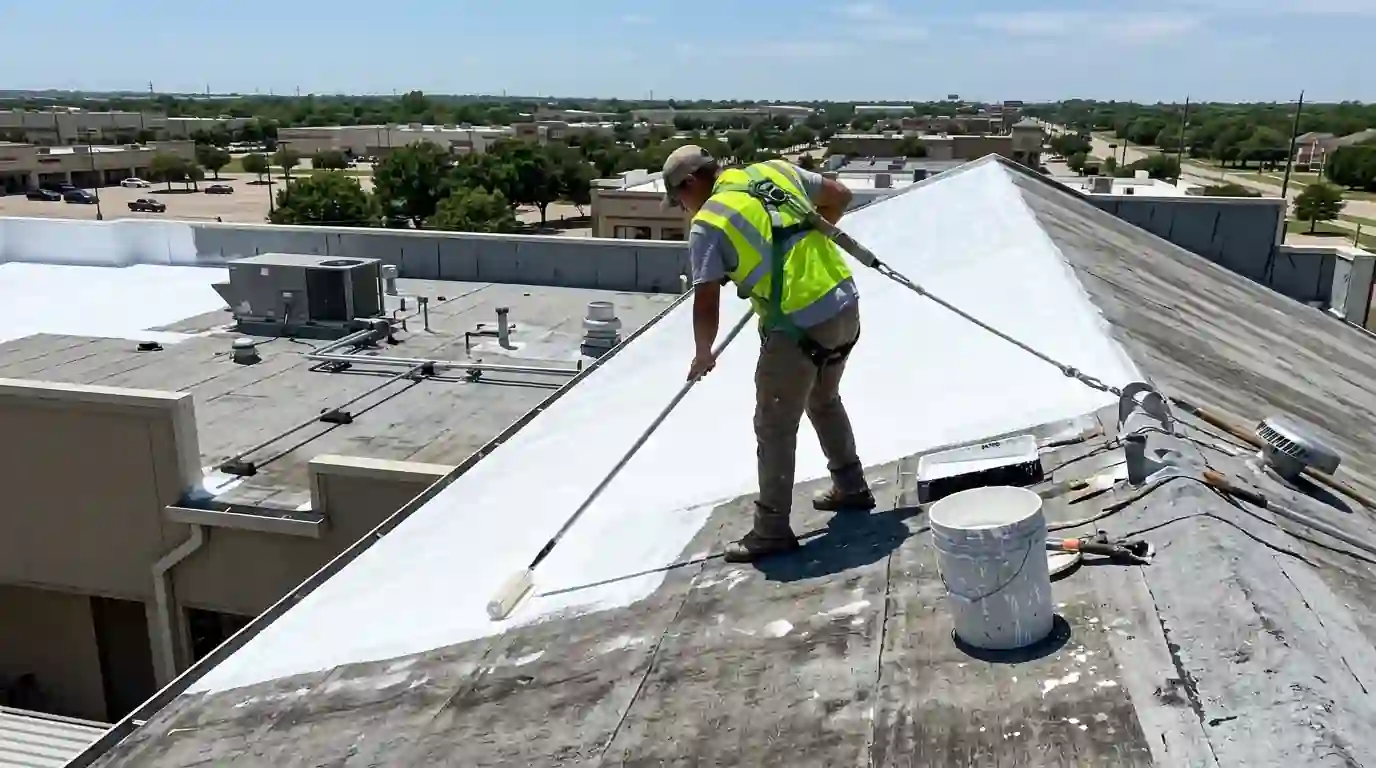
On a metal roof, the coating system starts with the fasteners and seams, where metal roofs actually leak. Rust is wire-brushed and treated with a rust-inhibitive primer, every exposed fastener is replaced or encapsulated, laps and seams are sealed with reinforced fabric and mastic, and then the field is coated. Done properly it turns a leaking, rusting metal roof into a watertight, reflective one without removing a single panel. Gutters and trim are coated or replaced at the same time, and every panel is checked for rust-through before the coat goes on, because a hole under a coating is still a hole.
Coating over existing membrane
Coating over TPO, EPDM, modified bitumen or built-up roofs requires the right preparation for each: power washing, adhesion testing with a small patch, repairing open seams and blisters, replacing any wet insulation found in the cores, and priming where the manufacturer specifies it. Skipping adhesion testing is the most common reason coatings peel, so we test on every roof. Details at drains, curbs and walls are reinforced with fabric before the field coat. Every step is photographed for your building file.
Roofing in Dallas
What we see on Dallas roofs
Dallas summers put a commercial roof under intense sun for months, and a dark membrane or bare metal roof can run far hotter than the air around it, pushing heat into the building below and aging the roof surface. A white coating reflects most of that sunlight back. On a large single-story warehouse or retail roof in this city, that reflectivity is a real part of the argument for coating, along with avoiding the cost and disruption of a tear-off while the building stays in use.
Thinking about replacing a flat roof?
Ask for a core test first. If the insulation is dry, a coating may give you years for far less.
(214) 429-4542What happens after you call
How a coating job runs
Core test and survey
Core samples, moisture readings and adhesion test.
Recommendation
Coat, repair or replace, with the evidence.
Clean
Power wash and let the roof dry.
Repair
Seams, blisters, fasteners and wet insulation.
Prime and reinforce
Primer where specified; fabric at details.
Coat
Base and top coats to the specified dry thickness.
Verify
Thickness readings and a photo record.
Brands we install and service
Questions we get
Roof coating questions
Only a structurally sound roof with dry insulation underneath.
Silicone where water ponds, acrylic where drainage is good; GACO, Tremco and Henry make both.
Yes, when the seams and details are repaired first.
White coatings reflect most sunlight, which reduces roof heat gain.
Yes, after fastener and seam work.
Yes, and a twice-yearly roof check tells you when.
Most roofs are coated in a few days once the weather cooperates.
Coating over wet insulation traps the water and fails.
Tired roof, sound deck? Test it before you replace it
Core samples tell you whether a coating will buy years or whether replacement is the honest answer.