Storm and emergency
Emergency roof repair in Dallas, day or night
Water is coming in now. The first job is stopping it, tonight if needed, with a tarp or a temporary seal that holds until the roof is dry enough for a real repair.
- We answer 24/7
- Dallas service office
- Tarped the same visit
- 24/7Calls answered
- DallasService office
- EnnisHead office
- 1 to 2Days, most re-roofs
Quick answer
Emergency roof repair in Dallas has two stages: first a temporary fix the same visit, which is a secured tarp over the opening, a sealed flashing, or a limb cut off the roof and the hole covered; then a permanent repair once the roof is dry and the damage is documented. We answer 24/7, and active leaks go to the front of the schedule.
The job
What happens between the call and a dry house
An emergency is rarely fixed permanently at 2 a.m. in the rain, and anyone promising that is guessing. What can be done is stopping the water: a tarp run over the ridge and battened down, a lifted flashing screwed and sealed, a punctured area covered with sheathing and membrane.
The permanent repair follows once the roof is dry and photographed, which also gives your insurer a clear record of what the storm did.
Updated September 2026
Warning signs
When it is an emergency, not an appointment
Water dripping through a ceiling
Active leak into living space.
A sagging or bulging ceiling
Water pooling above the drywall.
A limb through the roof
Structure may be damaged.
Missing sections of shingles
Deck exposed to the next rain.
Open ridge after wind
The whole peak can leak.
Water near electrical fixtures
Shut off power to that circuit.
Daylight through the ceiling
An open hole in the roof.
What happens after you call
From the call to a permanent repair
Call
Tell us where water is coming in and whether anything structural is damaged.
Safety first
If ceilings are sagging with water, stay out of that room.
On the roof
Damage photographed, then tarped or sealed.
Inside check
Attic and ceiling checked for water and framing damage.
Written record
Photos and notes for you or your insurer.
Permanent scope
Repair or replacement written up once the roof is dry.
Permanent repair
Scheduled and completed; tarp removed.
Emergency roof tarping
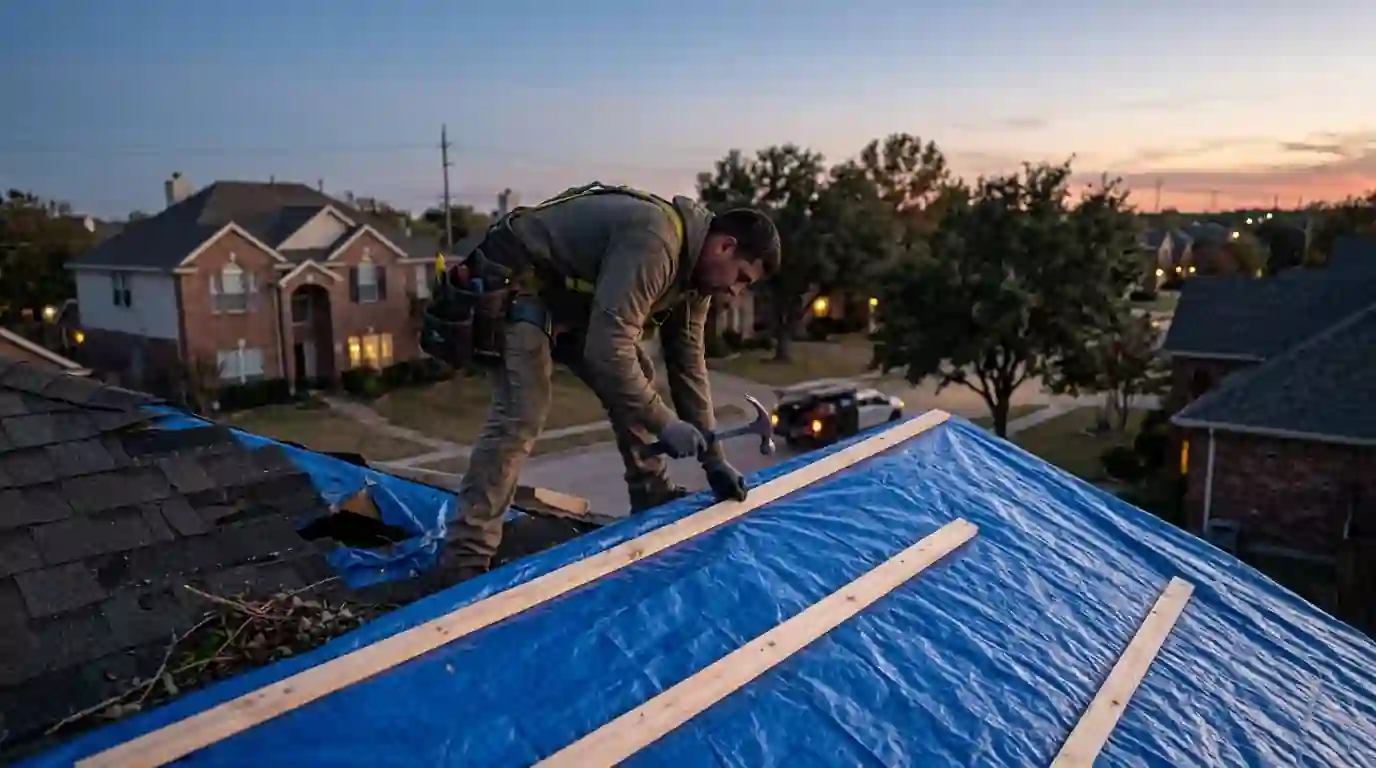
A tarp that works is run from past the damage up over the ridge, so water cannot get under its top edge, and held with wood battens screwed through the tarp into the deck rather than bricks or nails through grommets. Sandbags hold the eave edge. A properly battened tarp survives several weeks of weather, which is often how long a storm claim takes. We photograph the damage before covering it so the adjuster sees what was under the tarp.
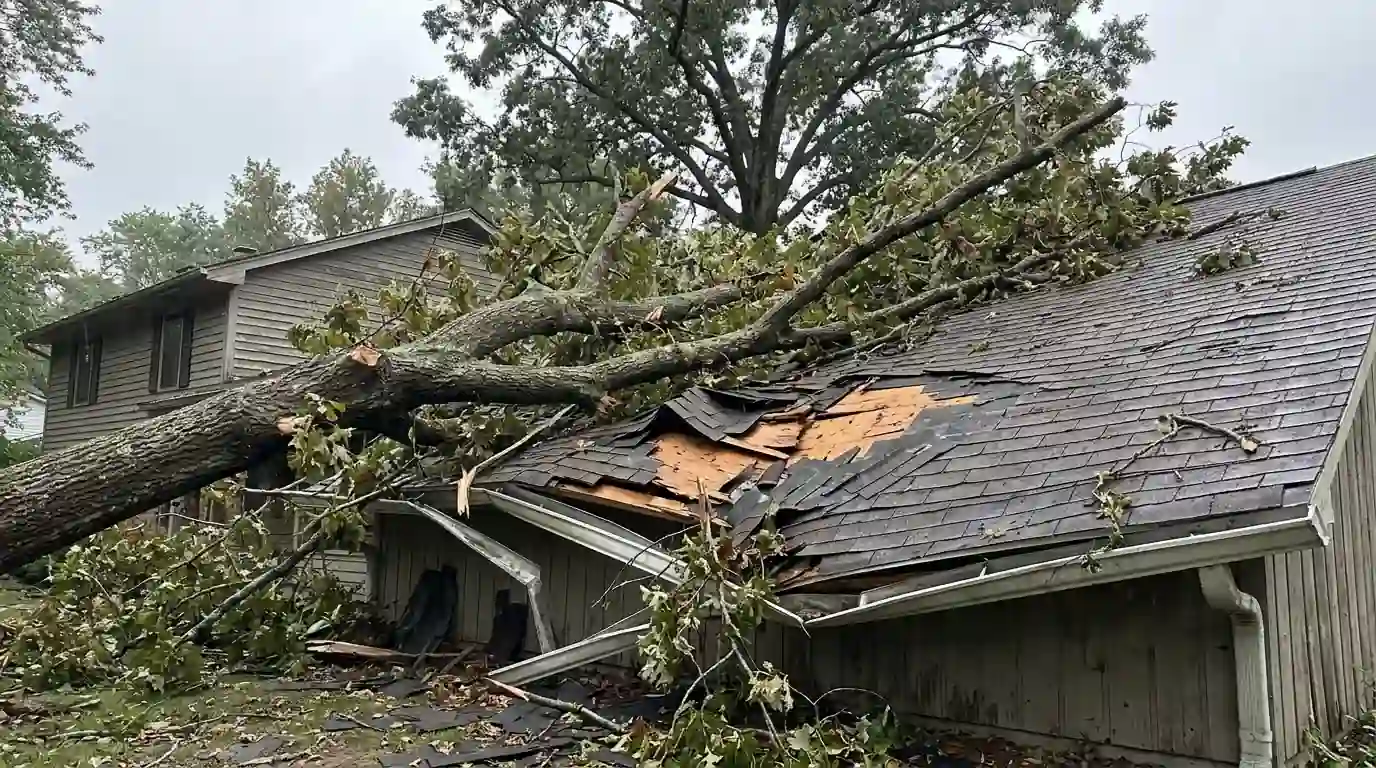
Tree impact damage
A limb through the roof means structure before shingles. The crew removes the tree load from the roof in sections so nothing falls further through, then checks the rafters and deck around the hole from the attic. Broken rafters are temporarily braced, the opening is covered with sheathing and membrane, and the permanent framing and roof repair is scheduled. We coordinate with a tree service for large trunks, since those need a crane rather than a roofer. Photos are taken before anything is moved, for the claim.
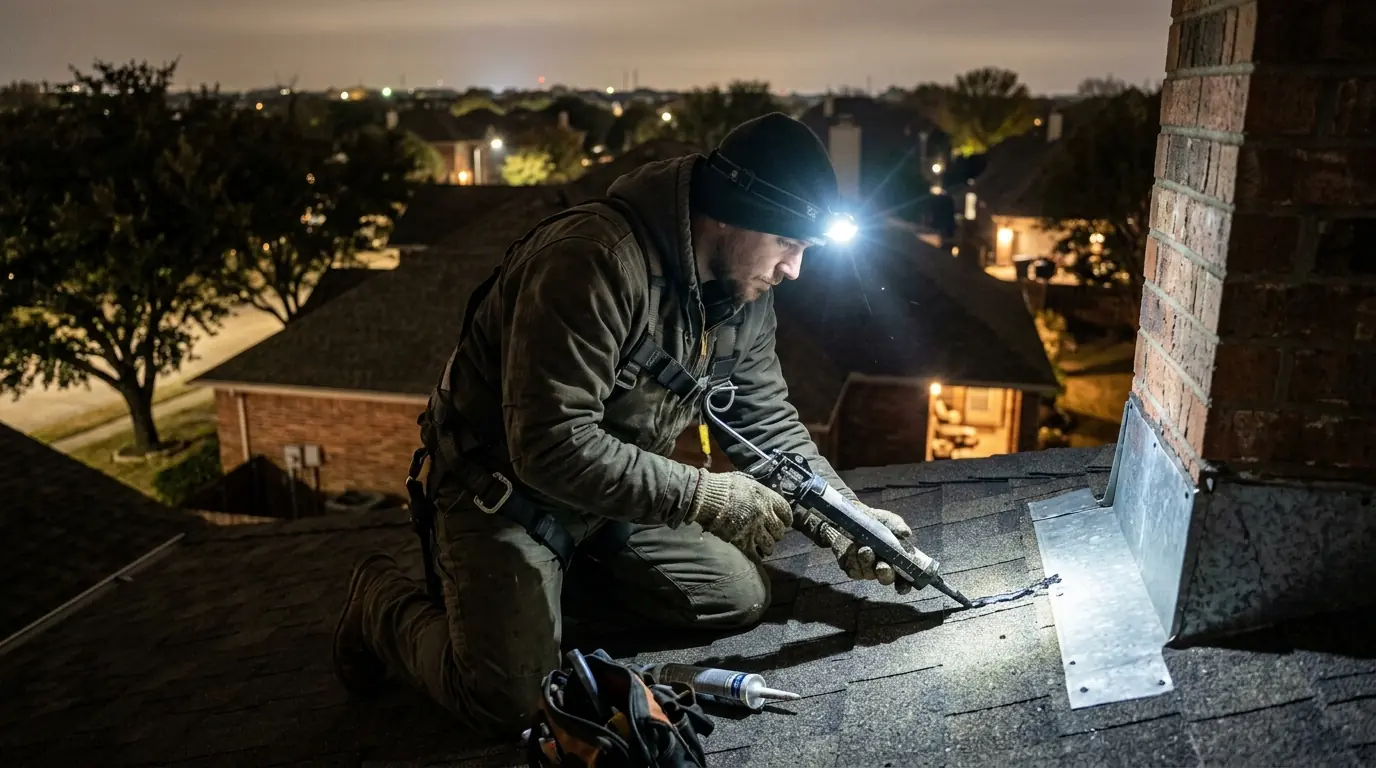
After-hours leak stops
Not every emergency is a storm. A pipe boot that split in the summer heat or a flashing that let go at the chimney can start dripping into a bedroom at any hour. At night the fix is targeted: find the entry point from the attic, seal it from the roof with membrane and sealant, and put a bucket and towel line where it is still dripping inside. The permanent repair is scheduled for daylight. You get photos of the entry point that same night.
Wind-lifted ridge caps
After a gusty front the ridge is often the first place water gets in, because missing caps leave the ridge vent or the top course open along the whole peak. As an emergency measure we cover the open ridge with a strip of membrane or a tarp secured along its length, so the attic stays dry until matching cap shingles can be installed. That permanent repair is usually done within a few days of the storm. We photograph the open ridge first so the claim shows the full length of the damage.
Do it yourself or call
What you can do before we arrive
A few things help. Climbing the roof in a storm is not one of them.
| Task | Doing it yourself | Having us do it |
|---|---|---|
| Catch the water | Buckets and towels under drips; move valuables. | We stop it at the roof. |
| Relieve a bulging ceiling | Only with care: a small hole releases trapped water. | Checked from the attic on arrival. |
| Photograph everything | Inside damage and anything visible from the ground. | We document the roof itself. |
| Tarp the roof | Dangerous in wind, rain or darkness. | Battened tarp, secured over the ridge. |
| Cut a limb off the roof | Risky; the load can shift. | Removed in sections safely. |
Roofing in Dallas
What we see on Dallas roofs
Storm season around Dallas does not come one storm at a time. By mid-May 2026 the Metroplex had already taken three hail-producing storms in a month, hitting southern Tarrant County in April and Denton and northern Tarrant counties in May, and the Storm Prediction Center rated that May above average for severe hail. When storms cluster like that, roofers across the region fill up in days, which is why we tarp first and schedule permanent repairs in order rather than leaving a house open.
Budget
What an emergency visit costs
Emergency work is priced by the visit and the materials used; there is no published Dallas range. These factors set it.
- Time of call
After-hours visits cost more than daytime ones.
- Tarp size
A small patch versus a slope-length tarp.
- Tree removal
Limbs off the roof, or a tree service for trunks.
- Temporary framing
Braces for broken rafters.
- Access
Steep or two-story roofs in the dark take longer.
- Permanent repair
Quoted separately once the roof is dry.
- Insurance
Emergency mitigation is usually part of a covered claim.
Questions we get
Emergency roofing questions
Yes, every night and weekend.
Active leaks go first; you get an arrival window on the call.
No, not in wind or rain. Put buckets down and call.
Emergency mitigation is usually covered as part of a storm claim.
A battened tarp holds for weeks, long enough for most claims.
Stay out of the rooms under it and call. We coordinate tree removal.
Rarely. The permanent repair needs a dry roof.
Keep people out of the room; a sagging ceiling holds water and can fall.
Water coming in right now? Call, and keep out from under it
We answer every hour of the night, stop the water first, and write up the permanent fix once the roof is dry.