Roofing guide
Hail hit your Dallas roof: what to do first
The storm has passed, the neighbors are on the phone, and a truck with a magnetic sign is already parked on your street. Here is the order to do things in.
- We answer 24/7
- Dallas service office
Quick answer
After a hail storm in Dallas, first check for active leaks and protect the inside, then photograph the gutters, vents, AC unit and any hail on the ground, note the date and time, and have the roof inspected before signing anything. File the claim once you know there is damage worth claiming. Do not let anyone onto the roof without an agreement you understand.
By Cyril Cross, Roofing Guides Editor · Updated September 2026
First hour: inside the house
Start inside, not on the roof. Walk every room under the roof and the attic if you can get into it safely. Look for drips, wet spots on ceilings, and water around light fixtures. If water is coming in, move valuables, put down buckets and towels, and if a ceiling is bulging with water keep people out of that room.
An active leak after hail is an emergency, and it is the one situation where calling a roofer before your insurer makes sense: get it tarped. Our emergency roof repair page explains what a proper tarp looks like.
The same day: photographs
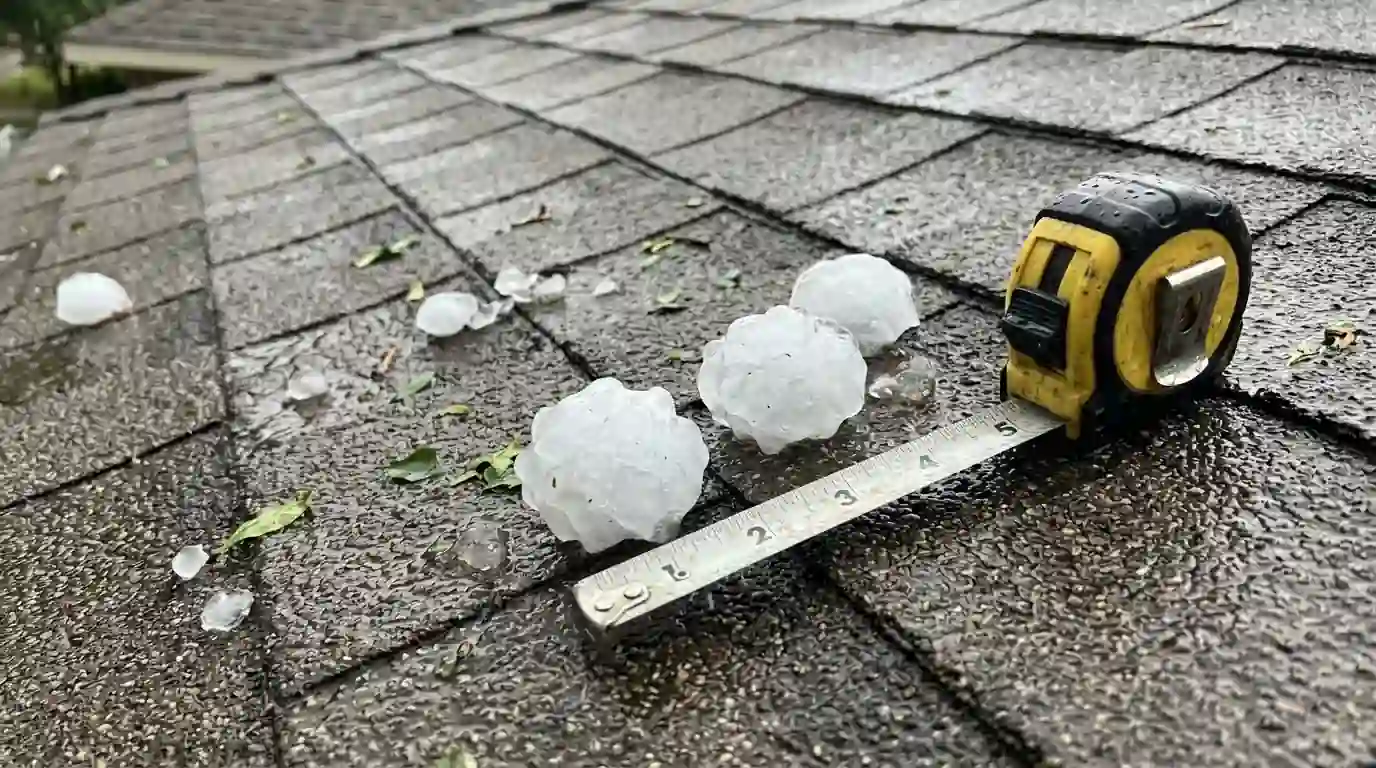
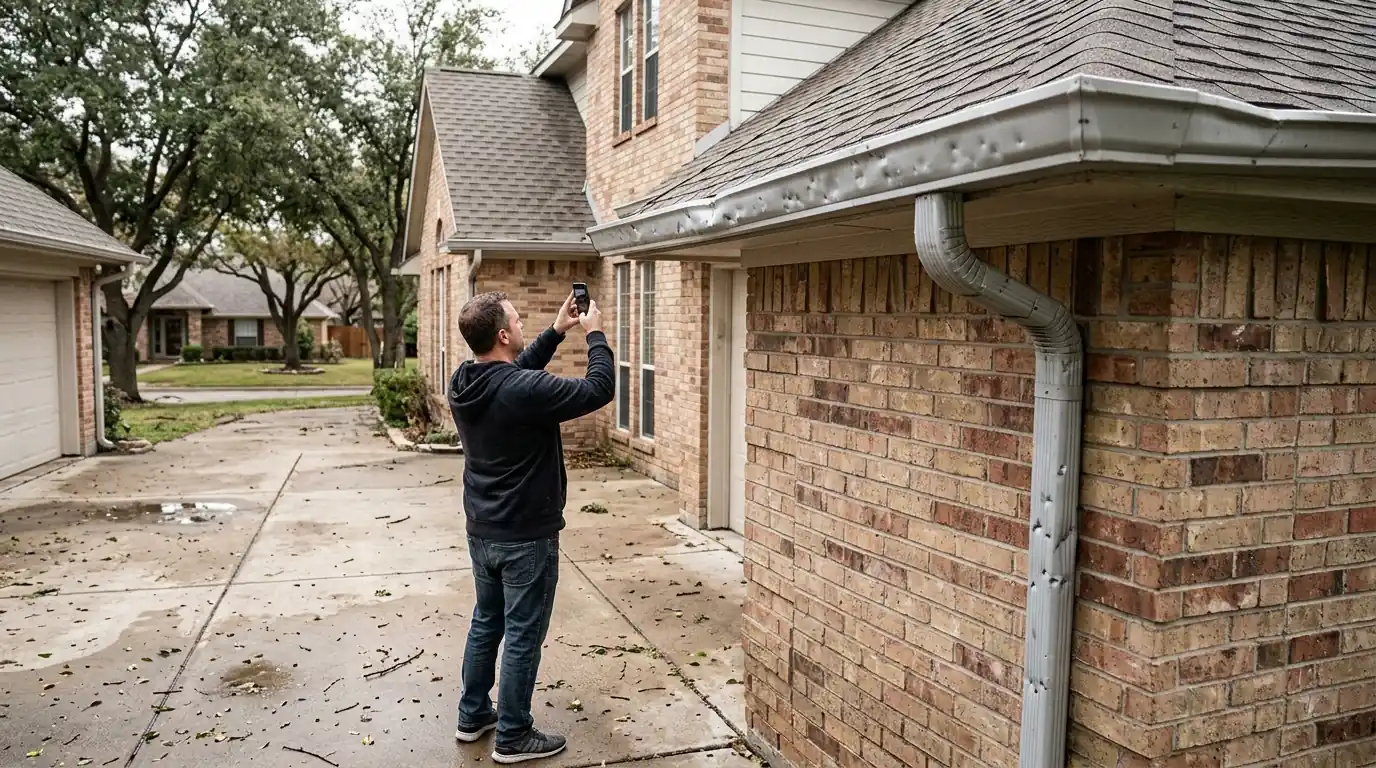
Hail evidence disappears fast. Stones melt within the hour, and granules wash down the street with the next rain. From the ground, photograph:
- Hail on the lawn or driveway next to a coin or tape measure for scale.
- The gutters and downspouts, especially dents on the top edge.
- Metal roof vents and the AC condenser fins.
- Window screens, siding and any dents on cars in the driveway.
- Your roof slopes from the street, even if you see nothing.
Note the date and time of the storm. North Texas storms often arrive in clusters; in spring 2026 the Metroplex took three hail-producing storms in under a month. Knowing which one damaged your roof matters to the claim.
The first two days: the inspection
Most hail damage cannot be seen from the ground. A hailstone bruises the shingle mat and knocks off granules; the bruise feels soft for a while and cracks months later. Only a walk of the roof finds it. A proper inspection circles hits inside ten-by-ten test squares on each slope and photographs them. That is what our hail damage repair visit starts with.
Get the inspection before you file if you can. If the roof has no real damage, you have avoided a claim on your record for nothing. If it does, the photos go with the claim from day one.
Talk to a Dallas roofer now
Describe the leak or the damage, and we will tell you whether it needs a tarp tonight or a scheduled visit this week.
(214) 429-4542Door-knockers and storm chasers
Texas has no statewide roofing license, so anyone can call themselves a roofer, and hail brings crews from out of state within days. You are not obliged to talk to anyone who knocks. The rules worth keeping:
- Do not sign anything at the door, including a form described as permission to inspect.
- Do not let anyone on your roof without knowing who they are and where their office is.
- Never accept an offer to waive or cover your deductible; it is illegal in Texas.
- Get a written report from an inspection you arranged, not one that arrived on your porch.
Our guide to choosing a roofer in Texas covers what to check instead of a license.
What the adjuster visit looks like
After you file, the carrier schedules an adjuster, usually a staff or independent adjuster who inspects the roof and writes an estimate. Expect them to walk the slopes, check test squares, look at the gutters, vents and siding, and photograph what they find. The visit often takes under an hour.
Have your roofer on the roof with them. It is not about arguing; it is about pointing to every marked test square and damaged vent so nothing is missed, and answering material questions on the spot. When the estimate arrives, compare it line by line with your roofer's scope. Missing items such as drip edge or code-required underlayment are added through a documented supplement, not a phone call.
You stay in charge of the claim throughout. A contractor in Texas cannot act as your public adjuster or negotiate the settlement for you; what a roofer can do is make sure the roofing facts are complete. That is how we handle storm replacements.
Filing the claim
Call your insurer or use their app once you know there is damage. Have the storm date, your photos and the inspection report ready. The carrier will send an adjuster; ask your roofer to be on the roof when they come, because most disagreements about scope are settled there.
Whether the adjuster writes a repair or a full replacement depends on how much damage is on each slope, the roof's age and your policy. The repair or replace guide explains how that decision usually goes.
Keep reading
More guides on this
Questions we get
After-hail questions
If water is coming in, a roofer for a tarp first. Otherwise an inspection first helps you decide whether to file.
Rarely. Dented gutters and vents are hints; shingle bruises need a roof walk.
Within days, before granules wash away and while the storm date is clear.
Not recommended. Wet shingles are slippery and damage is hard to judge without training.
No. Waiving or covering a deductible is illegal in Texas.
Read it carefully; some forms are contracts. Ask for a copy and get advice before any work starts.
Weather claims are treated differently from at-fault claims, but carriers vary. Ask your agent.
Storm just passed? Get the roof walked this week
A photographed, slope-by-slope report tells you whether you have a claim before you file one.