Repairs and roof components
Chimney crown, cap and chase cover repair in Dallas
A chimney leak is not always the flashing. Water also gets in from the top: through a cracked crown, an open flue with no cap, or a rusted metal chase cover that has turned into a funnel.
- We answer 24/7
- Dallas service office
- Masonry and metal above the roof
- 24/7Calls answered
- DallasService office
- EnnisHead office
- 1 to 2Days, most re-roofs
Quick answer
Chimney top repair in Dallas covers rebuilding or sealing a cracked mortar crown on a masonry chimney, fitting a stainless steel cap to keep rain, animals and debris out of the flue, replacing rusted metal chase covers on framed chimneys, and repointing loose mortar joints above the roofline. It is the work that stops chimney leaks the flashing is not causing.
Warning signs
Signs the top of your chimney is failing
Water in the firebox
Rain getting down the flue or through the crown.
Rust stains below the chase cover
Cover rusting through.
Cracks across the crown
Visible from a ladder or with binoculars.
Crumbling mortar joints
Sand-like mortar at the top courses.
Animals in the chimney
No cap, or a damaged one.
White staining on the brick
Water moving through the masonry.
Stains on walls beside a framed chimney
Chase cover leaking.
The job
Three ways water gets into a chimney from the top
A masonry chimney ends in a crown, a sloped slab of mortar or concrete that sheds water away from the flue. Crowns crack in the heat, and water goes straight down inside the brick. An uncapped flue lets rain fall directly into the firebox or the chase. On framed chimneys with siding, the metal chase cover on top rusts, dishes and holds water until it leaks.
We look at all three, and at the flashing, before blaming any one of them. The water stain inside does not tell you which it is.
Updated September 2026
Budget
What decides the cost of chimney top repairs
Chimney work is priced by what is failing; there is no published Dallas range we use. These factors set it.
- Crown seal or rebuild
Sealing cracks costs far less than a new crown.
- Cap size
Single flue caps versus a multi-flue top mount.
- Chase cover size
Custom covers are fabricated to measure.
- Mortar work
Priced by the joints repointed and bricks replaced.
- Chimney height
Tall chimneys need staging on the roof.
- Flashing
Often replaced at the same time.
- Historic matching
Matched brick and lime mortar on older homes.
Cracked chimney crowns
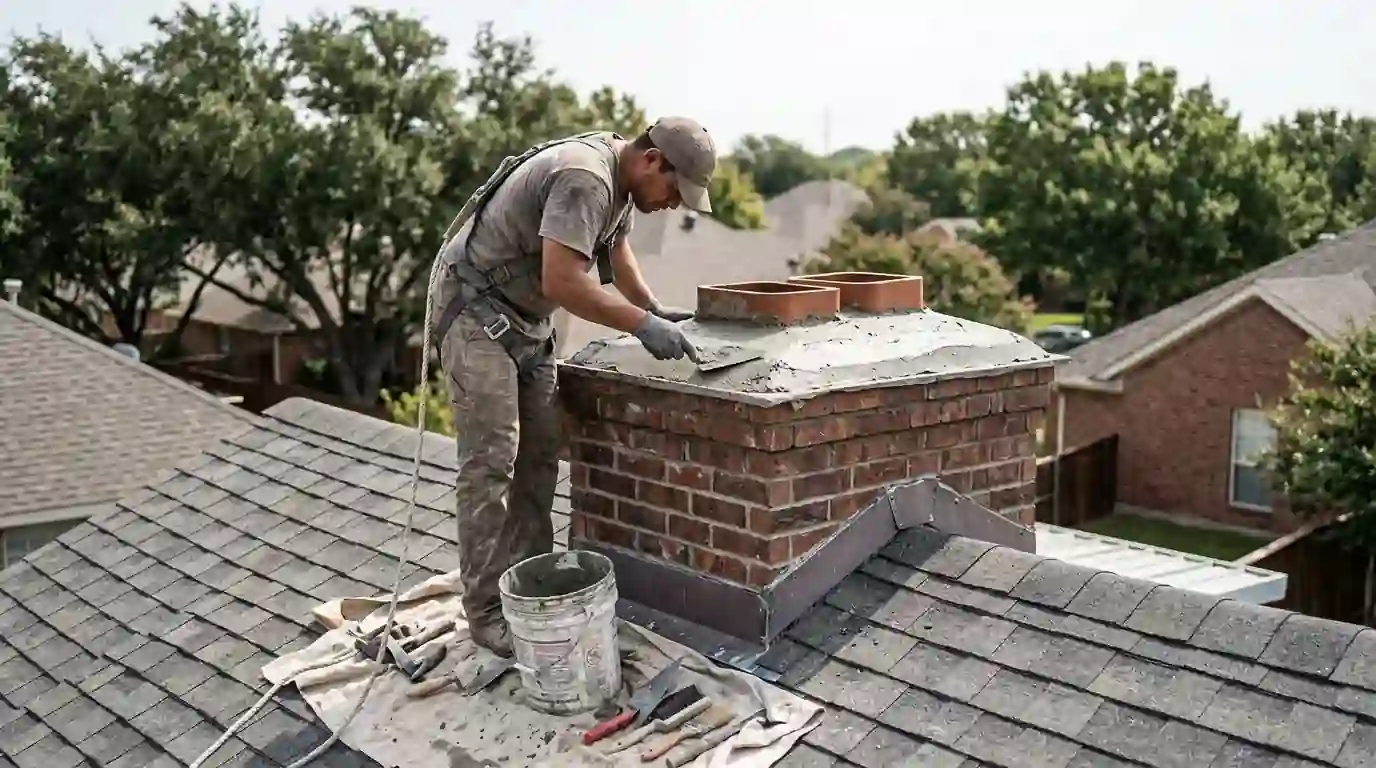
Hairline cracks in a sound crown are cleaned and sealed with a flexible crown coating that bridges movement. A crown that is crumbling, too thin or built flat is removed and replaced with a new, properly sloped crown that overhangs the brick with a drip edge, so water falls clear of the face instead of running down it. A gap between the crown and the flue tile is sealed with a flexible sealant, because a rigid joint there cracks again with the first hot week.
Chimney caps and spark arrestors
A cap keeps rain out of the flue, keeps birds, squirrels and raccoons from nesting inside, and with spark arrestor mesh stops embers from reaching the roof. We measure the flue, fit a stainless steel cap sized to it, and fasten it securely enough to stay put in a North Texas wind. Multi-flue chimneys get a single top-mount cap that covers every flue. Galvanized caps rust within a few years here, so we use stainless. Any nest inside is cleared before the cap goes on.
Metal chase covers
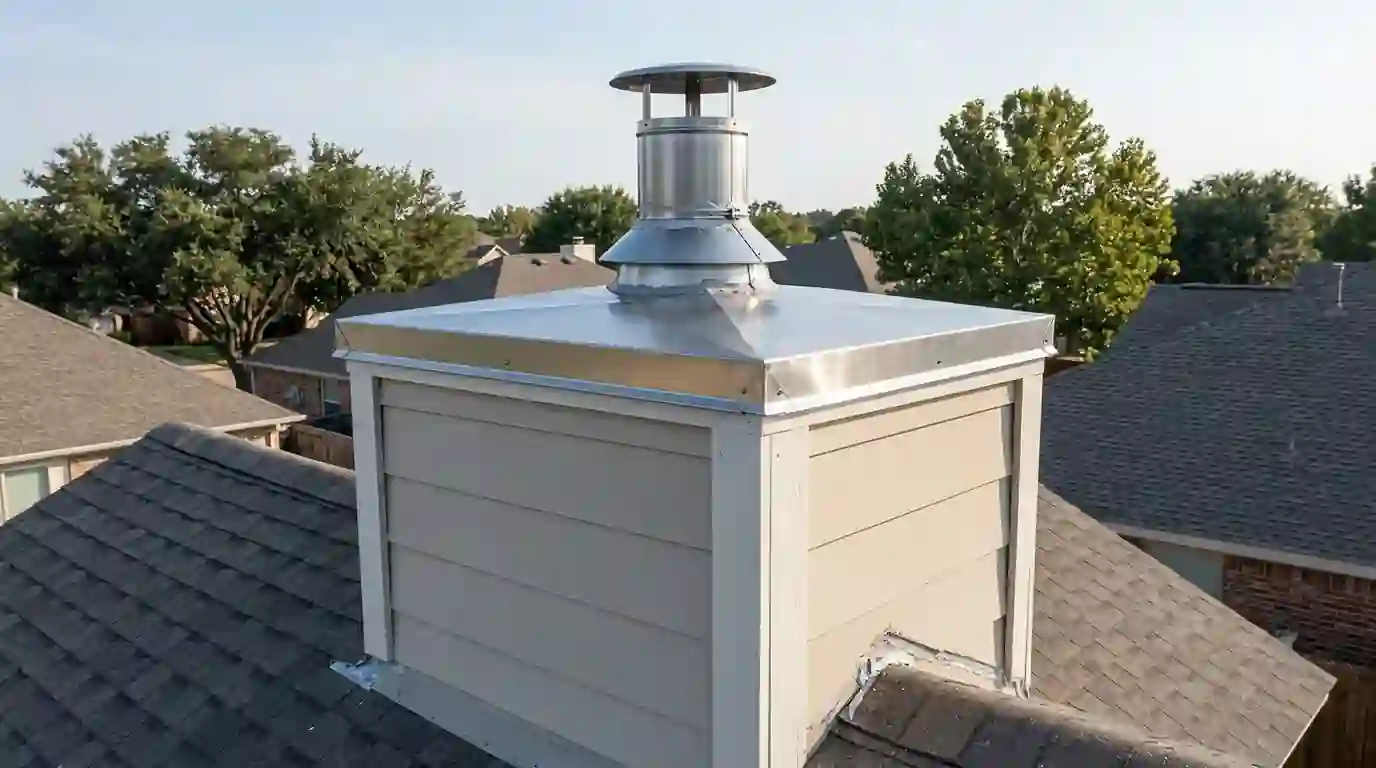
Framed chimneys, common on Dallas homes with prefabricated fireplaces, are topped with a metal chase cover that seals the box around the flue pipe. Builder-grade covers are thin galvanized steel that rusts, sags in the middle and holds water. We replace them with a custom-fabricated cover in heavier stainless or painted steel, with cross-breaks or a slope so water runs off, a drip edge on every side, and a new storm collar around the flue pipe. The siding just below is checked for rot while the cover is off.
Chimney tuckpointing above the roof
Above the roofline, a chimney takes the full weather on four sides, and mortar joints erode first. We grind out loose or cracked joints to a sound depth and repoint with mortar matched to the brick's age and hardness; on older homes that usually means a softer lime-based mix, since hard modern mortar can crack old brick. Spalled bricks are replaced. Tuckpointing is usually paired with new counterflashing so the whole chimney top is sound at once. The work is photographed course by course.
Roofing in Dallas
What we see on Dallas roofs
The early twentieth-century homes of Munger Place and Old East Dallas were built with tall masonry chimneys, and a century of North Texas heat cycles has left many with crumbling crowns and eroded mortar above the roof. On those houses we match the original brick and use a softer lime-based mortar, because a hard modern mix can crack century-old brick. The same neighborhoods often have landmark rules on visible masonry, so any rebuild keeps the chimney's original profile.
What happens after you call
How a chimney top repair runs
Find the water path
Crown, cap, chase cover, masonry and flashing all checked.
Scope
What failed and what the fix is, with photos.
Measure
Flue and chase sized for caps and covers.
Masonry work
Crown rebuilt or sealed; joints repointed.
Metal work
Cap fitted; chase cover and storm collar installed.
Flashing check
Counterflashing replaced if needed.
Water test
Hose test around the chimney top.
Do it yourself or call
Chimney top repairs yourself or calling us
Most of this is at the highest point of the house.
| Task | Doing it yourself | Having us do it |
|---|---|---|
| Checking with binoculars | A safe first look from the yard. | Close inspection on the roof. |
| Sealing crown cracks | Needs the right flexible coating. | Sealed or rebuilt as needed. |
| Fitting a cap | Measuring and fastening at height. | Stainless cap sized and secured. |
| Replacing a chase cover | Custom fabrication required. | Fabricated to measure, with drip edges. |
| Repointing mortar | Mortar choice matters on old brick. | Matched mortar, spalled bricks replaced. |
Questions we get
Chimney top questions
Stains high in the firebox or chase point to the top; stains on the ceiling beside it point to flashing.
Yes, to keep out rain, animals and debris.
Most builder covers are thin galvanized steel that holds water.
Hairline cracks can be sealed; crumbling crowns are replaced.
No; we repair the parts above the roof.
Yes, including softer lime mortar on older homes.
Caps and covers take hours; crowns and repointing a day or two.
Yes, so the chimney and roof are sealed together.
Chimney leaking and the flashing looks fine?
We check the crown, the cap and the chase cover and fix the one that is actually letting water in.