Replacement and new roofs
New construction roofing in Dallas
On a new build the roof is on the critical path: framing waits on the dry-in, the dry-in waits on the roofer, and the inspection waits on both. We schedule to your framing, not the other way around.
- We answer 24/7
- Dallas service office
- Framing and roofing, one company
- 24/7Calls answered
- DallasService office
- EnnisHead office
- 1 to 2Days, most re-roofs
Quick answer
New construction roofing in Dallas covers the dry-in and final roof on custom homes, additions and second-story builds: we install underlayment and flashings as soon as the sheathing passes, so the structure is weather-tight for the other trades, then come back for shingles, metal or tile once windows and siding are set. Work is built to the 2021 International Residential Code as Dallas amends it.
The job
Roofing a house that is still being built
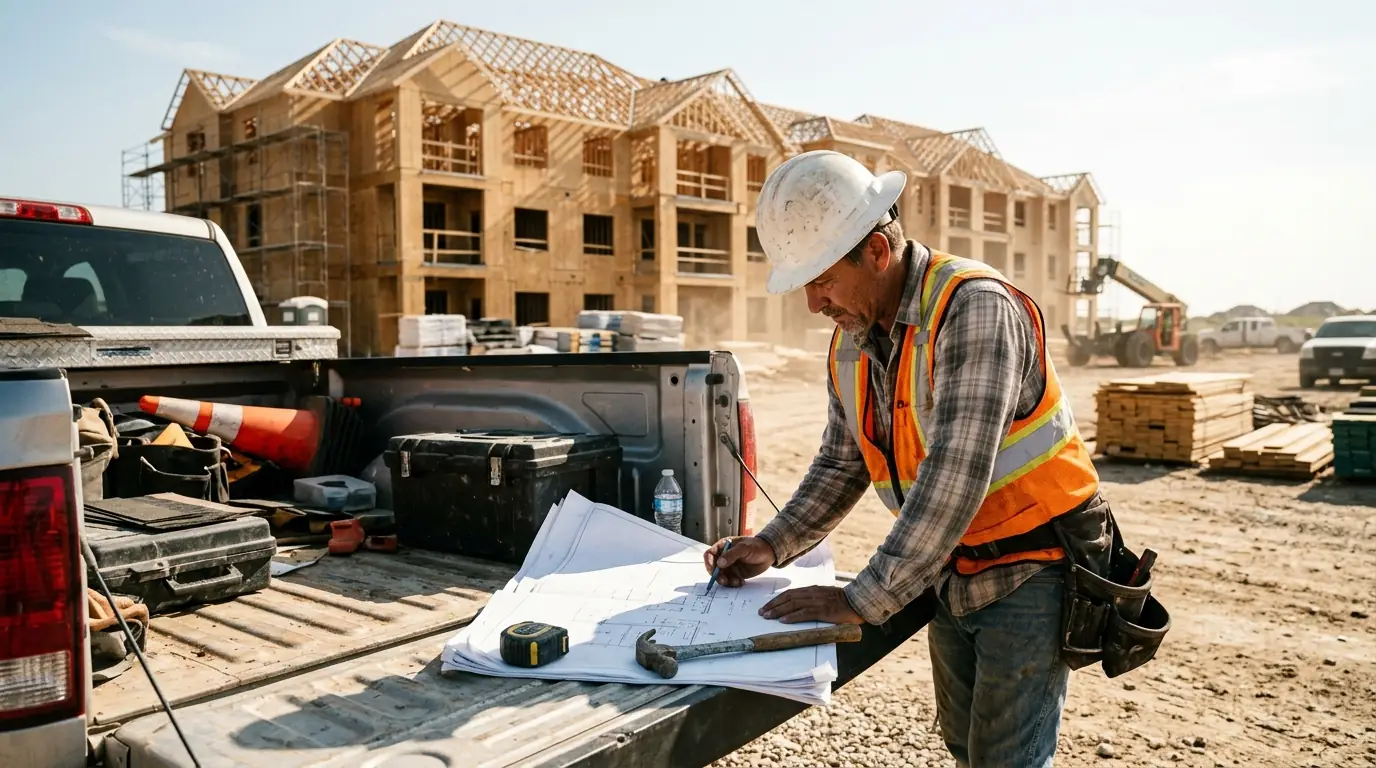
New work is two visits, not one. The dry-in closes the building against weather as early as possible so drywall and electrical can start; the finish roof goes on later, after exterior trades have stopped walking on the deck. Doing both in one pass on a busy site usually means a damaged roof on day one.
Because the company also does general construction, we read framing plans, catch problems at the valleys and walls before they are sheathed, and speak the same schedule as the builder.
Updated September 2026
Budget
What sets the price of a new-construction roof
New roofs are priced from the plans; there is no single published Dallas range for them. These factors set the bid.
- Roof area from the plans
Measured in squares from the drawings.
- Roof complexity
Hips, valleys, dormers and pitch changes add labor.
- Finish material
Shingle, Class 4, metal or tile.
- Low-slope sections
Porches and flat sections need membrane.
- Ventilation design
Ridge, soffit and any mechanical exhaust.
- Number of visits
Dry-in and finish, plus return trips.
- Change orders
Scope changes priced in writing.
Your options
Finish roof options for a new Dallas home
Decide early, because the material changes the sheathing and framing details.
| Compare | Architectural shingle | Class 4 shingle | Standing seam metal |
|---|---|---|---|
| Hail performance | Standard | UL 2218 Class 4 | Class 4 on most panels |
| Framing impact | None | None | None; tile would need more |
| Look and life | Layered shadow line, 25 to 30 years | Same look, longer hail life | Clean modern lines, 40 years or more |
Scope
What our new-construction roof includes
The same scope on every build, written into the bid.
- Plan review before bidding
- Sheathing checked before dry-in
- Synthetic underlayment dry-in
- Ice and water at valleys and eaves
- Drip edge and step flashing
- Penetrations coordinated with trades
- Balanced ridge and soffit ventilation
- GAF, Owens Corning or CertainTeed shingles, or metal or tile
- On site for the roofing inspection
Custom home roofs
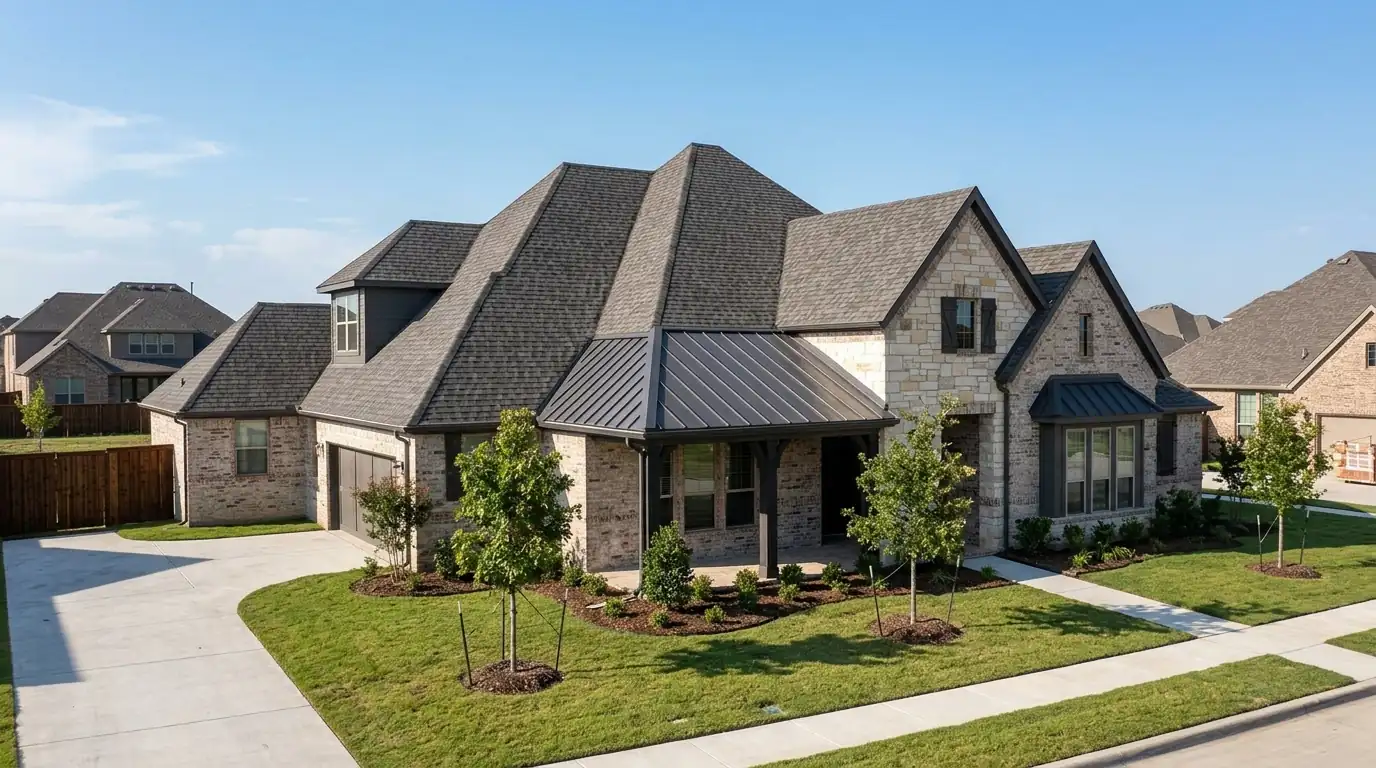
Custom homes bring the complicated roof lines: intersecting hips, dormers, low-slope sections over porches and several materials on one house. We work from the plans, lay out valleys and crickets before the sheathing is covered, and specify the underlayment, flashing and ventilation for each section rather than one detail for the whole roof. Owners choose the finish material with us early, because metal or tile changes how the framing and sheathing should be done. Low-slope porch sections get membrane, not shingles.
Additions and second stories
An addition means tying a new roof into an old one. We open the existing roof back to sound material, weave or step the new roof into it, and flash every new wall where it meets the old slope. A second story over an existing home means the original roof comes off entirely; we dry in the new level quickly because the house below is occupied, and match or replace the lower roofs so the whole house carries one system.
Builder and GC coordination
Builders want one thing from a roofer: showing up when promised. We confirm dry-in dates against the framing schedule a week out, keep the site clean of debris each day, and coordinate penetrations with the plumbing, HVAC and electrical trades so nothing is cut through the finished roof later. Written change orders cover anything that moves the scope, so the builder never gets a surprise invoice at closeout. One point of contact on our side stays with the job from bid to closeout, so the builder never has to explain the job twice or chase a different person for each visit.
Dry-in and inspections
Dry-in means synthetic underlayment, ice and water shield in the valleys and at eaves, drip edge and temporary flashings, installed the day the sheathing passes. The house is then weather-tight for the interior trades. Final roofing follows the city's inspection sequence, and we are on site for the roofing inspection with the ventilation and flashing details visible so the inspector is not waiting on us. If the inspector asks for a change, it is made before the next trade needs the roof, so the build schedule does not slip behind it.
Roofing in Dallas
What we see on Dallas roofs
Dallas builds to the 2021 International Residential Code with local amendments, and roofing inspections are part of that sequence, so new-construction roofs here are detailed to what the inspector will look for: fastener patterns, underlayment type, flashing and ventilation. Building inspection publishes its fee schedule and takes permit questions at 214-948-4480; on a new home the builder normally holds the permit and we work under it, keeping our part inspection-ready on the builder's timeline.
What happens after you call
How a new-construction roof runs
Plan review
Roof plan, pitches, materials and ventilation checked.
Bid and schedule
Priced from the plans and tied to the framing dates.
Sheathing check
Deck inspected before we cover it.
Dry-in
Underlayment, ice and water, drip edge and temporary flashings.
Trades coordination
Penetrations placed before the finish roof.
Finish roof
Shingles, metal or tile, ridge and vents.
Inspection and closeout
On site for the inspection; paperwork to the builder.
Brands we install and service
Questions we get
New-construction roofing questions
Yes, or under your builder. Either way we follow the build schedule.
On the date agreed with the builder once the sheathing passes.
Yes; the tie-in is where most addition leaks start, so it gets the most attention.
Yes, and we specify framing and sheathing needs early.
On a new home, usually the builder; we work under it.
The dry-in does; the finish roof follows once exterior trades are clear.
Yes, balanced ridge and soffit sized to the attic.
We can install them after the finish roof, or leave them to your builder.
Framing going up? Get the roof on the schedule
Send the plans and the framing dates; we will bid from the drawings and lock in the dry-in.