Commercial roofing
Commercial roof maintenance in Dallas
A flat roof nobody walks for five years fails the same way every time: a clogged drain, an open seam, a cracked pitch pan, and a ceiling full of wet insulation before anyone notices. Two visits a year prevents most of it.
- We answer 24/7
- Dallas service office
- Written report every visit
- 24/7Calls answered
- DallasService office
- EnnisHead office
- PhasedAround your tenants
Quick answer
Commercial roof maintenance in Dallas is a scheduled visit, usually spring and fall, where a roofer walks the whole roof, clears drains and gutters, probes seams, checks flashings at walls, curbs and penetrations, fixes small defects on the spot, and delivers a dated photo report. The report is also the record an insurer or a future buyer asks for after a storm.
The job
What a maintenance program actually does
Most commercial roof failures start small and stay invisible from the ground: a drain strainer missing, a seam lifting at a corner, sealant pulled away from a pipe. On a maintained roof those get fixed in minutes; on an ignored one they soak the insulation for months before the first ceiling tile stains.
The program also creates paper. Manufacturers often require documented maintenance to keep a roof warranty valid, and a claim goes smoother when the roof's condition before the storm is on file.
Updated September 2026
Semi-annual inspections
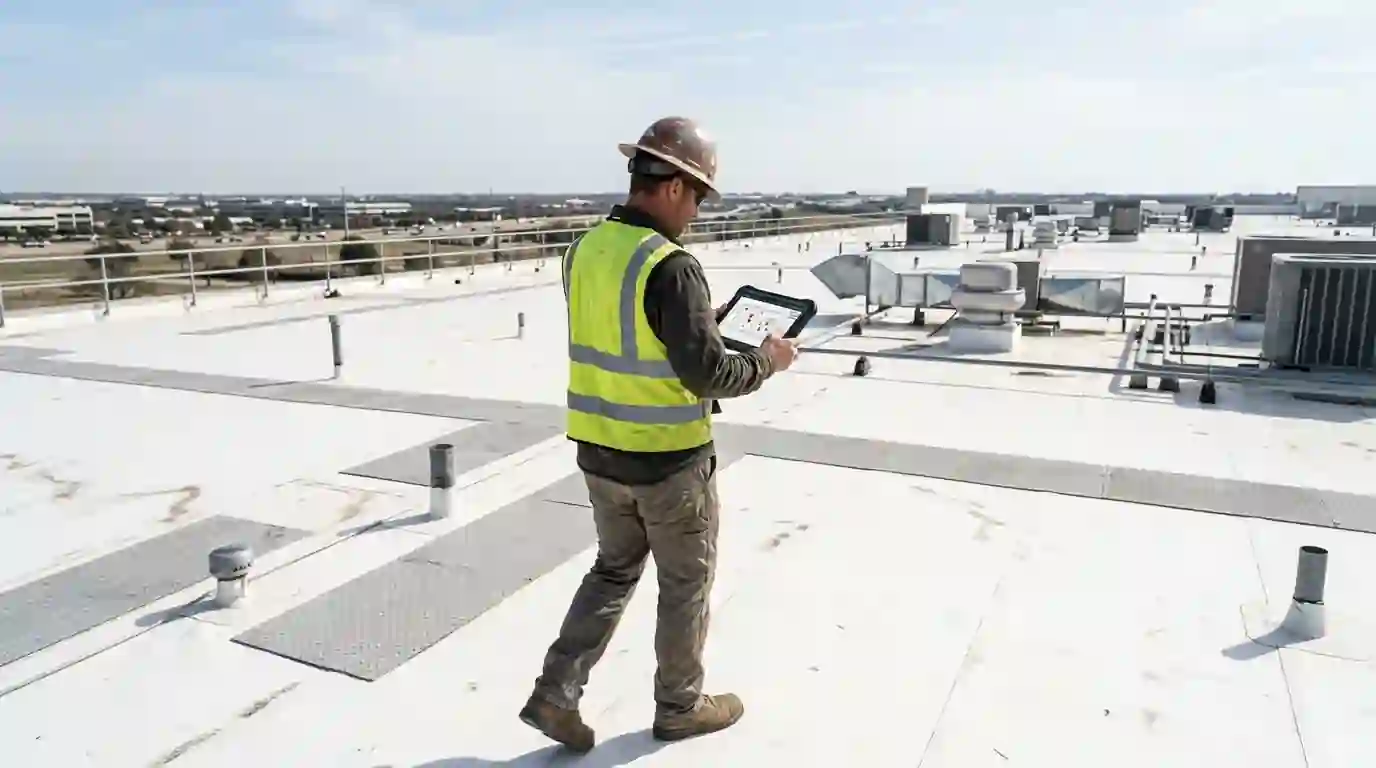
We schedule one visit in spring before the storm season and one in fall after the trees drop, so the roof goes into each season clean and checked. The roofer walks the full field and perimeter, not just the problem area, and records every defect on a roof plan with a photo and a location. Small items are fixed during the visit; anything larger is written up with a scope and price for you to approve. Visits after a named storm are added at your request.
Drain and gutter clearing
Clogged drains cause more commercial leaks and more structural risk than anything else on a flat roof, because a blocked drain lets water pond and add weight across the deck. Every visit clears interior drains, scuppers, gutters and downspouts, replaces missing strainers and checks that overflow scuppers are open. We also note where debris is coming from, such as an overhanging tree or rooftop equipment, so the source can be dealt with instead of cleaned forever. Debris is bagged and removed, never swept off the edge.
Seam and flashing checks
Seams are probed along their length, since a seam can look closed on top and be open underneath. Wall flashings, curb flashings, pitch pans and termination bars are checked for pulled sealant, loose fasteners and split corners, which are the typical early failures on TPO, EPDM and modified bitumen roofs. Resealing and small patches are done the same visit, and each one is photographed before and after so you can see exactly what was done. Loose edge metal is refastened on the spot.
Roof asset reports
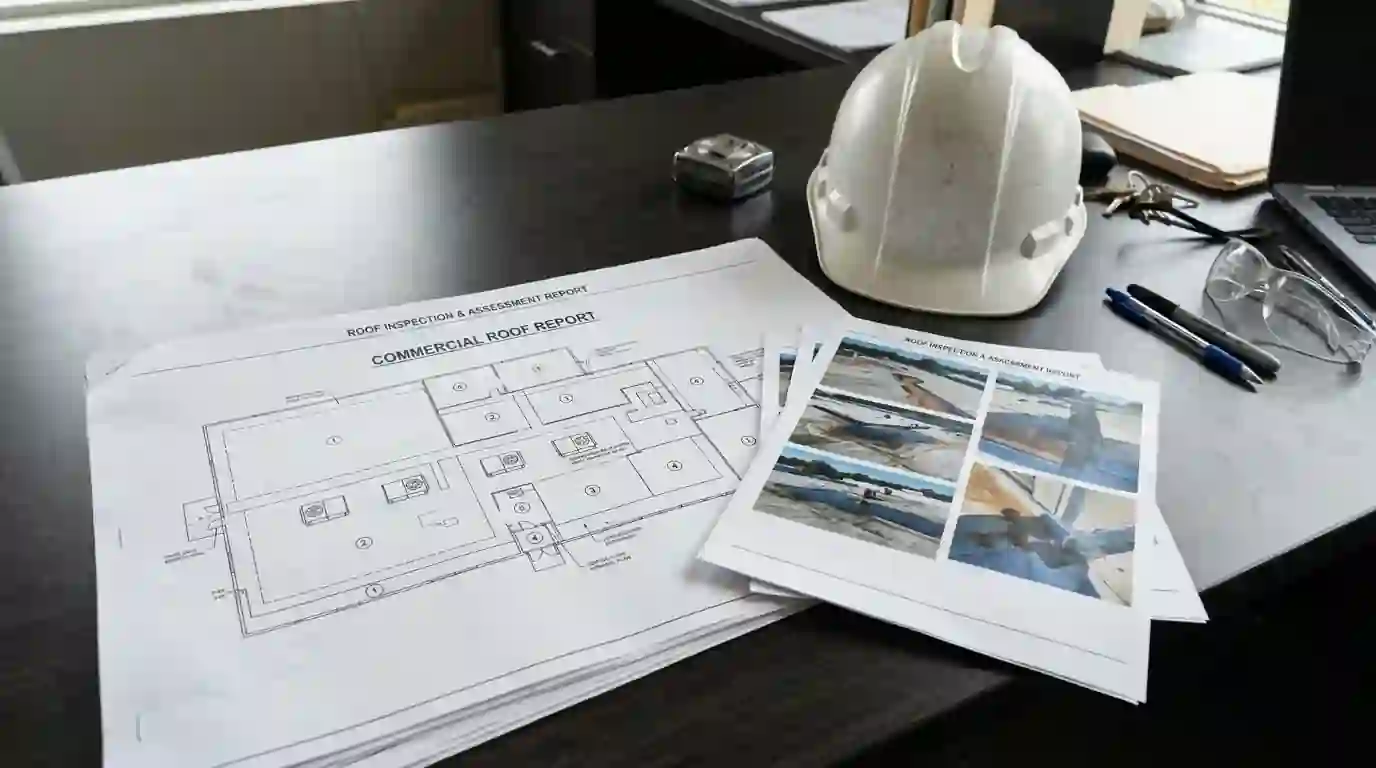
Each visit produces a dated report: a roof plan with numbered defects, photos, what was fixed, what is recommended, and an honest estimate of remaining service life. For property managers with several buildings, the reports let you budget replacements years ahead instead of reacting to leaks. We keep the history on file, so the fifth report shows how the roof has changed since the first, which is what an owner or buyer really wants to know. Reports go to whoever you name, owner or manager.
Scope
What every maintenance visit covers
The same list on every visit, checked off in the report.
- Full field and perimeter walk
- Interior drains and strainers cleared
- Scuppers, gutters and downspouts cleared
- Seams probed along their length
- Wall and curb flashings checked
- Pitch pans and penetrations resealed
- Edge metal and coping secured
- Small defects repaired on site
- Dated photo report with roof plan
What happens after you call
How a maintenance visit runs
Schedule
Spring and fall dates set for the year.
Access
Roof hatch or ladder access arranged with the manager.
Full walk
Field, perimeter, drains, seams and penetrations.
Clear and fix
Drains cleared, small defects repaired.
Photograph
Every defect and repair photographed and located.
Report
Dated report with plan, photos and recommendations.
Follow-up
Larger items quoted separately for approval.
Roofing in Dallas
What we see on Dallas roofs
Once a year on average, a hail event damages roofs across DFW, and after a big one every roofer in the region is booked for months. A maintained commercial roof has two advantages in that week: a recent dated report showing its condition before the storm, and a contractor who already knows the building and has it on the schedule. That is the practical reason we set maintenance visits for spring and fall rather than waiting for the next hail season to decide them.
Budget
What a maintenance program costs
Maintenance is priced per visit by roof size and complexity; there is no published Dallas range we rely on. These factors set it.
- Roof area
Larger roofs take longer to walk and document.
- Number of drains
Each drain, scupper and gutter run is cleared.
- Rooftop equipment
Units and penetrations add flashing checks.
- Membrane type
Some systems need more seam probing than others.
- Repairs on the visit
Small items included; larger work quoted.
- Visit frequency
Semi-annual is standard; storm visits are added.
- Number of buildings
Portfolios are scheduled together.
Warning signs
Signs a commercial roof has gone too long unchecked
Standing water days after rain
Drains blocked or deck sagging.
Debris piled at drains
Strainers missing or buried.
Stained ceiling tiles
Water already inside.
Lifted seam corners
Visible from the roof hatch.
Cracked pitch pan sealant
Pulled away from pipes.
Vegetation on the roof
Soil built up in low areas.
No roof records on file
Nobody knows its condition.
Questions we get
Commercial maintenance questions
Twice a year, spring and fall, plus after major storms.
Many manufacturer warranties require documented maintenance; check your warranty terms.
Drains, small seam and flashing repairs, sealant and minor patches.
Yes, dated, with a roof plan, photos and recommendations.
Yes, on one schedule with one report format.
Yes: fasteners, seams, trim and gutters.
It is written up with a scope and price; nothing is done without approval.
Yes, to extend it and to plan its replacement.
Put your roof on a schedule before it puts you on one
Two visits a year, a report after each, and small problems fixed before they reach the ceiling tiles.