Maintenance and upgrades
Roof cleaning and algae removal in Dallas
Those black streaks running down the shaded side of the roof are algae, not dirt, and a pressure washer will take the granules off with them. The right way is a soft wash.
- We answer 24/7
- Dallas service office
- Low-pressure soft wash only
- 24/7Calls answered
- DallasService office
- EnnisHead office
- 1 to 2Days, most re-roofs
Quick answer
Roof cleaning in Dallas is done with a soft wash: a low-pressure application of a cleaning solution that kills algae, moss and lichen on shingles, left to work and then rinsed gently, with plants and siding protected. Pressure washing a shingle roof strips the protective granules and shortens its life, so we never do it. The streaks fade as the dead algae washes off.
The job
What the black streaks actually are
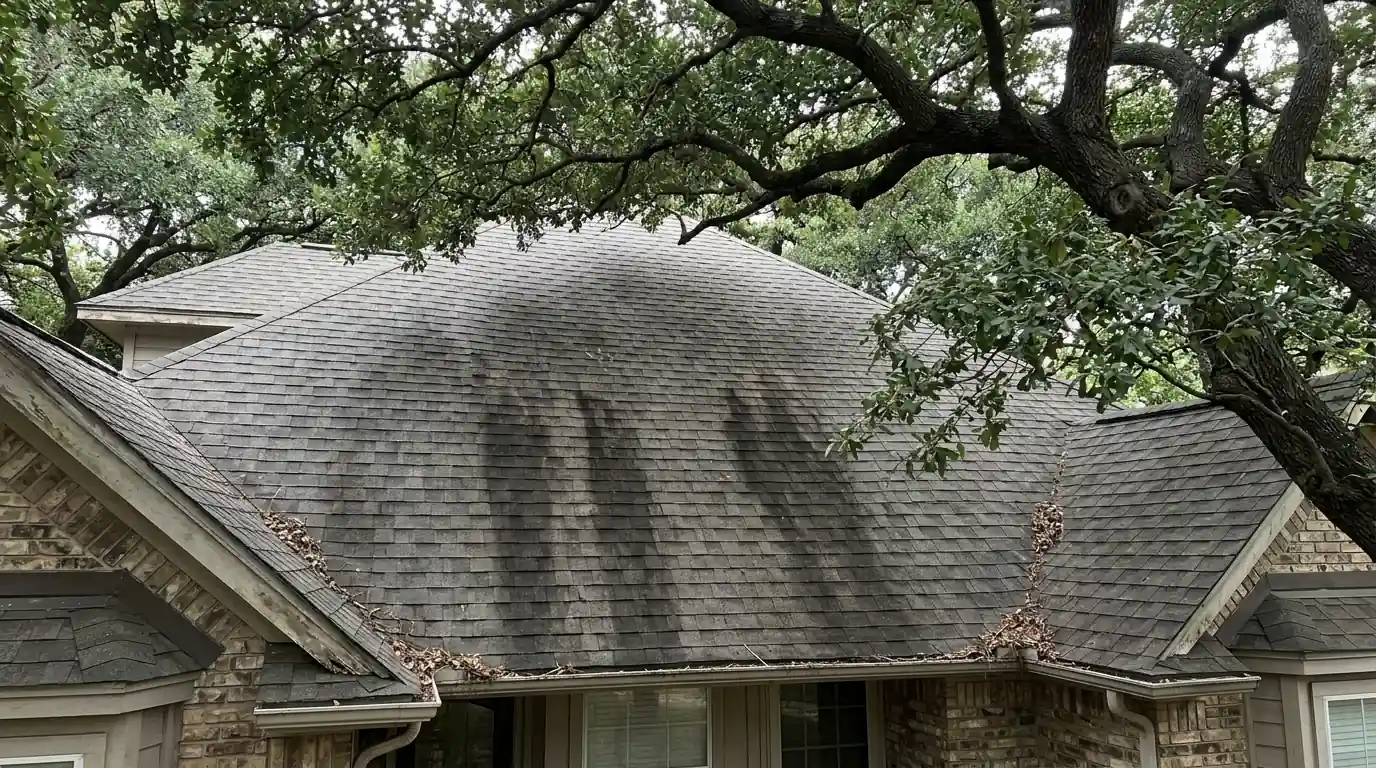
The dark streaks on many Dallas roofs are a cyanobacteria that feeds on the limestone filler in asphalt shingles and grows best where the roof stays damp, on the north and shaded slopes. Moss and lichen follow in the heaviest shade. None of it is a crisis, but it holds moisture against the shingles and makes a roof look older than it is.
Cleaning it is gentle work. The growth is killed with a solution and rinsed at garden-hose pressure. Anything harder damages the roof you are trying to help.
Updated September 2026
Your options
Soft wash, pressure wash or zinc strips
Three things people try on algae, and what each actually does.
| Compare | Soft wash | Pressure wash | Zinc or copper strips |
|---|---|---|---|
| What it does | Kills growth; rinses gently | Blasts growth and granules off | Slows regrowth after cleaning |
| Effect on shingles | None when done correctly | Strips granules; shortens life | None |
| Use it for | Cleaning an existing problem | Not recommended on shingles | Prevention after a clean |
Black streak algae
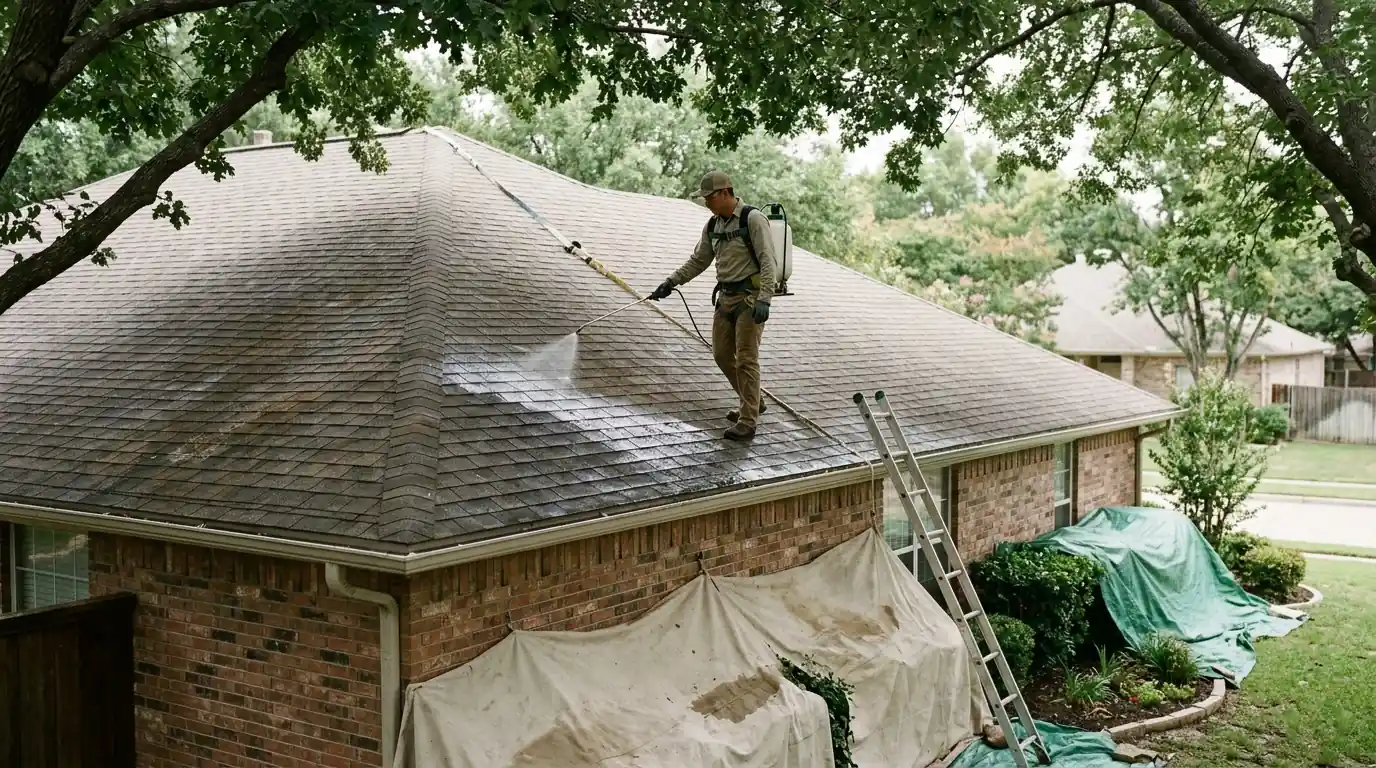
Algae streaks start at the top of shaded slopes and run downward as rain carries the growth. We apply the cleaning solution at low pressure from the roof edge or a ladder, let it dwell long enough to kill the growth, and rinse lightly. Some streaks lift the same day; the rest fade over the following weeks as rain washes the dead algae away. Scrubbing or blasting to make it look finished that afternoon is exactly what damages shingles. We tell you what to expect before we start.
Moss and lichen
Moss grows in thick, green cushions where trees shade the roof and leaves collect, and it lifts shingle edges as it grows. Lichen is the flat, crusty growth that bonds tightly to the granules. Both are treated with the same solution and a longer dwell time; loose moss is gently brushed off by hand afterward, never scraped. Lichen dies in place and weathers off over months, because forcing it off takes the granules with it. We say so if the shingles under it are damaged.
Soft washing, not pressure washing
A pressure washer at the settings needed to clean shingles blasts off the granules that protect the asphalt from sunlight, can force water under the laps and void manufacturer warranties. Soft washing uses a pump sprayer at roughly garden-hose pressure. Before we start, plants below the eaves are wetted and covered, downspouts are directed away from beds, and siding and windows are rinsed afterward so the solution does not dry on them. Gutters are flushed afterward so no solution sits in them.
Keeping the roof clean afterward
Cleaning treats the growth that is there; it does not stop new spores arriving. Trimming branches back to let sun reach the roof, keeping valleys and gutters clear, and fixing any spot where water sits all help. Zinc or copper strips installed just below the ridge release traces of metal in each rain that slow regrowth, and many algae-resistant shingles now carry copper granules for the same reason, which is worth knowing at your next replacement. We can install strips during the same visit.
Do it yourself or call
Cleaning the roof yourself or calling us
The chemistry is simple. The roof and the plants below are where it goes wrong.
| Task | Doing it yourself | Having us do it |
|---|---|---|
| Spraying cleaner from the ground | Possible on a low roof with the right mix and care. | Applied evenly at low pressure from the roof. |
| Pressure washing | Damages shingles; do not do it. | Soft wash only. |
| Scraping moss | Tears shingle edges. | Killed first, then brushed off by hand. |
| Protecting plants | Easy to forget; solution burns leaves. | Wetted, covered and rinsed. |
| Trimming overhanging branches | A good homeowner job. | We point out which ones matter. |
What happens after you call
How a roof cleaning visit runs
Look first
Growth type, extent and roof condition checked.
Protect
Plants wetted and covered; downspouts redirected.
Apply
Cleaning solution sprayed at low pressure.
Dwell
Left to work long enough to kill the growth.
Rinse
Gentle rinse; loose moss brushed off by hand.
Clean up
Siding, windows and plants rinsed; covers removed.
Follow-up
Remaining streaks fade over the following weeks.
Roofing in Dallas
What we see on Dallas roofs
Dallas roofs get plenty of sun, which is why algae here concentrates on the north slopes and under the live oaks and pecans that shade so many older neighborhoods, rather than covering whole roofs the way it does in wetter climates. That pattern also makes the fix more targeted: most homes need one or two shaded slopes treated rather than the entire roof, and trimming the branches over those slopes does as much to prevent a return as anything applied to the shingles.
Budget
What decides the cost of roof cleaning
Roof cleaning is priced by the area treated; there is no published Dallas range we use. These factors set it.
- Area treated
One shaded slope or the whole roof.
- Growth type
Moss and lichen need longer treatment than streaks.
- Pitch and height
Steep and two-story roofs take longer.
- Landscaping
More plants to protect below the eaves.
- Roof material
Tile and metal have different cleaning needs.
- Zinc or copper strips
Optional, priced per run.
- Gutters
Often cleaned in the same visit.
Questions we get
Roof cleaning questions
Slowly; they hold moisture and feed on the shingle filler, and they age the look of the roof.
No. It strips granules and can void shingle warranties.
Some do; the rest fade over a few weeks as rain washes the dead growth away.
We wet, cover and rinse them to protect them.
Usually a few years; trimming shade and zinc strips help.
Yes, with methods suited to each.
If the shingles are sound, cleaning is far cheaper.
No; we note any damage we see and quote it separately.
Roof looks older than it is? It may just need cleaning
A soft wash kills the growth without touching the granules, and the shaded slopes come back.