Roofing guide
What a roof warranty actually covers
"Lifetime warranty" is printed on almost every shingle bundle, and it means less than most people think. A roof has two warranties, they cover different things, and both have conditions.
- We answer 24/7
- Dallas service office
Quick answer
A roof usually carries two warranties. The manufacturer's warranty covers defects in the materials, often prorated after an early period, and is sometimes upgraded to cover more when a credentialed installer registers the job. The contractor's workmanship warranty covers installation errors for the term written in the contract. Neither normally covers storm damage, which is an insurance matter, and both can be voided by poor ventilation or unauthorized work.
By Cyril Cross, Roofing Guides Editor · Updated September 2026
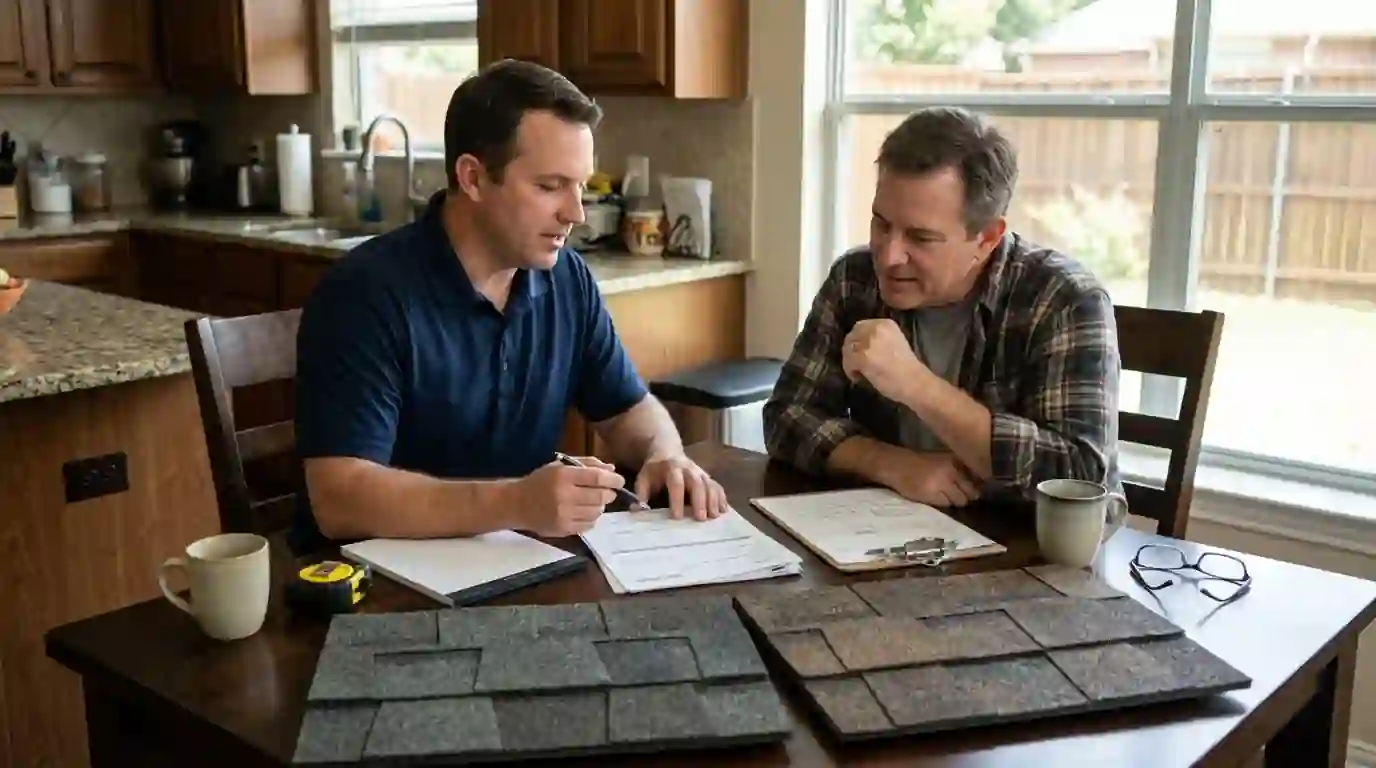
Two warranties, two different promises
The manufacturer's warranty is a promise about the product: that the shingles, membrane or panels will not fail because of a manufacturing defect. The workmanship warranty is a promise from the contractor about the installation: nailing, flashing, ventilation and the details. Most leaks on newer roofs are installation problems, not material defects, so the workmanship warranty is often the one that matters most in the first years.
What "lifetime" really means
On many shingle warranties, lifetime coverage is limited and prorated. During an initial period, the manufacturer may cover replacement materials, and sometimes labor, at full value. After that, coverage shrinks year by year, so a defect found in year 18 may be worth only a fraction of the cost to fix. The warranty document spells out the non-prorated period, what it covers and what it does not. Read that page before you choose a product by its label.

Enhanced system warranties
Most major manufacturers offer upgraded warranties when a roof is installed as a complete system: matching underlayment, starter, ridge cap and ventilation from the same maker, by a contractor they have credentialed, with the job registered after completion. These upgrades can extend the non-prorated period and, in some cases, add coverage for workmanship backed by the manufacturer. The conditions are strict. If the job is not registered, or the components do not match, the roof falls back to the standard warranty.
Talk to a Dallas roofer now
Describe the leak or the damage, and we will tell you whether it needs a tarp tonight or a scheduled visit this week.
(214) 429-4542What voids a warranty
- Poor attic ventilation, which shortens shingle life and is a common reason claims are denied.
- Installation that ignores the manufacturer's instructions, such as wrong nailing or missing starter.
- A new roof installed over an old one where the manufacturer does not allow it.
- Later work by others: satellite mounts, solar racking or patches cut through the roof without proper flashing.
- Pressure washing or harsh cleaning the manufacturer does not approve.
- Failing to register the roof when the warranty requires it.
Before solar or a satellite dish goes on a newer roof, ask the installer how they will flash the mounts. Our ventilation and solar removal and reinstall pages cover the two issues we see most.
Storms, hail and insurance
Shingle warranties cover defects, not weather. Wind coverage is usually limited to a stated speed and depends on the roof being installed with the specified nailing and starter, and hail damage is generally excluded. In North Texas that means storm damage is almost always an insurance claim, not a warranty claim. Class 4 shingles reduce how often that claim happens, which is why most Texas insurers discount premiums for them.
Transfers and paperwork
Many warranties transfer to a new owner once, often within a set time after the sale and sometimes with a notice or fee. If you are selling, find the paperwork; if you are buying, ask for it. Keep the warranty certificate, the contract with the workmanship term, the product names and installation photos in one folder. On commercial roofs, warranties typically require documented maintenance, which our maintenance visits provide. Choosing who installs the roof is covered in our guide to choosing a roofer.
Keep reading
More guides on this
Questions we get
Roof warranty questions
No; it is usually limited and prorated after an initial period.
Installation errors, for the term written in the contract.
Generally no; hail damage is an insurance matter.
Yes, and it is a common reason claims are denied.
Many do, once, within a set window; check the terms.
An upgraded warranty for a fully matched, registered system installed by a credentialed contractor.
The certificate, the contract, product names and installation photos.
Want both warranties in writing?
Every estimate we write names the product, the manufacturer's warranty and the workmanship term.