Jacksonville, FL guide
A season-by-season AC maintenance checklist for Jacksonville homes
What to do before the muggy months, through the summer, around storms and before the first cold morning, plus what a professional visit should actually include.
By Glenn Milburn, HVAC Guides Editor Updated September 2026
Quick answer
How often should an AC be serviced in Jacksonville, FL?
In Jacksonville an air conditioner should get a professional tune-up at least once a year, ideally in spring before the muggy season, and heat pumps benefit from a second check in fall. Between visits, change or check the filter monthly in summer, keep the outdoor unit clear and flush the condensate drain line a few times a year.
Why maintenance matters more here
In a lot of the country an air conditioner works hard for three months and rests the rest of the year. In Jacksonville it runs most of the year, and nearly every one of those hours is spent pulling water out of humid air. That water has to drain away, and the dust that comes with it has to go somewhere. Filters load up faster, drain lines grow slime, coils collect grime and small electrical parts work through more cycles than they would almost anywhere else.
None of that fails all at once. It shows up as a system that runs longer, cools a little less and finally quits on the hottest week of the year. Most of what keeps that from happening is simple, and some of it you can do yourself.
Spring: before the muggy season
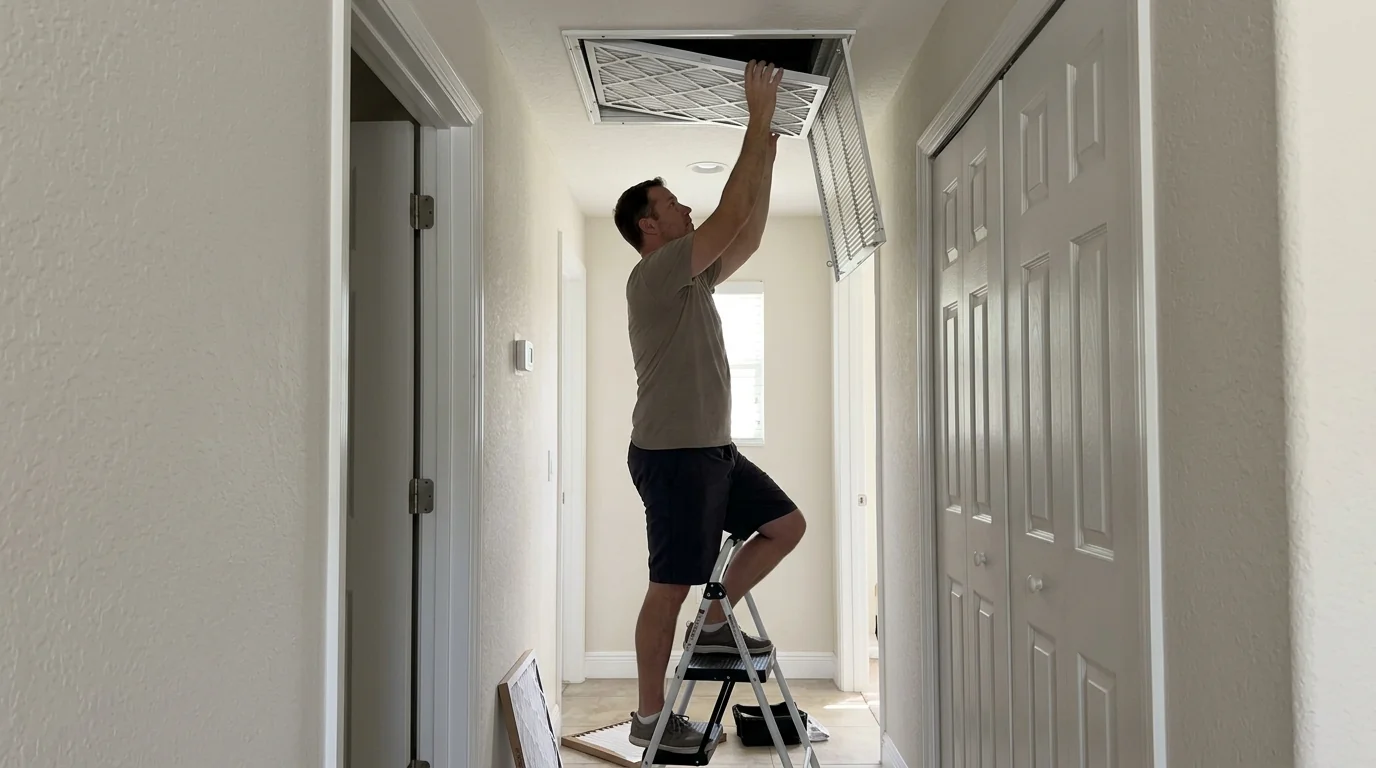
Spring is the time for the professional visit. Before the heat and humidity settle in, have a technician check refrigerant pressures, test the capacitor and contactor, clean or rinse the outdoor coil, flush the condensate drain, check the indoor coil and blower, and confirm the thermostat is reading and staging correctly. Weak capacitors are the single most common summer failure, and they almost always test weak before they fail.
On your side, put in a fresh filter, clear leaves and grass clippings away from the outdoor unit, trim back plants to give it about two feet of space on every side, and make sure the drain line outside is dripping when the system runs.
Summer: keep it running
Through summer, check the filter monthly and change it when it looks gray, more often with pets or a dusty renovation underway. A clogged filter starves the indoor coil of air, which can freeze it and shut the system down. Keep the outdoor unit clear: mower clippings, mulch and vines all block airflow and make the compressor work harder.
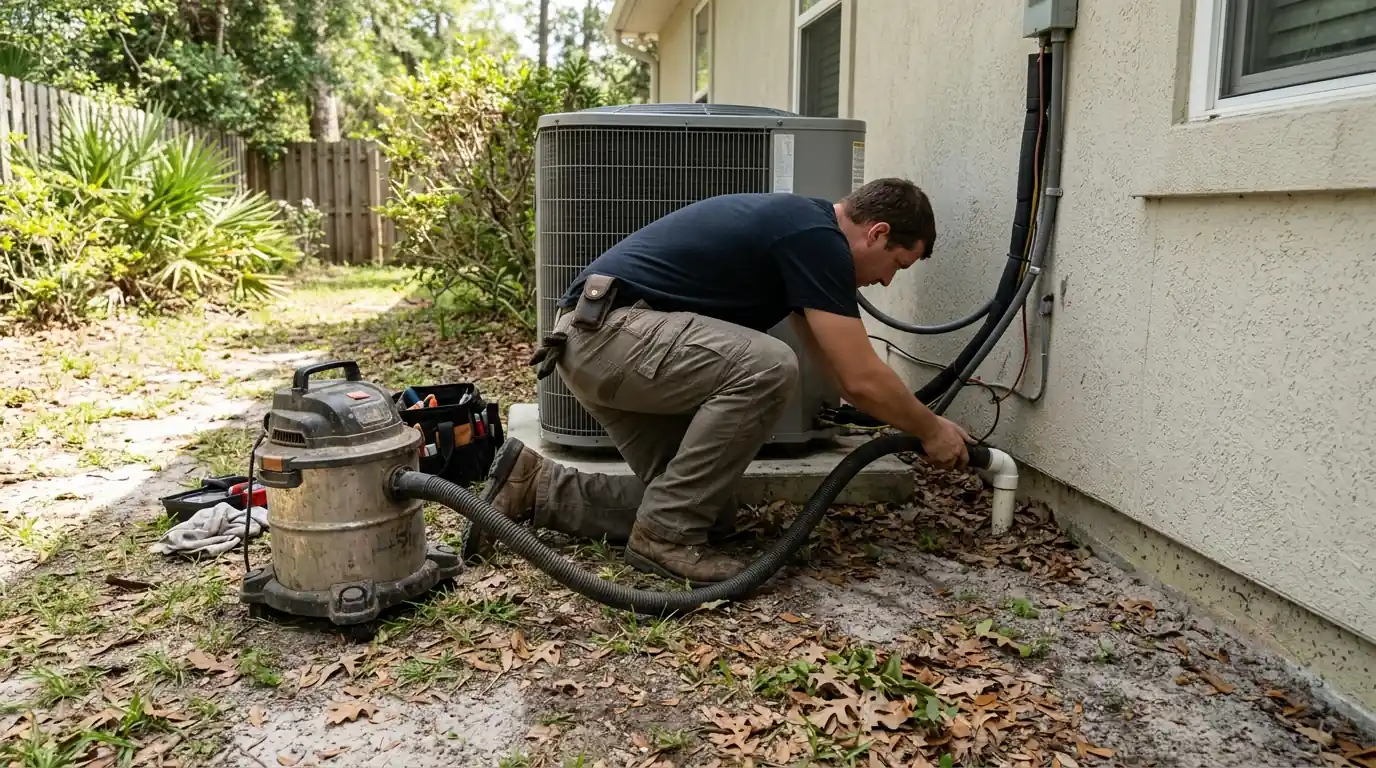
Watch the drain. If the safety float switch shuts the system off or water appears around the indoor unit, the drain line is clogging. Pouring a cup of white vinegar into the drain access every couple of months helps keep slime down. Finally, notice changes: a system that suddenly runs all afternoon without catching up is telling you something early.

Due for a spring or fall check?
Call any hour to book a tune-up with written readings you can compare next year.
Storm season
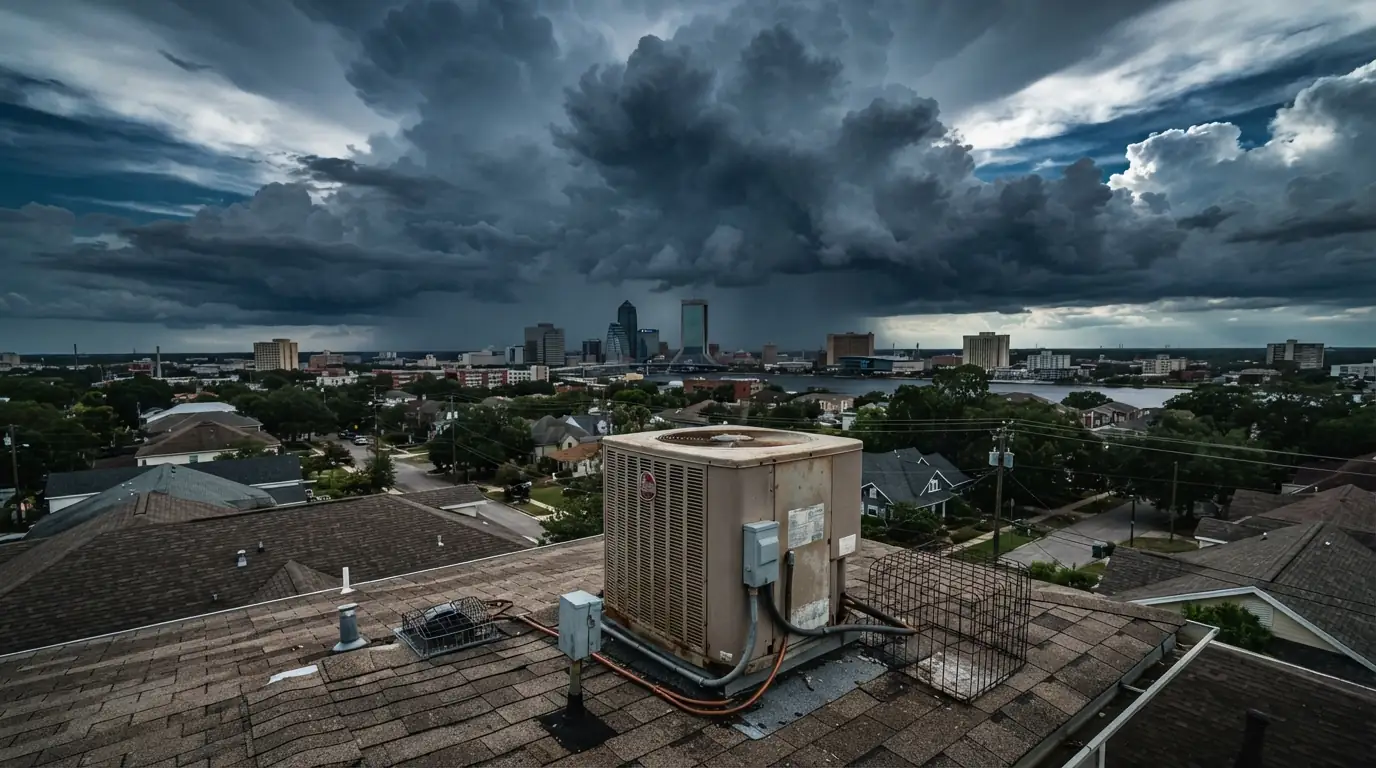
From June through November, a little storm preparation protects the outdoor unit. Check that it sits level and is anchored to its pad, and clear away anything nearby that wind could throw into it. A surge protector at the unit is inexpensive protection against the lightning and power flickers that summer storms bring.
If flooding is expected, turn the system off at the thermostat and the outdoor disconnect. Afterward, don't restart a unit that sat in water until it has been checked, because water damages electrical parts and compressors. If the yard floods regularly, a raised stand is worth considering.
Fall and winter: heat pump checks
Most Jacksonville homes heat with a heat pump or electric heat strips, and the first cold morning is when weak parts show up. A fall check of the defrost controls, reversing valve and backup heat strips catches most of those problems before you need the heat.
Expect a brief dusty smell the first time the heat strips run each season as dust burns off; a smell that persists, or a burning plastic smell, means shut it off and call. Keep changing the filter through winter, since the system still moves the same air.
What a professional visit should cover
A real tune-up is more than a quick rinse. Expect electrical checks (capacitor, contactor, connections and amp draw), refrigerant pressures and temperatures compared with what the system should show, coil condition indoors and out, drain flush and float switch test, blower and belt or motor check, filter, thermostat operation, and a written note of what was found.
Ask for the readings. A technician who writes down pressures, temperatures and capacitor values gives you a record to compare next year, and that comparison is how slow problems get caught before they turn into breakdowns.
When maintenance isn't enough
Maintenance keeps a healthy system healthy, but it can't fix a system that's undersized for the house, ducts that leak into the attic or a coil that's corroded through. If a well-maintained system still can't keep up, still leaves the house humid, or needs refrigerant every year, it's time for a diagnosis rather than another tune-up.
FAQ
Questions readers ask
How often should I change my AC filter in Jacksonville?
Check it monthly in summer and change it when it looks gray; every one to three months is typical depending on filter type, pets and dust.
Can I clean my outdoor AC coil myself?
A gentle rinse with a garden hose from the inside out is fine with the power off; avoid pressure washers, which bend the fins.
What does vinegar in the drain line do?
It helps slow the slime that clogs condensate drains; it won't clear a line that's already blocked.
Do heat pumps need maintenance twice a year?
It helps, because they run in both seasons: a spring cooling check and a fall heating check.
Is a maintenance plan worth it?
For systems that run most of the year it usually is, because scheduled visits catch weak parts before they fail.
Should I cover my AC in winter?
No. Covers trap moisture and aren't needed in Northeast Florida's climate.
Why does my heat smell dusty the first time I use it?
Dust burning off the heat strips; it should fade quickly, and a lingering or plastic smell means call a technician.
Keep reading
Related services and guides
AC drain line clogs
The most common no-cool call that isn't a mechanical failure, explained: what clogs the line, what the float switch.
Learn moreHurricane season and your AC
What to do before a storm, why you should shut the system off, and the checks to make before turning it back on after.
Learn moreWhy the house feels humid with the AC on
The reason a system can hit the setpoint and still leave the air damp, how to tell if it's happening, and the fixes in.
Learn moreBook the visit before the busy season
Call any hour. A dispatcher answers live and books the next open technician.