Jacksonville, FL guide
AC drain line clogs in Jacksonville: why they happen and how to stop them
The most common no-cool call that isn't a mechanical failure, explained: what clogs the line, what the float switch does, and how to keep it clear.
By Glenn Milburn, HVAC Guides Editor Updated September 2026
Quick answer
Why does my AC drain line keep clogging in Jacksonville, FL?
AC drain lines clog in Jacksonville because systems here remove a lot of water during the long muggy season, and algae and slime grow in the warm, wet line. When it clogs, the pan fills and a float switch shuts the system off. Regular flushing and treatment keeps the line clear.
Where the water comes from
Every time your AC runs, warm humid air passes over the cold indoor coil and water condenses on it, the same way a cold glass sweats on a summer afternoon. That water drips into a pan under the coil and runs out through a small PVC line, usually to the outside or into a plumbing drain.
In a humid climate, that's a lot of water. The muggy season here runs roughly from May through October, and during those months a working system can move gallons of condensate a day. Anything that slows that line down becomes a problem quickly.
Why the line clogs
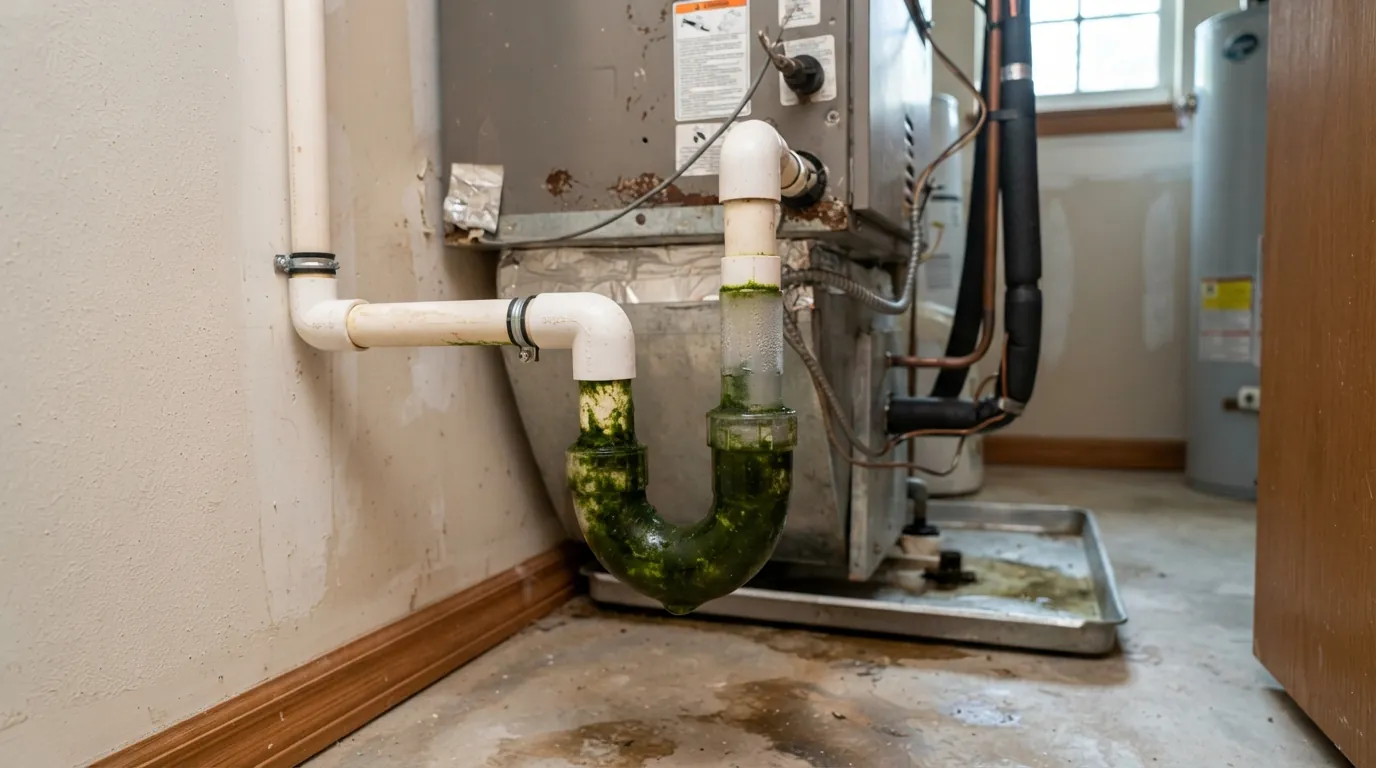
The drain line is warm, dark and constantly wet, which is ideal for algae and bacterial slime. Over weeks that growth builds into a gel that narrows the pipe and eventually stops it. Dust that gets past the filter adds to it, and so do insects that find their way into the outdoor end.
Lines without a proper trap, or with long flat runs that don't slope enough, clog faster because water sits in them instead of draining away.
What the float switch does
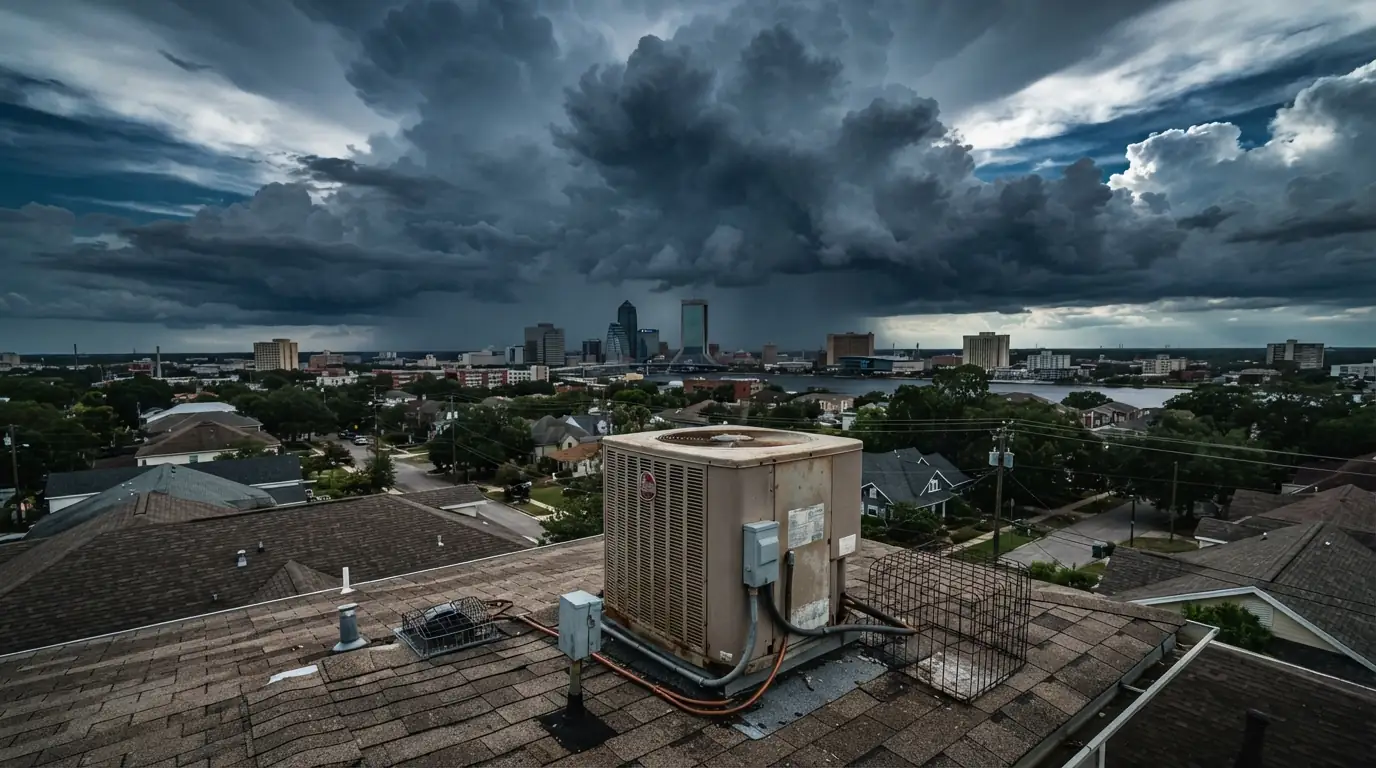
Most systems have a float switch in the drain pan or on the line. When water rises past a set level, the switch cuts power to the system to stop the pan overflowing. That's why a clogged drain often looks like a dead AC: the thermostat calls for cooling, nothing happens, and there's water in the pan.
It's a safety device doing its job. On attic air handlers in particular, it's the only thing between a clog and a stained or collapsed ceiling. If your system doesn't have one, it's worth adding.

Water in the pan and no cooling?
Call any hour. We clear the line, test the float switch and find out why it clogged.
What you can safely clear yourself
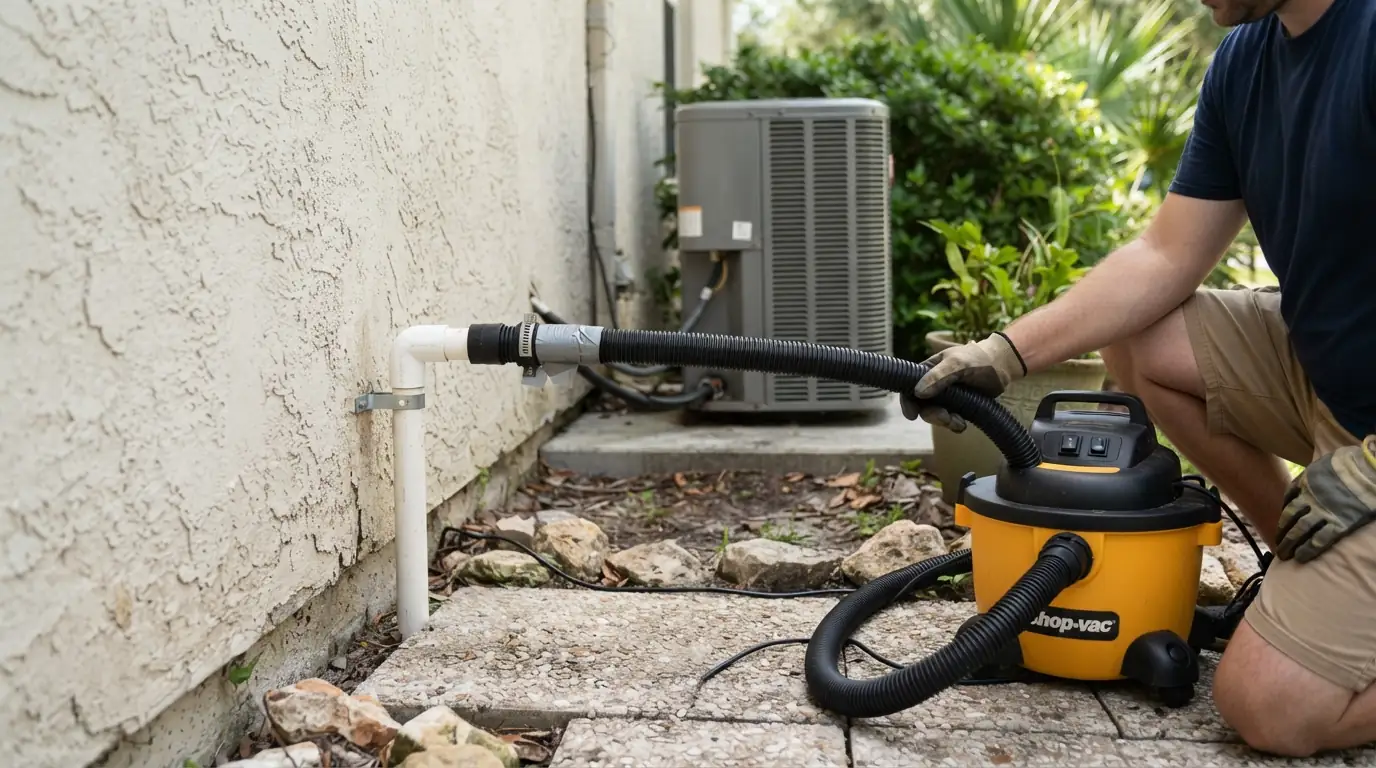
Find the outdoor end of the line, usually a short PVC pipe near the condenser or foundation. With the system off, attach a wet vac to it, seal around the pipe with a rag, and run the vac for a minute or two. You'll often pull out a plug of slime and the pan will drain.
Some systems have an access cap near the air handler where a cup of plain white vinegar can be poured in to help keep growth down between cleanings. Avoid bleach unless the manufacturer allows it, since it can harm some pan materials.
When to call instead
Call if the pan is overflowing, if there's water on a ceiling or wall, if the line clogs again within weeks, or if you can't find the outdoor end. Repeated clogs usually point to a line without a trap, a flat run, or a cracked pan, and those need fixing rather than more vacuuming.
A technician also checks that the float switch actually shuts the system off when it should. A switch that's stuck or wired wrong gives false confidence.
Drain problems in attic installs
When the air handler sits in the attic, drain problems carry more risk. Many attic installs have a secondary drain pan underneath with its own line or float switch as backup. It's worth knowing where yours drains. If you ever see water dripping from a soffit or an odd spot outside the house, that's often the secondary line telling you the primary is clogged.
Keeping it clear
The simplest prevention is regular flushing and treatment, which is part of every tune up and maintenance plan visit. Keeping the filter clean reduces the dust that feeds growth. Making sure the outdoor end isn't buried in mulch or blocked by plants helps the line drain freely.
If your line clogs every summer, ask about adding a clear trap and a cleanout tee so it can be inspected and flushed easily.
FAQ
Questions readers ask
Why did my AC stop working with water in the pan?
A clogged drain filled the pan and the float switch shut the system off to prevent water damage.
Can I clear the drain line myself?
Often, with a wet vac on the outdoor end, with the system off.
Should I pour bleach in the drain line?
Plain white vinegar is the safer choice for most systems unless the manufacturer says otherwise.
How often should the line be flushed?
At least at each tune up; homes with frequent clogs benefit from more often.
What if water is coming through my ceiling?
Turn the system off, catch the water and call. It's usually a clog or a cracked pan.
Does every AC have a float switch?
Most newer ones do. If yours doesn't, adding one is inexpensive protection.
Why does my line clog every summer?
Often a missing trap, a flat run or a cracked pan. Those need repair, not just flushing.
Keep reading
Related services and guides
AC not cooling: what to check first
Five safe checks that sometimes solve it, what the common symptoms point to, and the signs that mean turn it off and.
Learn moreWhy the house feels humid with the AC on
The reason a system can hit the setpoint and still leave the air damp, how to tell if it's happening, and the fixes in.
Learn moreHurricane season and your AC
What to do before a storm, why you should shut the system off, and the checks to make before turning it back on after.
Learn moreClear it and keep it clear
Call any hour. We'll flush the line, check the float switch and fix what's causing the clogs.