Jacksonville, FL
Attic fan installation and ventilation checks in Jacksonville
Solar and powered attic fans installed where the attic has the intake air to support them, with an honest check first so the fan doesn't pull cooled air out of your house.
Quick answer
Is an attic fan worth it in Jacksonville, FL?
An attic fan can lower attic temperatures and ease the load on ducts and upstairs rooms, but only when the attic has enough intake vents and the ceiling below is sealed. Without that, the fan pulls cooled, dry air up from the house and replaces it with humid outdoor air. We check intake and air sealing first and recommend a fan only where it helps.
Overview
Moving heat out of the attic, not out of the house
On a summer afternoon a Florida attic gets far hotter than the outdoor air, and in many homes the air handler and ductwork live up there. Every degree of attic heat soaks into the ducts and through the ceiling into the rooms below, which is why upstairs bedrooms and rooms under flat ceilings run warm. Moving that hot air out with a fan can help, as can more insulation and a radiant barrier.
The catch is where the replacement air comes from. A fan exhausting air needs an equal amount coming in, ideally through soffit vents. If the soffits are blocked or too small, the fan draws air from the easiest source, which is often the house itself through gaps around light fixtures, the attic hatch and duct boots. In a humid climate that's cooled air you paid for, replaced by damp outdoor air. So the job starts in the attic, not on the roof.
Cost factors
What affects the cost of an attic fan
- Fan typeSolar, powered roof or gable fan.
- WiringPowered fans need a circuit and controls.
- Roof typeShingle, tile or metal changes the flashing work.
- Intake ventsAdding soffit vents if the attic can't feed the fan.
- Air sealingCeiling gaps sealed so the fan doesn't pull house air.
We check the attic first and price the fan, any intake vents and sealing in writing.
Options
Ways to cool a hot attic
| Option | How it works | Consideration |
|---|---|---|
| Soffit and ridge vents | Passive airflow from eaves to peak | Needs clear intake to work |
| Solar attic fan | Panel-powered exhaust fan | No wiring, strongest in full sun |
| Powered roof or gable fan | Wired fan on a thermostat | Needs ample intake air |
| Radiant barrier | Reflects roof heat back out | Works best with ventilation |
| Air sealing and insulation | Stops leaks and slows heat | Often the first step |
We check intake, air sealing and duct leakage before recommending a fan, because those often deliver more for less.
What is included
Every attic fan job includes
- Attic temperature and ventilation checked
- Soffit intake area measured
- Ceiling and duct leaks looked for
- Fan type and size matched to the attic
- Roof or gable opening cut and framed
- Flashing sealed against leaks
- Thermostat or humidistat set
- Operation checked and explained
What we fix
Solar attic fans
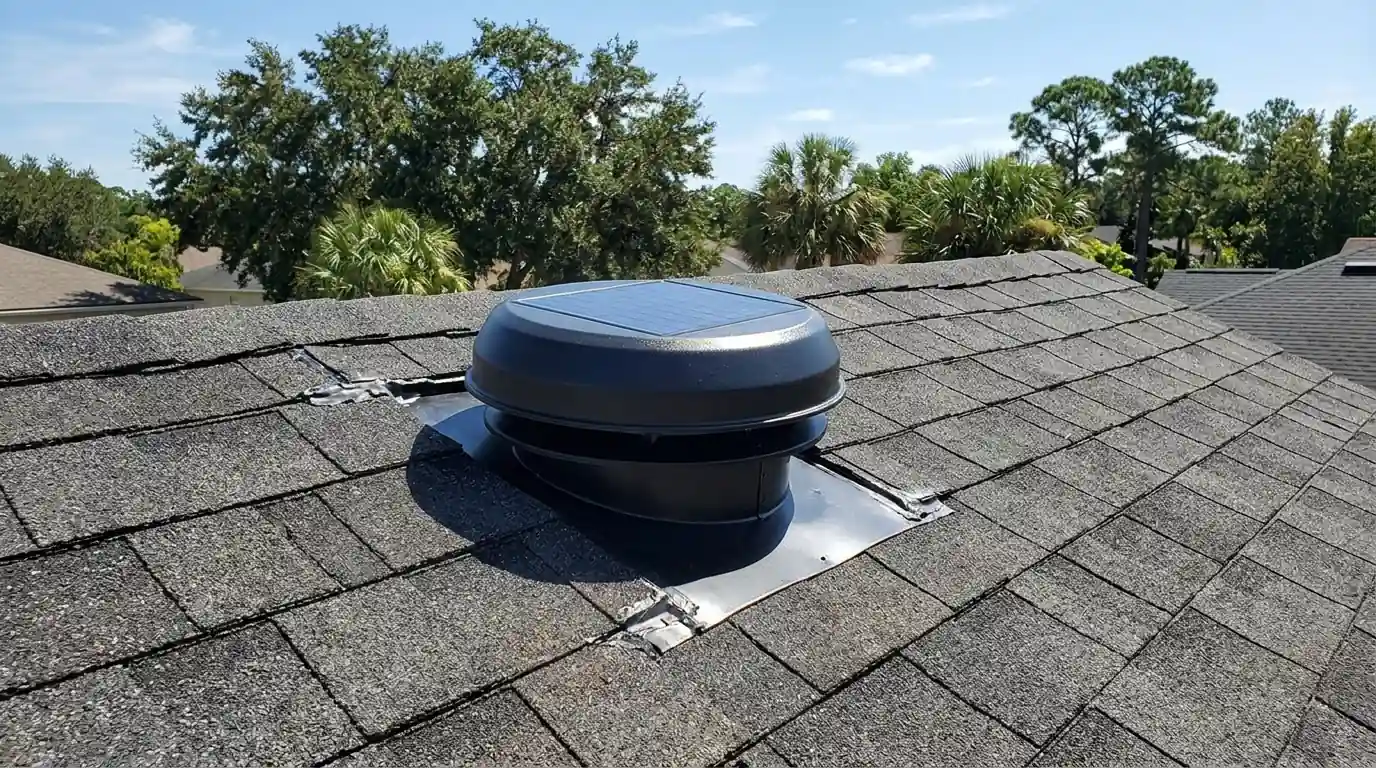
A solar attic fan runs on its own small panel, so it needs no wiring and costs nothing to operate. It moves the most air when the sun is strongest, which is also when the attic is hottest. Placement matters: the panel needs good sun exposure, and the fan should sit high on the roof, away from ridge vents that would let it pull air from the wrong place. We flash and seal every roof penetration so the fan doesn't become the next leak.
Powered and gable fans
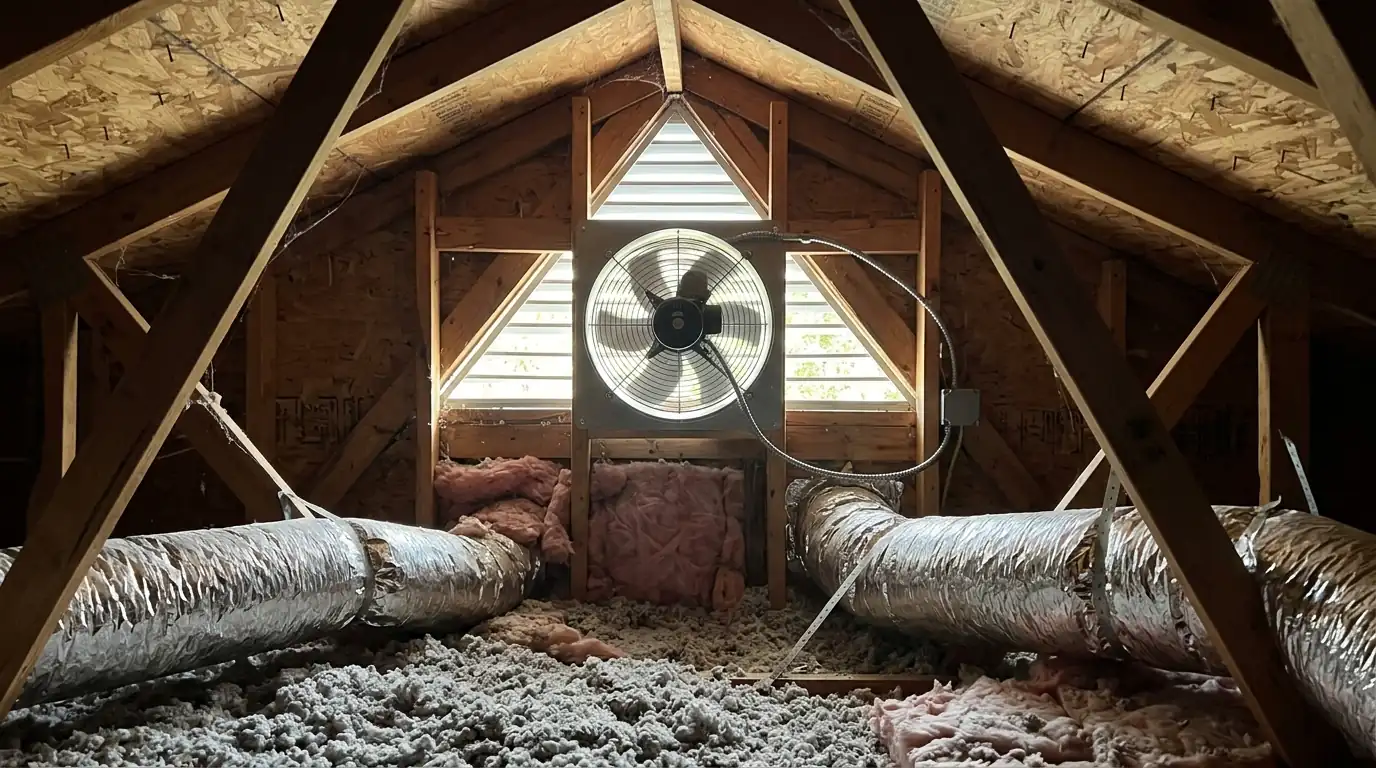
Wired roof fans and gable-wall fans move more air than most solar units and are controlled by a thermostat and often a humidistat. Their strength is also the risk: a powerful fan in an attic without enough intake depressurizes it and pulls conditioned air through every gap in the ceiling. We size the fan to the attic and the intake area, and in many homes we'll recommend adding soffit vents or air sealing before or instead of a bigger fan.
When we recommend something else
Some attics are better served without a fan at all. If the home has ridge and soffit venting working together, a fan can short-circuit it. If ducts are leaking into the attic, sealing them saves more than any fan. And in homes with spray foam on the roof deck, the attic is meant to be sealed and should never be vented with a fan. And where the real problem is thin insulation or a radiant barrier that's missing, those come first. We'll tell you which situation you're in before anything is installed, and what each option is likely to change.
Why attics matter so much here
In Jacksonville most homes put the air handler and ductwork in the attic, and the cooling season is long, so attic heat is something the system fights for most of the year. A hot attic warms the ducts the cooled air travels through and the ceilings over every room. Better ventilation, insulation and duct sealing all help, but in this humid climate the order matters: seal and ventilate properly first, then add a fan only where the attic can feed it.
How the job runs
How the install runs
- 1
Attic check
Ventilation, intake, insulation and leaks inspected.
- 2
Written plan
Fan, vents and sealing priced, or a better option suggested.
- 3
Prepare
Opening cut and framed, intake added if needed.
- 4
Install
Fan mounted, flashed and wired or panel aimed.
- 5
Verify
Operation and controls checked.
FAQ
Attic fan questions
Can an attic fan pull air conditioning out of my house?
Yes, if the attic lacks intake vents or the ceiling has gaps; we check both before installing.
Is a solar attic fan enough for a Florida attic?
Often, when intake is good and the panel gets full sun; larger attics may need more.
Does an attic fan lower my electric bill?
It can reduce attic heat on the ducts and ceilings, but sealing and insulation usually save more.
Should a home with spray foam on the roof have an attic fan?
No. That attic is designed to be sealed, and a fan would work against it.
Will an attic fan cause roof leaks?
Not when it's flashed and sealed correctly, which is part of every install.
Do attic fans help with humidity?
Only with proper intake; otherwise they can pull humid outdoor air into the house.
How many attic fans do I need?
It depends on attic size and intake area, which we measure before recommending any.
Related services
Other work on the same system
Whole House Dehumidifier Installation
Ducted dehumidifiers that hold indoor humidity in the high 40s through the muggy months.
Learn moreAir Purifier & Filtration Installation
Media cabinets, HEPA bypass and electronic cleaners matched to your blower.
Learn moreUV Light Installation
UV lamps that keep the coil and drain pan clean through the humid months.
Learn moreEvaporator Coil Cleaning
Indoor coils cleaned of dust and growth to restore airflow and drainage.
Learn moreFresh Air Ventilation Installation
ERVs and ventilating dehumidifiers for tight, newer homes.
Learn moreFind out what your attic needs
Call any hour to book an attic check before you buy a fan.