Jacksonville, FL guide
Why your Jacksonville home feels humid with the AC running
The reason a system can hit the setpoint and still leave the air damp, how to tell if it's happening, and the fixes in order of cost.
By Glenn Milburn, HVAC Guides Editor Updated September 2026
Quick answer
Why does my house feel humid even with the AC on in Jacksonville, FL?
A Jacksonville house feels humid with the AC on when the system cools the air faster than it removes moisture, most often because it's oversized and shuts off in short cycles, or because leaky ducts pull humid attic air in. Proper sizing, variable speed equipment, duct sealing or a whole house dehumidifier fix it.
Cooling and drying aren't the same job
An air conditioner dries the air as a side effect. Warm, humid air passes over a cold coil, moisture condenses on the coil and runs down the drain. But that only happens while the system is running and the coil is cold. The thermostat, meanwhile, only watches temperature.
So if the system reaches the setpoint quickly and shuts off, it hasn't run long enough to pull much water out. The air is cool, but it's still damp, and damp air feels clammy even at 72F.
Why it's so common here
Jacksonville's muggy season runs roughly May through October, and dew point stays high overnight, so outside air never gives the house a dry break. Add a vented attic where the ducts run, and any leak on the return side pulls hot, wet attic air straight into the system.
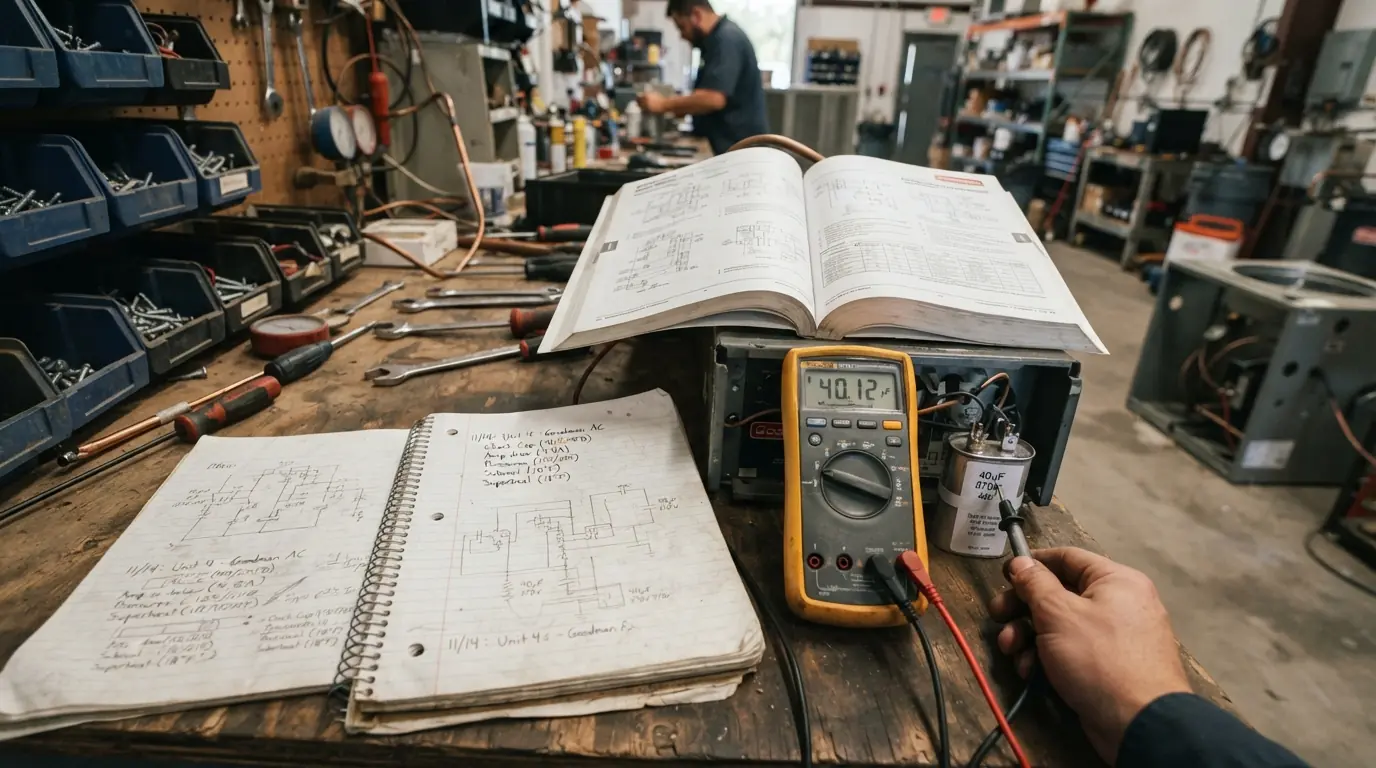
Oversizing is the other big cause. A system chosen by square footage rather than a Manual J load calculation is often a half ton or more too big, and it short-cycles through the whole summer.
How to tell if it's happening
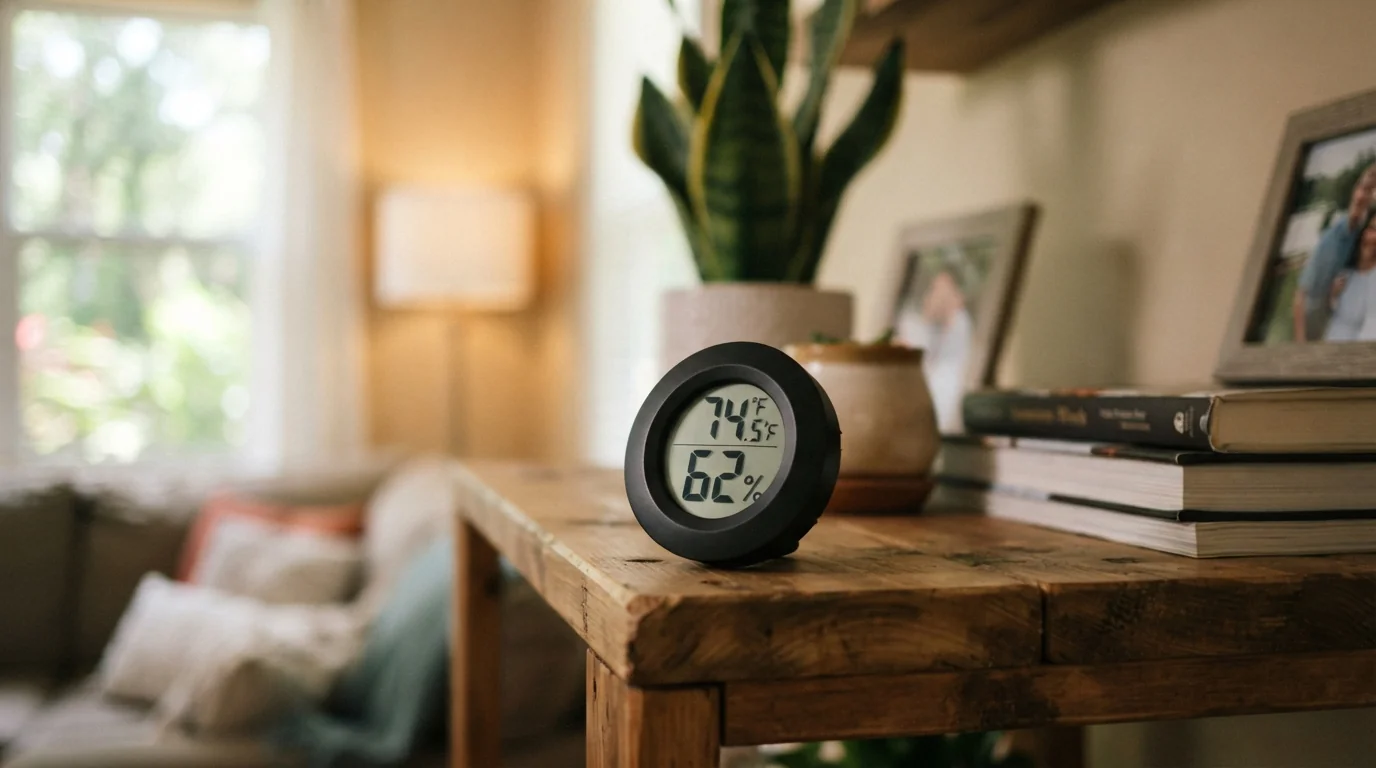
An inexpensive hygrometer tells you a lot. Indoor humidity in the high 40s feels comfortable; readings that stay above about 55 percent mean the house is carrying too much moisture. Other signs: a musty smell, condensation on windows or vents, or a system that runs in short bursts of a few minutes.
If you notice it most on mild, rainy spring and fall days, that's classic. The house barely needs cooling, so the AC barely runs, and the moisture stays.
House cool but still sticky?
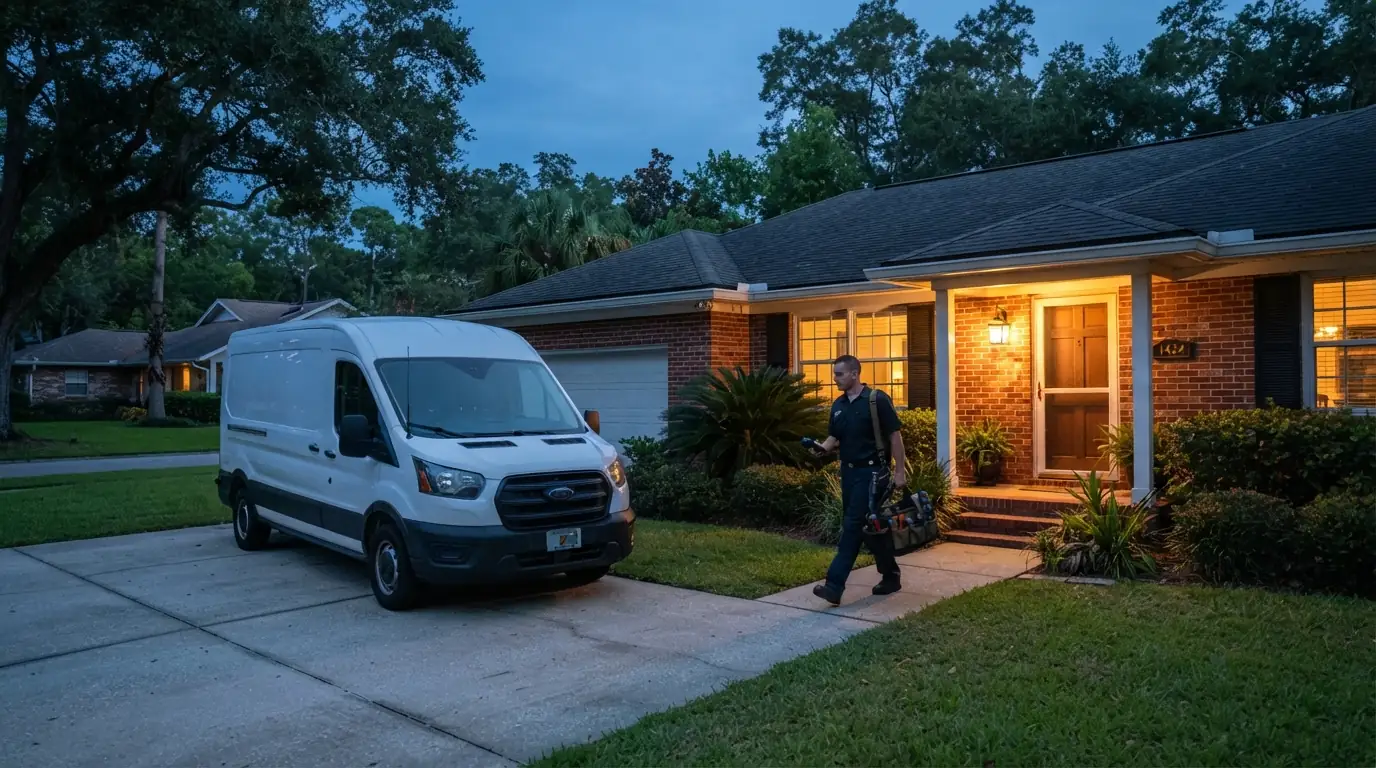
Call any hour. We'll measure humidity, check the sizing and ducts, and tell you what will actually help.
The fixes, cheapest first
Start with the free and cheap: set the fan to auto, not on, so the blower doesn't re-evaporate water from the coil after each cycle. Check that the filter is clean. If your thermostat has a dehumidify setting and your system supports it, turn it on.
Next, seal the ducts, especially the return side, so humid attic air stops leaking in. Then consider a whole house dehumidifier, which dries the air on its own control whether or not the AC is cooling. When the AC needs replacing anyway, a correctly sized variable speed system handles humidity best.
A quick way to check sizing
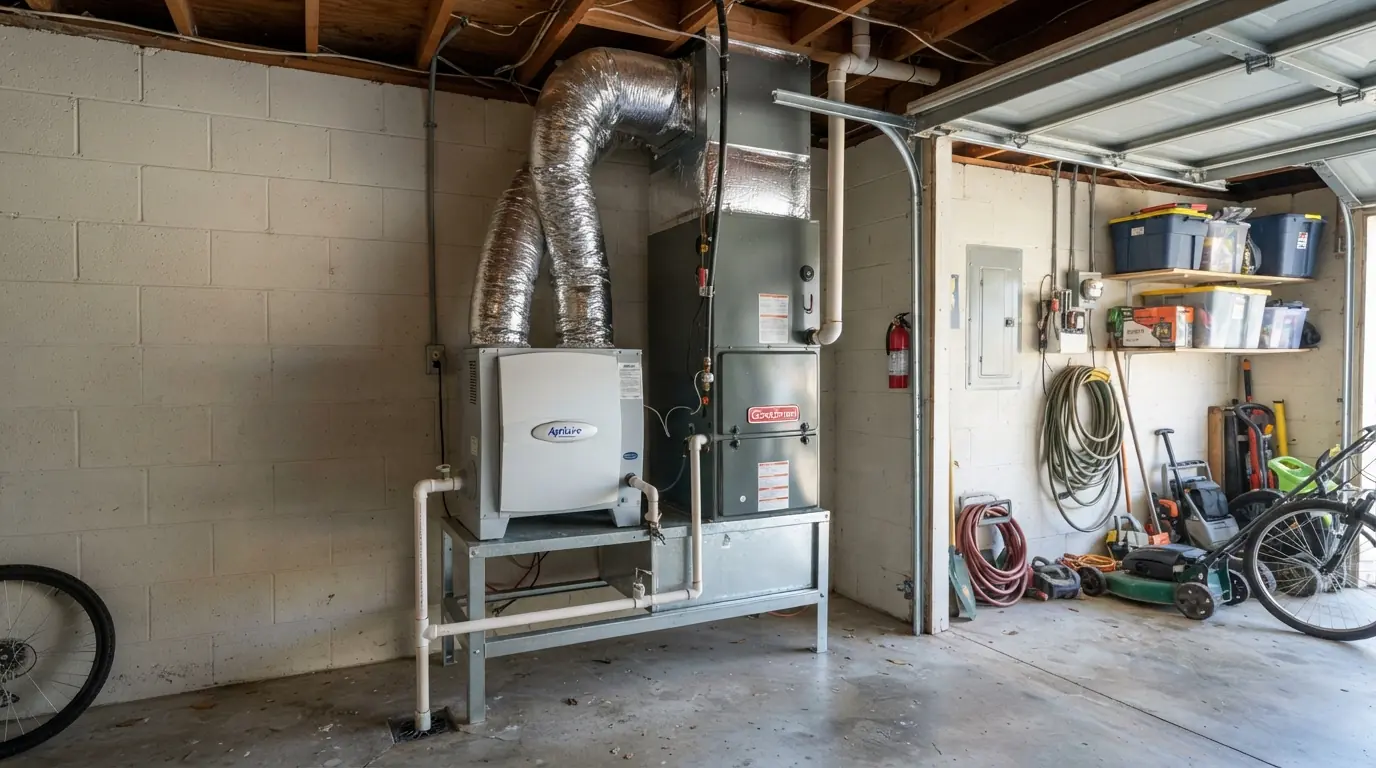
On a hot afternoon, time how long the system runs each cycle. A properly sized system in July should run long, steady cycles, often most of the hour. If it runs five or ten minutes, shuts off, and starts again shortly after, it's likely oversized for the house.
That doesn't mean you need a new system tomorrow. It does mean a dehumidifier, duct sealing or thermostat settings will likely help, and that the next replacement should be sized from a load calculation rather than the old label.
Where the moisture comes from
Outside air is the biggest source, leaking in through gaps, open doors and leaky return ducts. Showers, cooking and even people breathing add more. Bathroom and kitchen exhaust fans that actually vent outdoors help remove moisture at the source, and running them during and after showers makes a measurable difference.
Signs the humidity is doing damage
Beyond comfort, long stretches of indoor humidity above about 60 percent start to show up in the house. Closets smell musty, leather and wood furniture can grow mildew, wooden doors swell and stick, and dark spots appear around supply registers where cold air meets damp air. The indoor coil and drain pan can also grow slime that clogs the drain line.
None of these mean the house is ruined. They mean the moisture needs a real fix rather than a lower thermostat setting, and the sooner it's addressed the less cleanup follows.
What not to do
Don't just lower the thermostat. Overcooling to fight humidity costs money and leaves the house cold and damp. And don't assume a bigger system will help; a bigger system usually makes humidity worse.
Portable dehumidifiers help one room and need emptying. For a whole house that feels sticky, they're a stopgap rather than a fix.
FAQ
Questions readers ask
What indoor humidity should I aim for?
The high 40s feels comfortable for most homes.
Does a bigger AC remove more humidity?
Usually the opposite. An oversized system short-cycles and removes less.
Should my fan be on or auto?
Auto. Running the fan constantly can put moisture back into the air.
Do whole house dehumidifiers work here?
Yes, they hold humidity down independently of cooling.
Can leaky ducts make the house humid?
Yes. Return leaks pull humid attic air into the system.
Will a new AC fix it?
Only if it's sized correctly. Variable speed systems handle humidity best.
Will a dehumidifier raise my power bill?
It uses some power, but many homes offset it by running the AC a few degrees warmer.
Keep reading
Related services and guides
Whole House Dehumidifier Installation
Ducted dehumidifiers that hold humidity in the high 40s.
Learn moreHow an AC should be sized
Why the rule of thumb fails in a humid climate, what a Manual J load calculation actually measures, and the questions.
Learn moreAttic duct leaks
Why ducts in a hot attic matter so much here, the signs of leakage, and the difference between a real repair and a roll.
Learn moreAC not cooling: what to check first
Five safe checks that sometimes solve it, what the common symptoms point to, and the signs that mean turn it off and.
Learn moreStop the clammy feeling
Call any hour to book a visit. We'll find the cause before recommending a fix.