Jacksonville, FL
Coastal coil coating for Jacksonville beach homes
Protective coatings applied to outdoor coils after a thorough cleaning, to slow the salt corrosion that shortens coil life near the ocean.
Quick answer
Is coil coating worth it near Jacksonville's beaches?
For homes near Jacksonville's beaches, coil coating is usually worth it because salt air corrodes outdoor aluminum coils much faster than inland, and a corroded coil often can't be repaired. Coating a clean coil slows that corrosion; coastal grade equipment adds roughly $500 to $1,000 to a new outdoor unit.
What is included
Every coil coating includes
- Coil inspected for corrosion and leaks
- Salt and dirt cleaned off thoroughly
- Bent fins straightened where practical
- Coil dried before coating
- HVAC-rated coating applied to fins and tubes
- Electrical parts and cabinet checked for corrosion
- Cleaning schedule set by distance to the water
- Coating condition noted for future visits
Overview
Slowing salt down
Near the ocean, salt settles on the outdoor coil, holds moisture against the aluminum fins and tubes, and pits them over time. Once the pitting opens leaks, repair rarely holds and a coil or full system replacement follows. Protecting the coil before that happens is far cheaper.
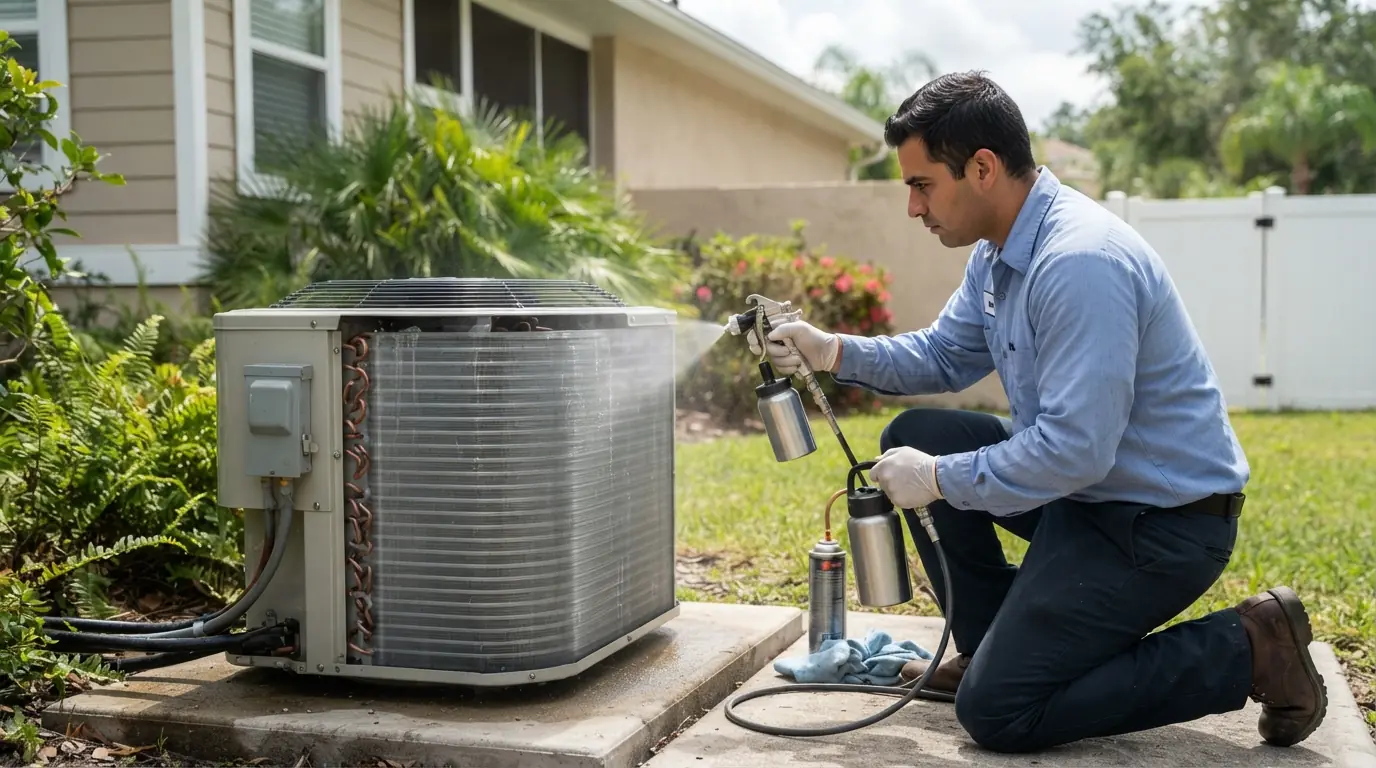
Coating works only on a clean coil. We rinse and clean the coil to remove salt and dirt, let it dry, then apply a protective coating designed for HVAC coils that coats the fins and tubes without blocking airflow. We also set a cleaning schedule based on how close the home is to the water, since coating slows corrosion but doesn't replace maintenance.
What we fix
New condenser coating
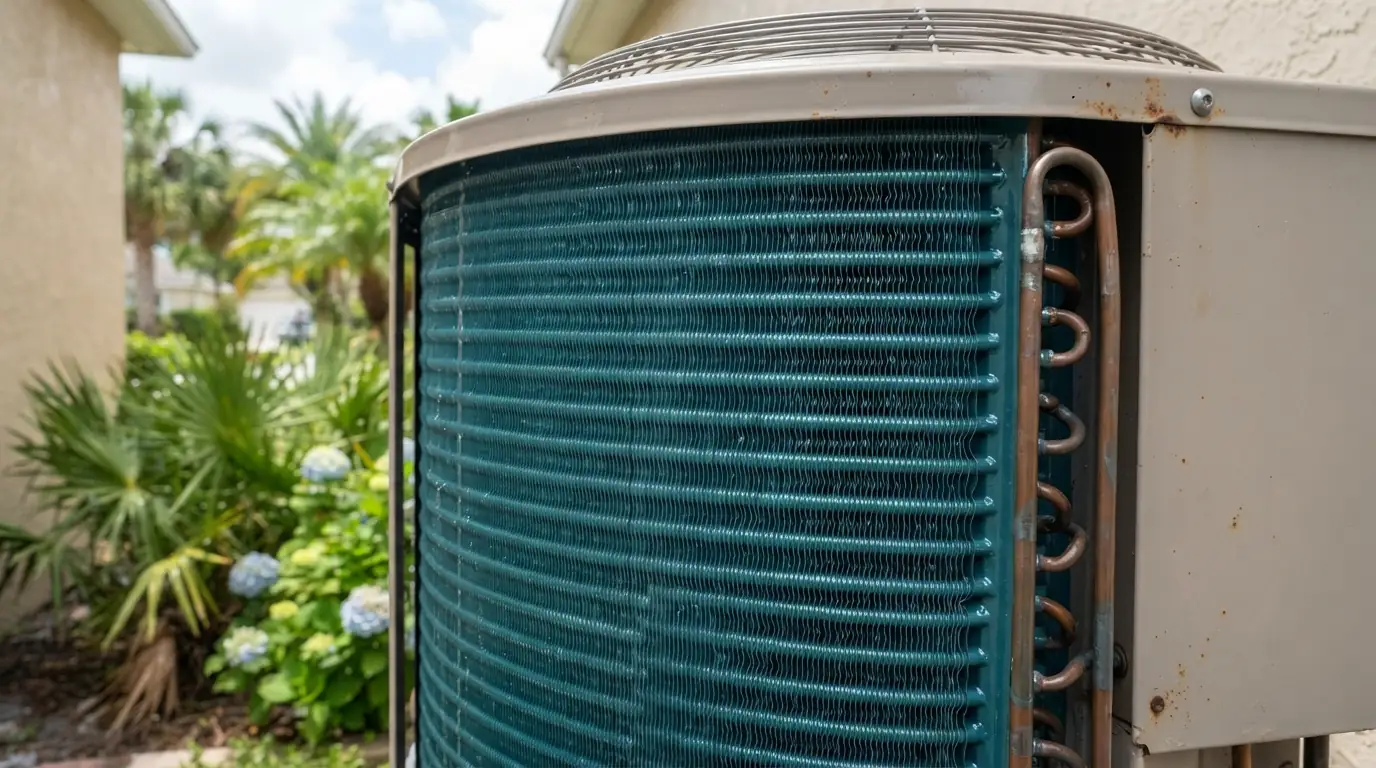
The best time to protect a coil is before it has seen any salt. New outdoor units can be coated at installation, or ordered as coastal grade models with factory coatings and stainless hardware, which add roughly $500 to $1,000 to the unit. Either way, the coil starts life protected. We'll compare the options on a new installation so you can choose what fits your distance from the water and budget. The coating details are noted for your records. It's simplest done at install.
Existing coil treatment
An existing coil can be coated if it's still in reasonable shape. We inspect it first; a coil with widespread pitting or leaks won't be saved by coating, and we'll tell you so. If it's sound, we clean thoroughly, straighten bent fins where practical, let it dry and apply the coating. It buys time for a coil that would otherwise corrode steadily, which is especially worthwhile on a relatively new system. You'll see the coil's condition before and after. Photos are included.
Coastal maintenance schedule
Coating slows corrosion; it doesn't stop salt from settling. Homes within a few miles of the ocean benefit from coil cleaning at least once a year and often twice, plus a gentle freshwater rinse after storms. We set the schedule by distance and exposure, check the coating's condition at each visit, and recoat when it's worn. Placement matters too: a condenser shielded from the ocean wind collects less salt. The schedule is written down so it doesn't depend on anyone remembering, and your coating's condition is noted every time we're out.
Salt air at Jacksonville's beaches
At homes near Jacksonville Beach, Atlantic Beach and out toward Nocatee, salt corrodes outdoor coils years ahead of inland units, and once a coastal coil starts leaking it's often too weakened to patch. That's exactly the damage coating is meant to delay. Coastal grade equipment with factory coatings adds roughly $500 to $1,000 to a new outdoor unit, and coating an existing sound coil protects the system you already have.
Brands we service and install
Trane, Carrier, Lennox, Rheem, Goodman, Daikin, Mitsubishi Electric, American Standard, Bryant, Ruud, Amana, Honeywell, York, Heil
How the job runs
How coil coating runs
- 1
Inspect
Coil condition and corrosion assessed.
- 2
Clean
Salt and debris removed.
- 3
Dry
Coil allowed to dry fully.
- 4
Coat
Protective coating applied evenly.
- 5
Schedule
Cleaning and recoat schedule set.
Cost factors
What affects the cost of coil coating
- Coil sizeLarger coils take more material and time.
- Coil conditionHeavily soiled coils need more cleaning first.
- New or existingCoating at installation is simplest.
- Coastal grade optionFactory-coated units add about $500 to $1,000.
- Maintenance planOngoing cleaning keeps the coating effective.
We inspect the coil and price cleaning and coating in writing.
Options
Coastal protection options
| Option | When it fits | Consideration |
|---|---|---|
| Coating an existing coil | Sound coil, early corrosion | Clean thoroughly first |
| Coating at installation | New standard unit near the coast | Protected from day one |
| Coastal grade unit | New unit close to the ocean | About $500 to $1,000 more |
| Cleaning schedule only | Inland or low exposure | Less protection near the water |
| Coil or unit replacement | Coil already leaking from corrosion | Coating can't save it |
Coating is a preventive measure; a coil already leaking needs replacement.
FAQ
Coil coating questions
Does coil coating really help near the beach?
It slows salt corrosion significantly on a sound, clean coil.
Can coating fix a leaking coil?
No. A leaking coil needs repair or replacement.
How long does a coating last?
It depends on exposure; we check it at each visit and recoat when worn.
Should I buy coastal grade equipment?
Near the ocean, usually. It adds roughly $500 to $1,000.
Does coating reduce efficiency?
HVAC-rated coatings are designed not to block airflow.
Do I still need cleaning?
Yes, coating works alongside regular cleaning.
Which units can be coated?
Most outdoor coils from Trane, Carrier, Lennox, Goodman and others.
Related services
Other work on the same system
AC Tune Up
Coil rinse, drain flush, refrigerant and electrical checks before the muggy season.
Learn moreHVAC Maintenance Plans
Two scheduled visits a year and drain line care, for systems that run most of the year.
Learn moreHVAC Inspection
Detailed system inspections for home purchases, insurance and second opinions.
Learn moreCommercial HVAC Repair
Rooftop units and split systems for offices, clinics and shops, day or night.
Learn moreCommercial AC Installation
Rooftop and split system replacements planned around business hours.
Learn moreProtect the coil before salt wins
Call any hour to book a coastal coil inspection and coating.