Jacksonville, FL
Dryer vent cleaning for Jacksonville homes
The full vent run cleaned from the dryer to the outside cap, the connector and termination checked, and airflow tested before we leave.
Quick answer
How often should a dryer vent be cleaned in Jacksonville, FL?
Most homes should have the dryer vent cleaned about once a year, and more often with a large family, long vent runs or a vent that exits through the roof. In humid Northeast Florida, lint picks up moisture and packs into the duct faster, so long drying times or a hot laundry room are worth checking sooner.
What is included
Every dryer vent cleaning includes
- Dryer pulled out and disconnected safely
- Connector cleaned or replaced
- Full duct run brushed and blown out
- Outside cap cleaned and damper checked
- Run checked for crushes and disconnects
- Screened or broken caps replaced
- Airflow measured at the termination
- Dryer reconnected and tested
Overview
Lint, airflow and a hotter-than-it-should-be dryer
Every load sends lint past the dryer's screen and into the vent. Over months it builds up along the walls of the duct, at every bend and at the cap outside, until the dryer is pushing hot, moist air through a much smaller opening. Clothes take longer to dry, the dryer runs hotter and longer, and the laundry room warms up. Lint is also highly flammable, and dryer fires are a well-documented household risk.
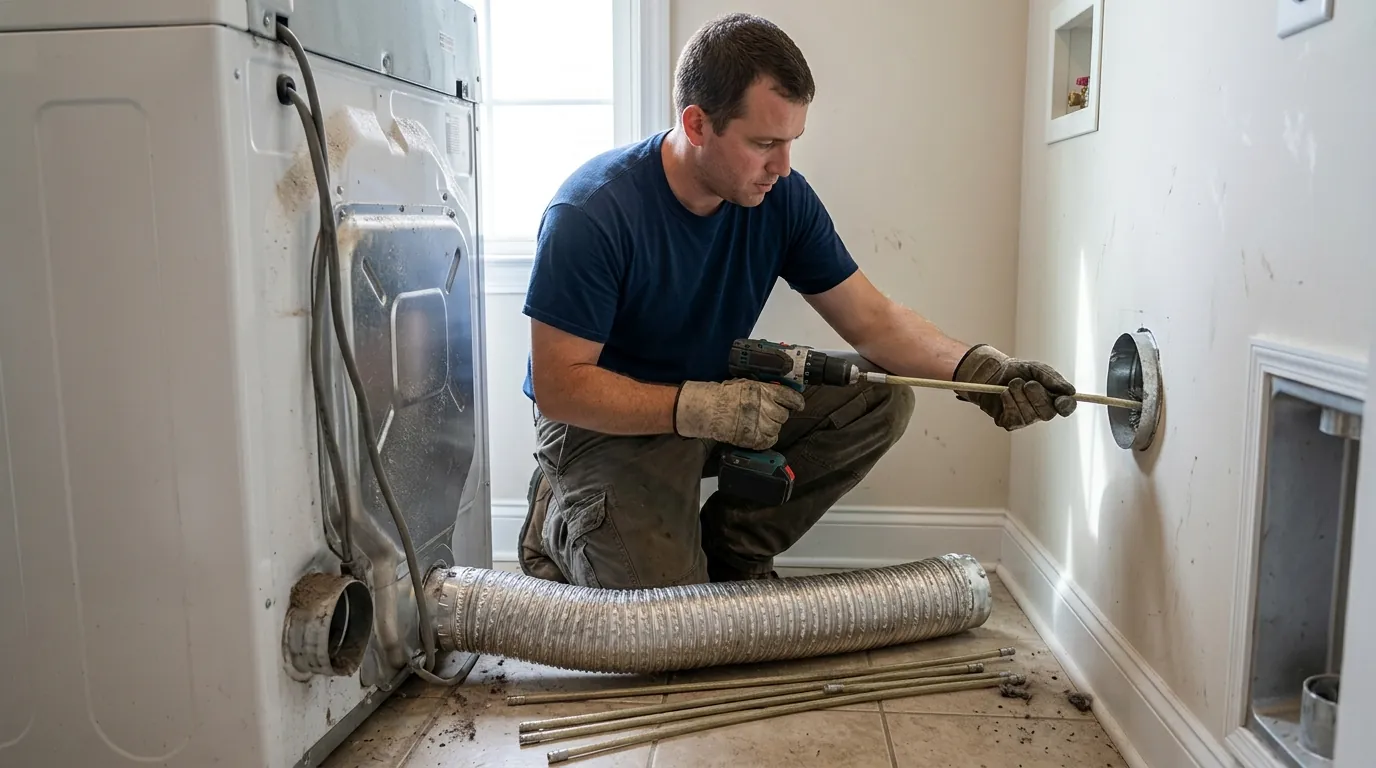
Cleaning the screen after each load helps but doesn't reach the duct. A proper cleaning runs a rotary brush and air through the whole vent, clears the cap and the flexible connector behind the dryer, and checks that nothing in the run is crushed, disconnected or venting into the attic or crawl space.
What we fix
Clogged vents and long dry times
When a normal load needs two cycles, the vent is usually the reason. We disconnect the dryer, clean the connector and the full duct run with rotary brushes and compressed air, and clear the outside cap. Then we measure airflow at the termination to confirm the run is open. If the dryer still runs hot or slow after the vent is clear, the problem may be inside the dryer itself, and we'll tell you so you can call the right person.
Long runs and two-story homes
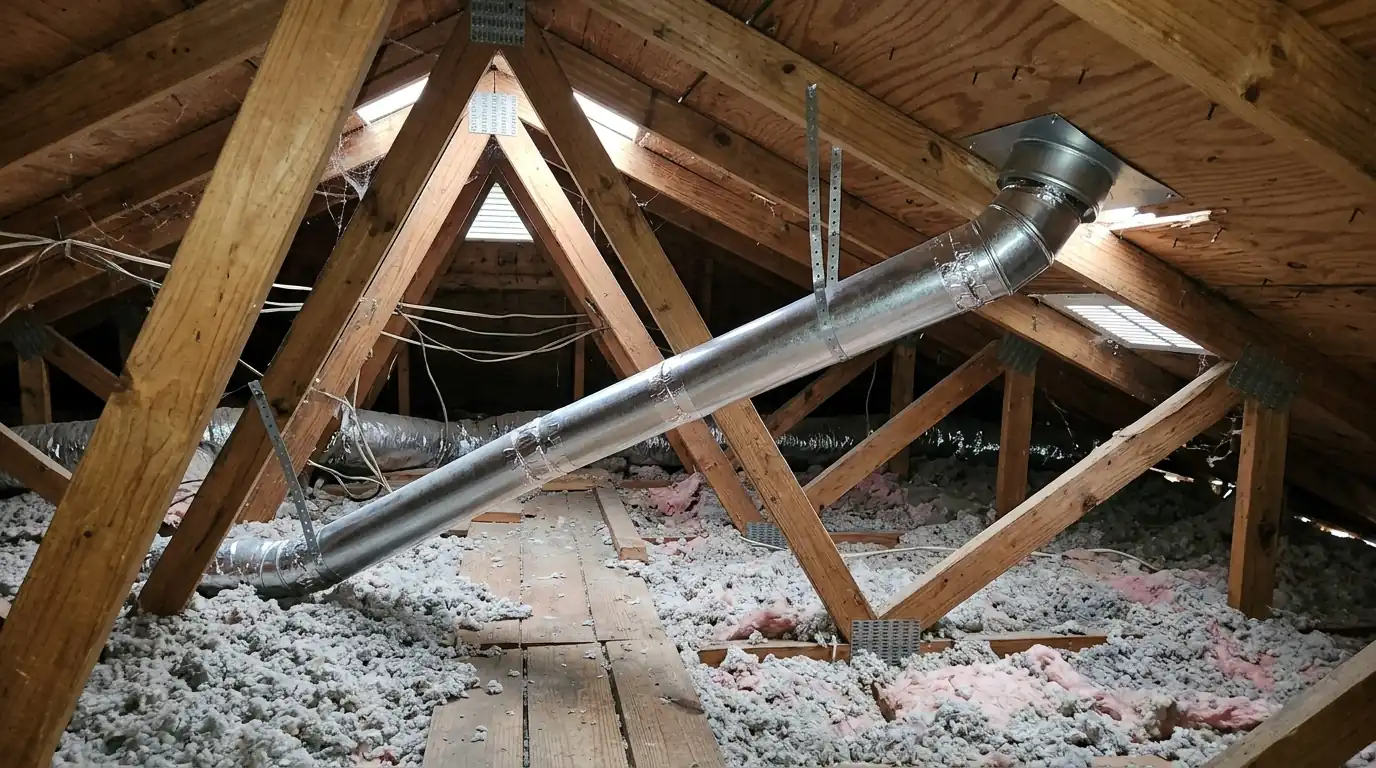
Laundry rooms in the middle of a house, or upstairs, often need long vent runs with several turns, and every turn collects lint. Some runs are longer than the dryer manufacturer allows, which no cleaning can fully fix. We note the run length and the number of bends, and where a run is poorly routed we can reroute it with smooth metal duct and fewer turns so it stays cleaner between visits. Upstairs laundry rooms also get a look at the duct where it passes through the attic, since a disconnected joint there dumps hot, damp, lint-filled air into the insulation.
Roof and wall vent caps
The cap outside is where lint often stops completely. Roof caps collect lint under their hoods, and caps with screens or bird guards clog quickly; screens aren't meant for dryer exhaust. Wall caps can stick shut with lint and humidity. We clean the cap, make sure its damper opens freely, and replace a cap that's screened, broken or sized wrong for the duct. On roof terminations we also check that the cap is sealed to the roof and that birds haven't started nesting in it, which happens more often than most people expect and can block the vent completely within a season.
Why vents clog faster in this climate
In Jacksonville the air is damp for much of the year, and dryer exhaust is full of moisture, so lint inside the duct tends to pick up humidity, cling to the walls and pack down instead of blowing out. Many newer homes put the laundry room upstairs or in the middle of the house, which means long runs to the roof or a side wall. Both make a yearly cleaning more important than the lint screen suggests.
How the job runs
How the cleaning runs
- 1
Inspect
Dryer, connector, run and cap checked.
- 2
Disconnect
Dryer pulled out and the vent opened.
- 3
Clean
Rotary brushes and air through the full run.
- 4
Cap and connector
Cap cleared, damper checked, parts replaced if needed.
- 5
Test
Airflow measured and the dryer reconnected.
Cost factors
What affects the cost of dryer vent cleaning
- Run lengthLonger vents with more turns take more time.
- TerminationRoof caps take longer to reach than wall caps.
- BuildupHeavily packed vents need more passes.
- PartsNew connector or vent cap if needed.
- ReroutingQuoted separately when a run needs redesigning.
We look at the run and the cap, then price the cleaning before we start.
FAQ
Dryer vent cleaning questions
Why does an HVAC company clean dryer vents?
It's duct work: the same tools, airflow testing and attic access we use on the home's ductwork.
Is a clogged dryer vent dangerous?
It can be. Lint is flammable and a blocked vent makes the dryer run hotter, so it's worth cleaning regularly.
Can I use a screen on my dryer vent cap?
No. Screens catch lint and clog; dryer caps should have a damper instead.
Is foil flex duct OK behind the dryer?
Smooth metal or semi-rigid connectors are safer and easier to keep clean than crushed foil duct.
Why do my clothes take two cycles to dry?
Restricted airflow from a clogged vent is the most common cause.
Do you clean roof-mounted dryer vents?
Yes, including the roof cap, which is often where lint stops completely.
Will cleaning the vent fix a dryer that doesn't heat?
Not if the dryer itself has failed; we'll tell you if the vent isn't the problem.
Related services
Other work on the same system
Duct Cleaning
Dust, debris and growth cleared from supply and return runs after renovations or water events.
Learn moreClothes taking two cycles to dry?
Call any hour to book a dryer vent cleaning with an airflow test.