Jacksonville, FL
Duct sealing that keeps cool air out of Jacksonville attics
Leak testing and sealing of supply and return ducts, boots and plenums with mastic, so the air you pay to cool reaches the rooms instead of the attic.
Quick answer
Is duct sealing worth it in a Jacksonville, FL home?
Duct sealing is usually worth it in Jacksonville homes with ducts in a vented attic, because leaks at joints, boots and plenums pull hot, humid attic air into the system and push cooled air out. Sealing with mastic and testing before and after shows exactly how much leakage was fixed.
Overview
Leaky ducts cool the attic, not the house
Most Jacksonville ducts run through a vented attic that bakes all afternoon. Every leaking joint on the supply side dumps cooled air into that attic, and every leak on the return side pulls hot, damp attic air into the system. The AC runs longer, rooms at the end of the runs stay warm, and humidity climbs.
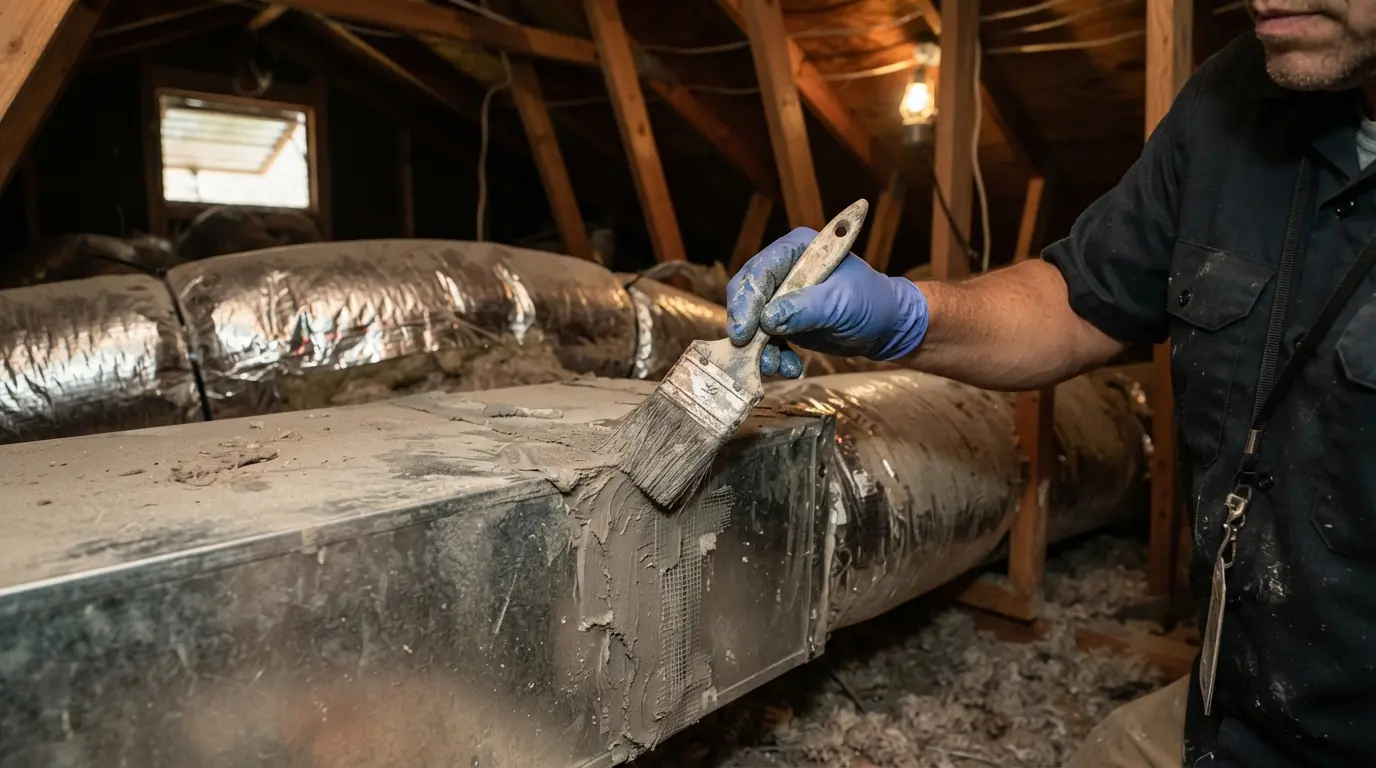
Sealing fixes the path, not the equipment. We find leaks at plenum connections, trunk joints, boots and register cans, then seal them with mastic, which stays flexible and doesn't dry out and peel the way cloth duct tape does. Testing before and after tells you how much leakage was actually removed.
Cost factors
What affects the cost of duct sealing
- Size of the systemMore runs and joints take more time.
- Attic accessLow clearance and deep insulation slow the work.
- Mastic or aerosolAerosol sealing adds equipment time; hands-on mastic adds labor.
- Repairs firstDisconnected or crushed ducts are fixed before sealing.
- TestingLeakage testing before and after is included in a full sealing job.
We test first and price the sealing only if the numbers say it's worth doing.
Options
Sealing methods compared
| Method | Reaches | Lasts | Best for |
|---|---|---|---|
| Cloth duct tape | Visible joints | Dries and peels in attic heat | Not recommended |
| Foil tape (UL listed) | Visible joints | Good on clean metal | Small seams |
| Mastic and mesh | Accessible joints and boots | Long, stays flexible | Most attic ducts |
| Aerosol sealing | Hidden leaks inside the ducts | Long | Buried or walled-in ducts |
| Duct replacement | Everything | Longest | Badly damaged or failing duct |
If the ducts are badly degraded, replacement can make more sense than sealing, and the leakage test tells us which.
What we fix
Mastic sealing
Mastic is a thick paste brushed over joints, often with fiberglass mesh across wider gaps. It bonds to sheet metal and duct board and stays flexible through attic heat cycles. We seal plenum-to-air-handler connections, trunk seams, takeoffs, boot-to-ceiling gaps and the return box, the spots that leak most. Where flex duct has pulled off a collar, it's refastened with a proper strap before sealing. The work is methodical, joint by joint, and we photograph the worst spots before and after so you can see the difference.
Aerosol sealing
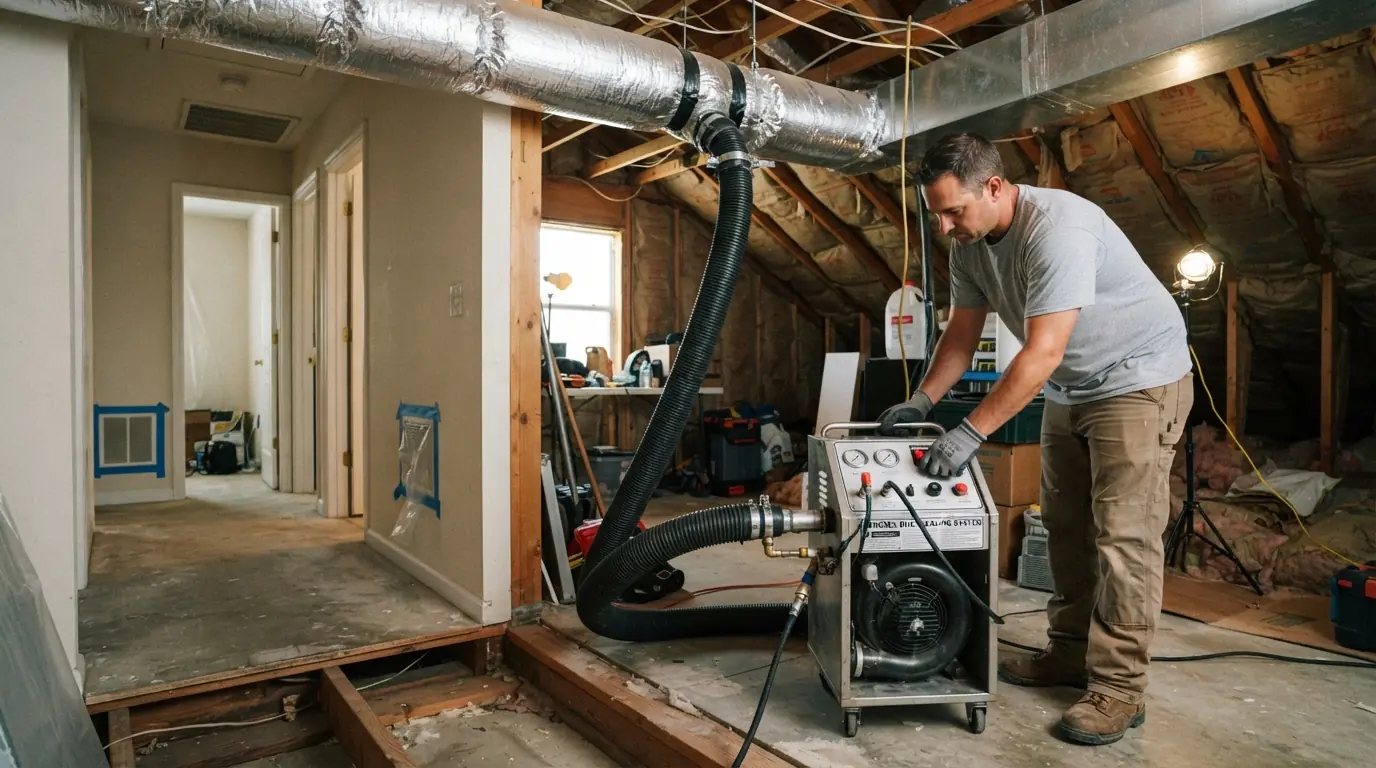
Aerosol sealing blows a sealant through the pressurized duct system from the inside, so particles build up at leaks and close them, including leaks behind walls you can't reach. It suits homes where ducts are buried in insulation or run through inaccessible chases. It works best on small to medium leaks. Disconnected ducts and crushed runs still need hands-on repair first, so we fix those, then use aerosol for what's left. Registers and the air handler are masked off so sealant only reaches the ducts.
Duct leakage testing
A duct leakage test pressurizes the duct system with a calibrated fan and measures how much air escapes. Running it before sealing tells us whether sealing is worth doing. Running it after shows the result in numbers rather than impressions. It also catches problems a visual check misses, like a return leak inside a wall cavity or a disconnected boot under insulation. You get both readings in writing, along with notes on anything we couldn't reach or would recommend replacing.
Attic ducts in Jacksonville's newer housing
About 57 percent of Jacksonville's homes were built in 2000 or later, and most of them put the air handler and nearly all the ductwork in a vented attic. That layout is convenient for builders and hard on efficiency here: every leak sits in air that reaches well above outdoor temperature on summer afternoons. Newer doesn't mean tight, either. Boot-to-ceiling gaps and loose return boxes are common even in homes only a few years old.
How the job runs
How duct sealing runs
- 1
Test
Duct leakage measured with a calibrated fan.
- 2
Inspect
Attic and returns checked for disconnects and damage.
- 3
Repair
Disconnected or crushed runs fixed first.
- 4
Seal
Joints, boots and plenums sealed with mastic or aerosol.
- 5
Re-test
Leakage measured again and both numbers given to you.
DIY or call
What you can seal yourself
| Task | Safe to try yourself | Leave to a technician |
|---|---|---|
| Sealing a register boot to the ceiling | Yes, with caulk or mastic from below | If gaps are large or boots are loose |
| Using cloth duct tape on joints | No, it fails in attic heat | Use mastic or UL foil tape |
| Sealing joints in the attic | Possible, but hot and hard to reach | Yes, with testing |
| Reconnecting a detached duct | Not recommended | Yes |
| Measuring leakage | No, it needs test equipment | Yes |
FAQ
Duct sealing questions
How do I know my ducts leak?
Warm rooms, dust, high bills and humidity are clues. A leakage test confirms it.
Why not use duct tape?
Cloth duct tape dries out and peels in attic heat. Mastic lasts.
Does sealing help humidity?
Yes, sealing return leaks stops humid attic air being pulled into the system.
Is aerosol sealing better than mastic?
It reaches hidden leaks. Accessible joints are usually sealed with mastic.
How long does sealing take?
Most homes take a day, including testing.
Will I see a difference?
Usually in room temperatures and run time. The test numbers show the change.
Should I seal or replace my ducts?
The leakage test and inspection tell us which makes sense.
Related services
Other work on the same system
Duct Cleaning
Dust, debris and growth cleared from supply and return runs after renovations or water events.
Learn moreSmart Thermostat Installation
Wi-Fi and humidity-control thermostats wired correctly for heat pumps and staging.
Learn moreStop cooling the attic
Call any hour to book a leakage test. We'll show you the numbers before recommending anything.