Jacksonville, FL
AC line set replacement for Jacksonville systems
Copper refrigerant lines between the outdoor and indoor units replaced when they leak, corrode, or don't match the system they serve.
Quick answer
When does an AC line set need replacing in Jacksonville, FL?
An AC line set in Jacksonville needs replacing when it leaks in places that can't be reliably repaired, is badly corroded, has damaged insulation that sweats, or is the wrong size for a new system. Reusing an old line set can also carry contaminants into new equipment.
Overview
The lines that connect everything
The line set is the pair of copper tubes carrying refrigerant between the outdoor unit and the indoor coil, one insulated suction line and one smaller liquid line. It runs through walls, attics and along the outside of the house, so it faces heat, sun, lawn equipment, pests and corrosion over the years.
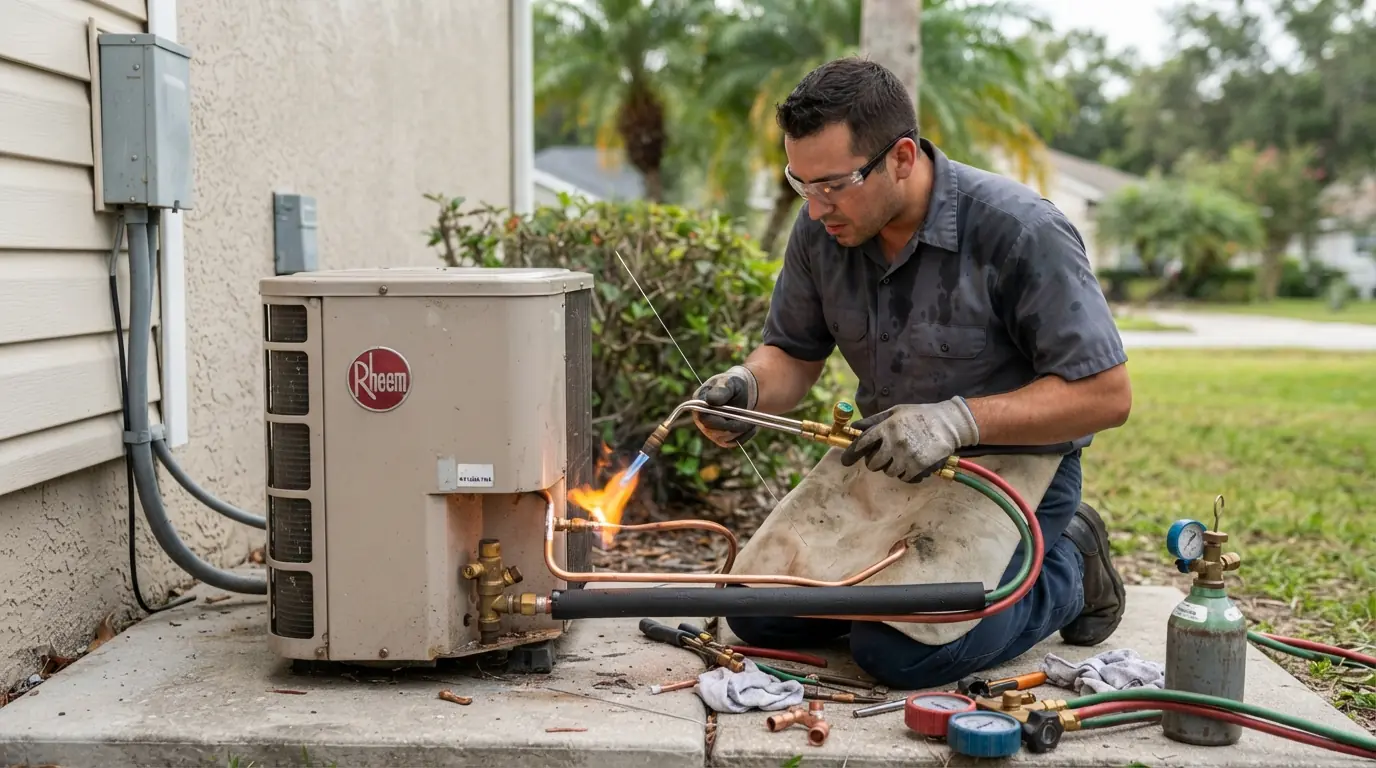
A line set can be reused on a replacement when it's the right size, in good condition and properly flushed. When it isn't, replacing it protects the new equipment. We size the new lines to the manufacturer's specifications, route them sensibly, braze with nitrogen flowing, insulate the suction line fully and pressure test before charging.
Cost factors
What affects the cost of a line set replacement
- Run lengthLonger runs need more copper and insulation.
- Line sizeLarger lines for bigger systems cost more.
- RouteFinished walls and tight attics add labor.
- RefrigerantRecovery and recharge on existing systems.
- Exterior coverProtective line set covers outside.
We measure the run and price the replacement in writing, often with an equipment replacement.
What is included
Every line set replacement includes
- Line sizes checked against the equipment specs
- Route planned for short, accessible runs
- Refrigerant recovered from the old lines
- New lines brazed with nitrogen flowing
- Suction line fully insulated
- Exterior sections covered and wall penetrations sealed
- Nitrogen pressure test and deep vacuum
- System charged to specification
What we fix
Corroded line set
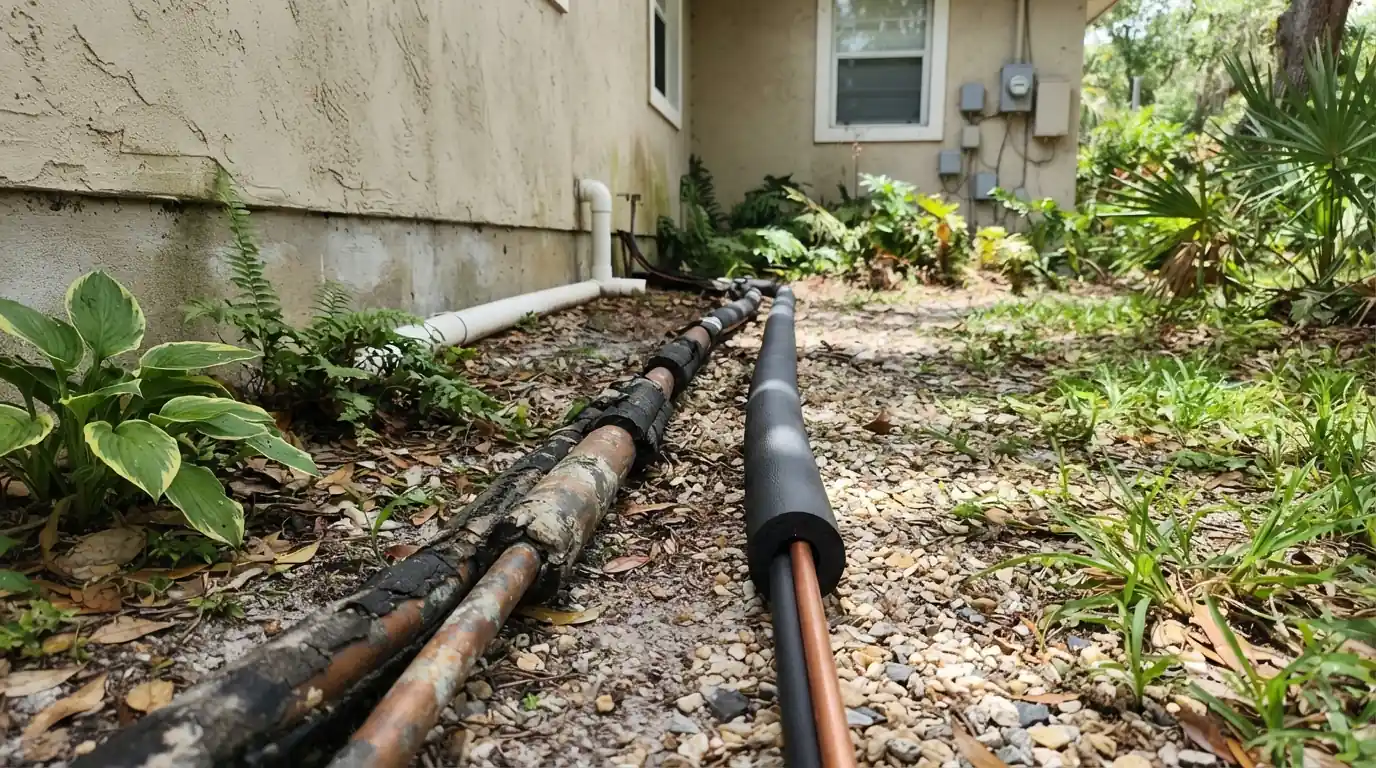
Copper lines exposed along the outside of the house, buried in soil or run through damp spaces corrode over time, and pinhole leaks follow. Insulation that has cracked or been chewed lets the suction line sweat, which drips water and speeds corrosion. When corrosion is spread along the line, repairing one leak just moves the problem. Replacing the line set, with new insulation and a protective cover outside, fixes it properly. We'll show you the corrosion so the recommendation makes sense.
Undersized or mismatched line set
New equipment often calls for different line sizes than the old system, especially when moving to a heat pump or a higher-efficiency unit. Lines that are too small or too long for the system affect capacity and oil return to the compressor. We check the manufacturer's requirements for the new equipment and the actual run length, and replace the lines when the old ones don't meet them rather than hoping they're close enough. The old and new sizes are written on the invoice for your records.
Line set rerouting
Sometimes the lines need a new path: a remodel, a relocated condenser, or lines that were run through a wall cavity where they can't be inspected. We plan the route to keep runs short and accessible, avoid sharp bends, and protect exposed sections outside with a paintable cover. The old lines are removed or capped and the wall penetrations sealed so no gaps are left for air, water or pests. You'll see the planned route before anything is cut, and we'll point out any trade-offs in length or visibility.
Line sets near the coast
Near the ocean, including Amelia Island, salt air and constant humidity accelerate corrosion on outdoor metal, and exposed copper lines are no exception. That's why coastal line sets deserve a protective cover and intact insulation, and why we look at the whole visible run for pitting before reusing it on a new system. A line set that looks fine at the wall can be corroded where it runs along the ground.
How the job runs
How a line set replacement runs
- 1
Inspect
Existing lines, route and sizes checked.
- 2
Plan
New route and sizes confirmed.
- 3
Replace
Old lines removed, new lines run and brazed.
- 4
Test
Pressure test and deep vacuum.
- 5
Charge
Refrigerant charged to spec and system tested.
Timing
How long a line set replacement takes
A straightforward line set replacement is usually done in a day, often alongside an equipment replacement. Long runs through finished walls or attics take longer. The system is pressure tested, evacuated and charged before we leave.
FAQ
Line set questions
Can I reuse my old line set with a new AC?
Sometimes, if it's the right size, in good condition and flushed.
Why does my line set sweat?
Damaged or missing insulation on the suction line.
Can a line set leak be repaired?
A single accessible leak can; widespread corrosion needs replacement.
Does line size matter?
Yes, it affects capacity and oil return to the compressor.
Can you move my line set?
Yes, rerouting is common during remodels and condenser moves.
How long does a line set replacement take?
Usually a day.
Do you cover the lines outside?
Yes, with a protective cover where they're exposed.
Related services
Other work on the same system
AC Replacement
Change-outs sized with a load calculation, permitted, and filed for the JEA rebate.
Learn moreAC Installation
New systems for additions, new construction and older homes getting central air for the first time.
Learn moreDuctless Mini Split Installation
Single and multi-zone heads for bonus rooms, garages and homes with no room for ducts.
Learn moreDuctless Mini Split Repair
Error codes, dripping heads and weak cooling on mini split systems.
Learn moreEvaporator Coil Replacement
Leaking indoor coils replaced with a coil matched to the outdoor unit.
Learn moreConnect the system properly
Call any hour. We'll check the lines and price the right fix.