Jacksonville, FL guide
Hurricane season and your AC: a Jacksonville homeowner's checklist
What to do before a storm, why you should shut the system off, and the checks to make before turning it back on after power returns.
By Glenn Milburn, HVAC Guides Editor Updated September 2026
Quick answer
How do I protect my AC during a hurricane in Jacksonville, FL?
Before a hurricane in Jacksonville, clear loose items around the outdoor unit, turn the AC off at the thermostat and breaker before the storm arrives, and leave it off until power is stable. After the storm, check the unit for debris, flooding or damage and rinse off salt before restarting it.
Before the storm
Walk around the outdoor unit. Move patio furniture, grills, planters and anything else that could be thrown against it. Trim dead branches nearby if there's time. Don't wrap the unit tightly in plastic; trapped moisture does more harm than good, and you'll need to remove it before running the system anyway.
If you have a maintenance visit due, getting it done before peak storm season means the drain is clear and the electrical connections are tight, which helps the system cope with the power fluctuations that come with storms.
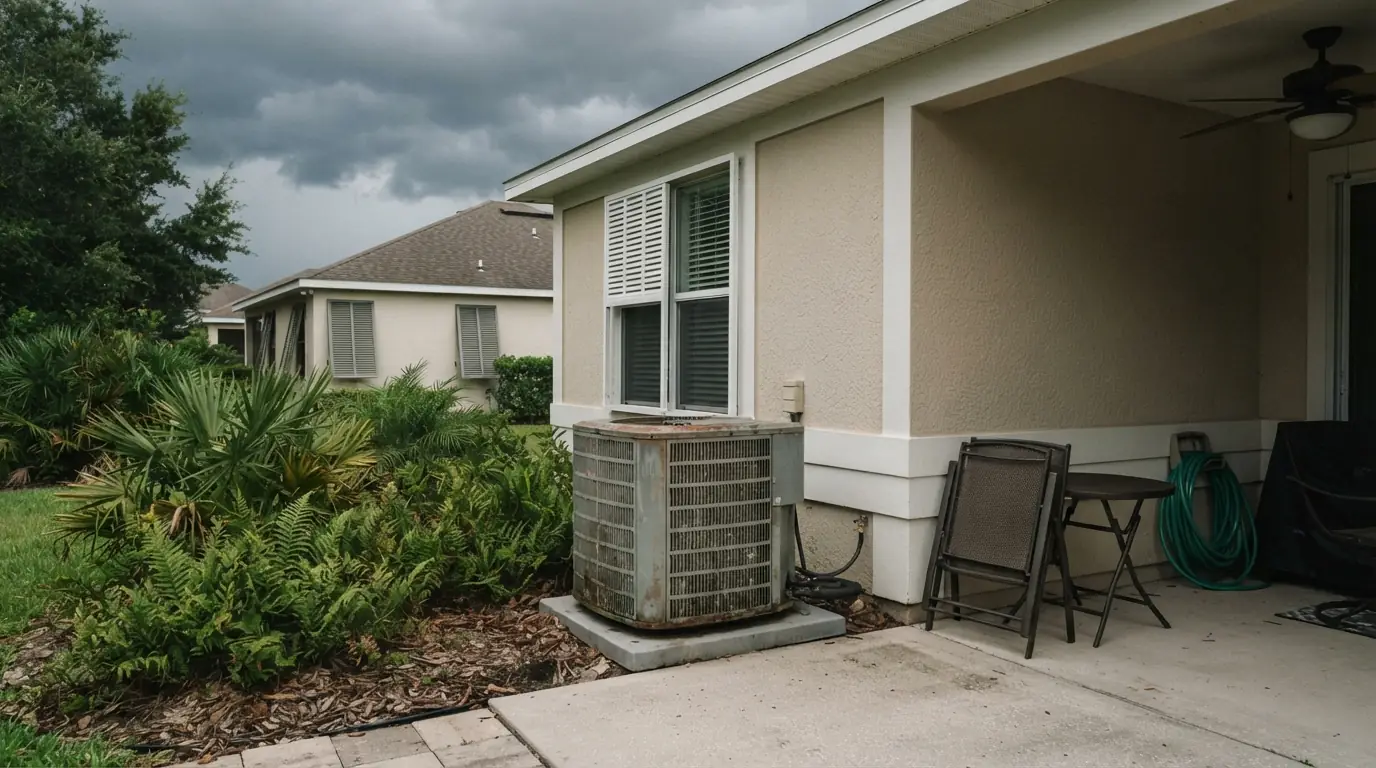
Cool the house, then shut it off
Some homeowners cool the house a few degrees below normal before the storm arrives, so it stays comfortable longer if power goes out. Then, before the high winds reach you, turn the system off at the thermostat and at the breaker.
The reason to shut it off is power quality. During storms, power can flicker, drop and surge repeatedly, and those swings are hard on compressors, capacitors and control boards. A system that's off can't be damaged by them.
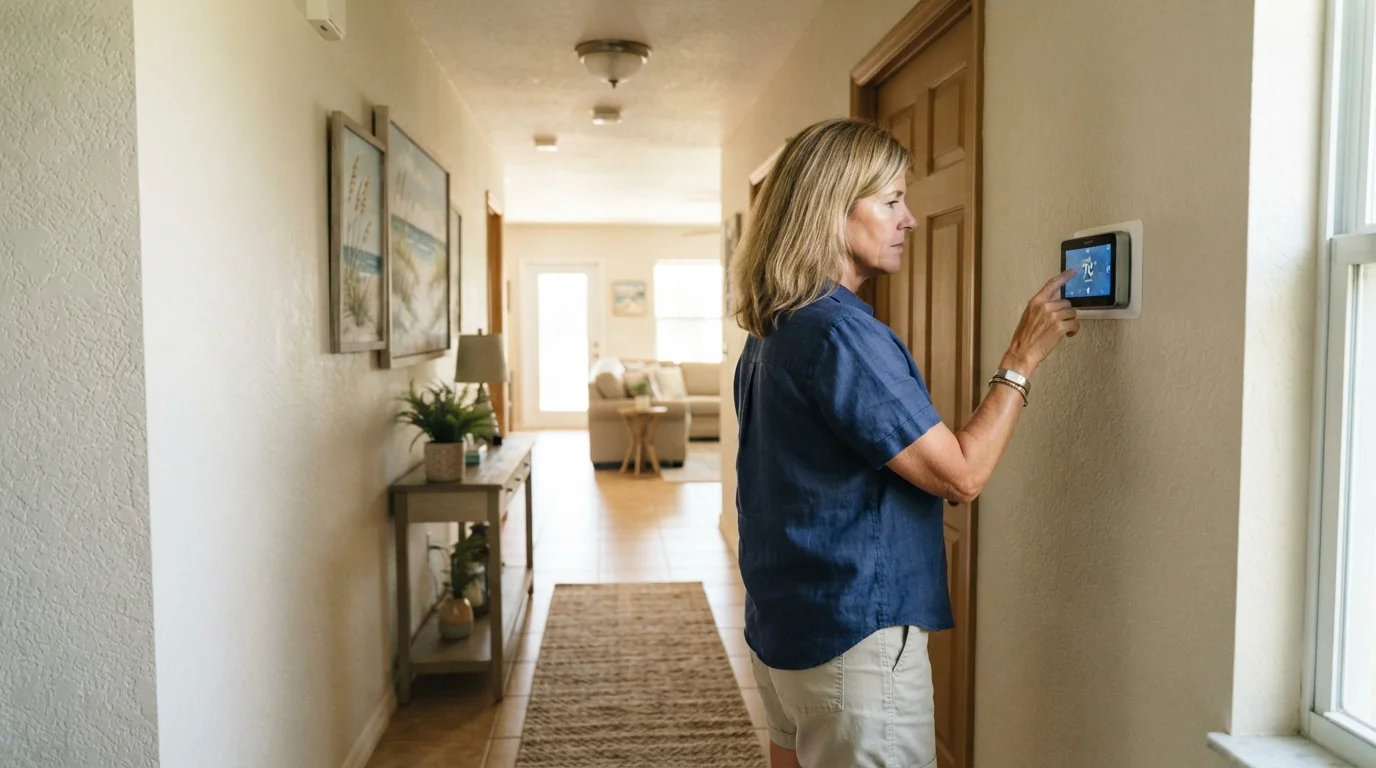
When the power comes back
Wait until power has been stable for a while before turning the system back on. Early restoration often comes with more flickers as crews work. Restoring power at the breaker first and then at the thermostat, after a pause, gives the system a gentler start.
If you run a portable generator, never connect it to the house wiring without a proper transfer switch, and never run it indoors or in a garage. A portable generator generally can't run a central AC safely anyway.
AC acting up after a storm?
Call any hour. A dispatcher answers live and books the next open technician.
Check the unit before restarting
Look for debris lodged in the fan guard or against the coil, a unit that has shifted on its pad, bent refrigerant lines, or damaged electrical conduit. If the outdoor unit was underwater, don't run it; flood water can ruin the electrical components and the compressor, and it needs a technician's inspection first.
Near the coast, strong onshore winds drive salt spray inland. A gentle freshwater rinse of the outdoor coil after the storm, once it's safe, removes salt before it starts corroding the fins.
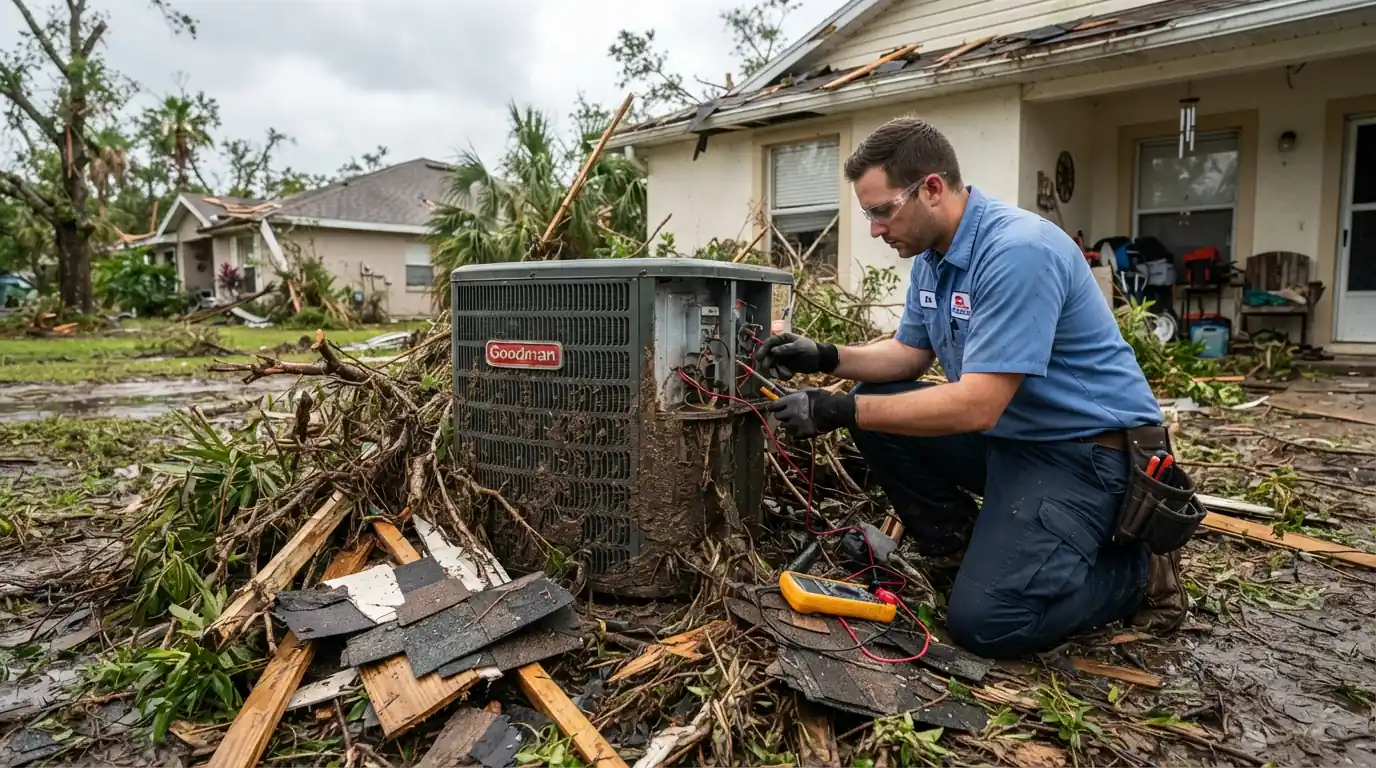
Signs something was damaged
After restarting, watch for warm air, unusual noises, a burning smell, breakers tripping, or the outdoor unit humming without the fan turning. A power surge commonly takes out capacitors and control boards, and those failures show up the first time the system tries to start.
If anything seems off, turn it back off and call. Running a damaged system can turn a small repair into a big one.
Protecting against surges
Power surges during and after storms are one of the most common causes of post-storm AC failures. Turning the system off before the storm is the best free protection. Some homeowners also add a surge protector at the outdoor disconnect, which can help absorb spikes that would otherwise reach the capacitor, contactor and control board.
A whole-home surge protector at the electrical panel is another layer. Either way, the goal is the same: keep damaging voltage swings away from the most sensitive parts of the system.
Mold and humidity after an outage
A long outage in summer lets indoor humidity climb quickly. Once power is back and the system checks out, run it on cool with the fan on auto to bring moisture down. If the house stayed closed and hot for several days, look for musty smells or visible growth around vents and in closets, and consider having the coil and drain checked, since standing water in the pan can grow slime.
After the season
Once storm season winds down in late fall, a check of the outdoor unit, the drain and the electrical connections catches anything the season loosened. It's also a good time for the heating check before the first cold night.
FAQ
Questions readers ask
Should I cover my AC during a hurricane?
Not tightly. Clear debris around it instead; plastic wrap traps moisture.
Should I turn off my AC during a storm?
Yes, at the thermostat and breaker, to protect it from power surges.
When can I turn it back on?
After power has been stable for a while and you've checked the unit for damage.
My unit was flooded. Can I run it?
No. Have it inspected first; flood water can ruin the compressor and electrical parts.
Can storm power surges harm an AC?
Yes. Capacitors and control boards are common casualties.
Should I rinse my unit after a storm?
Near the coast, yes, with a gentle freshwater rinse once it's safe.
Can I run my central AC on a portable generator?
Generally not safely. Never connect a generator without a transfer switch.
Keep reading
Related services and guides
Salt air and your AC
How salt damages outdoor coils, why coastal coils are hard to repair, and the maintenance and equipment choices that.
Learn moreAC drain line clogs
The most common no-cool call that isn't a mechanical failure, explained: what clogs the line, what the float switch.
Learn moreAC not cooling: what to check first
Five safe checks that sometimes solve it, what the common symptoms point to, and the signs that mean turn it off and.
Learn moreStorm damage? We'll check it properly
Call any hour. We'll inspect the system before it runs and repair what the storm damaged.