Jacksonville, FL guide
Heating and cooling an older Riverside or Avondale home
How to cool a house built long before air conditioning, the system types that fit, and what the historic district asks of anything visible from the street.
By Glenn Milburn, HVAC Guides Editor Updated September 2026
Quick answer
What's the best way to add air conditioning to an older Riverside or Avondale home in Jacksonville?
In many older Riverside and Avondale homes, ductless mini splits or a carefully designed small-duct system cool the house without major demolition. Where the attic has room, a conventional ducted system can work if the ducts are sized and sealed properly. Exterior equipment in the historic district may need a Certificate of Appropriateness from the City of Jacksonville.
Houses built for breezes
Riverside and Avondale are full of homes built before central air conditioning existed, designed to stay comfortable with high ceilings, tall windows, deep porches and cross-breezes. Many have since had air conditioning added, sometimes well and sometimes with ducts squeezed into attics and closets in ways that never quite worked. The houses are beautiful and worth protecting, and that shapes every HVAC decision.
The goal is to cool and dry the house without cutting into plaster, trim and floors that can't be replaced, and without putting equipment where it damages the street view the neighborhood is known for.

What the historic district asks
Riverside Avondale is a designated City of Jacksonville historic district, and exterior changes to homes within it require a Certificate of Appropriateness from the City's Planning Department. The City's preservation guidelines for the district include a section on heating and air conditioning, and some applications can be approved at staff level while others go to the Jacksonville Historic Preservation Commission.
In practice, the question is usually about anything visible from the street: a new condenser, a wall-mounted line set cover, a roof penetration or a through-wall unit. Placing outdoor equipment at the side or rear, screened by landscaping or a fence, is the usual direction. Check whether your property is inside the district before you plan the job.

Ductless systems
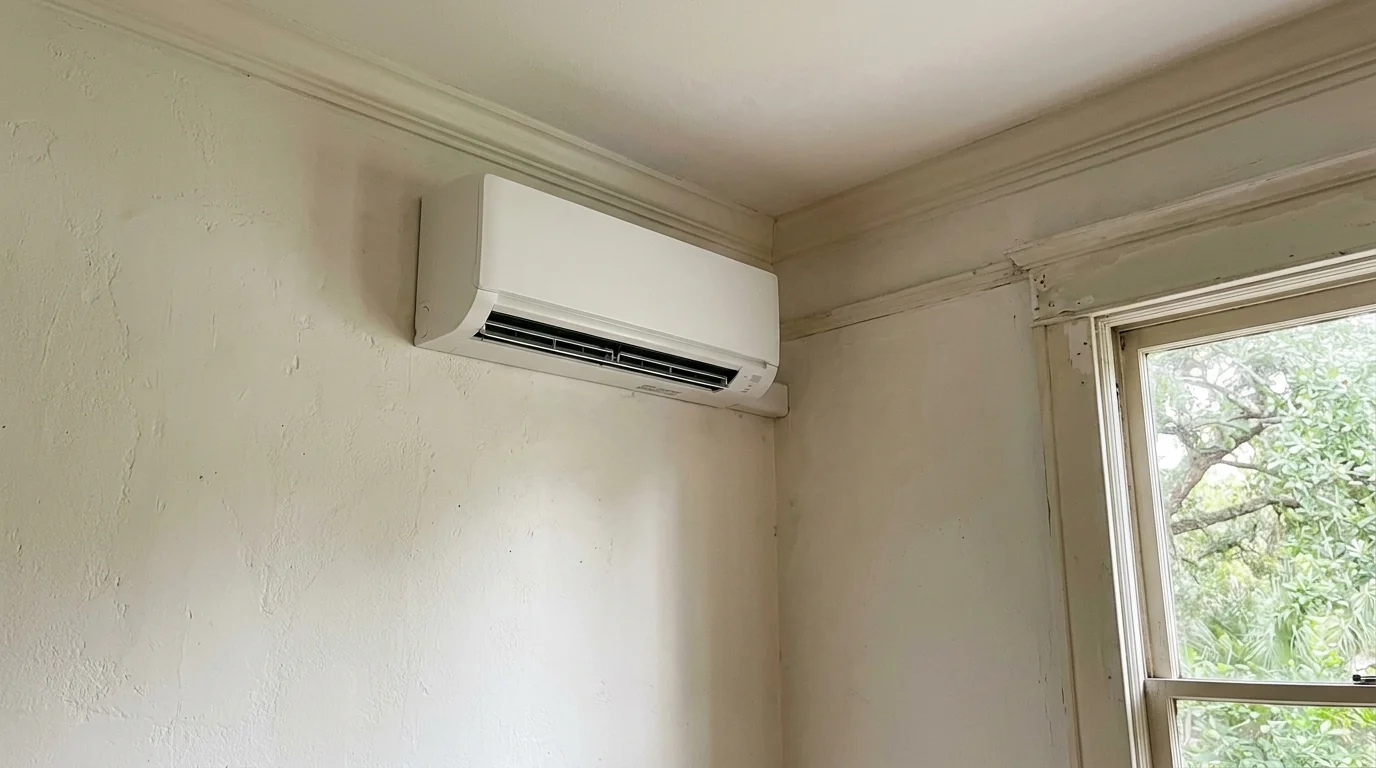
Ductless mini splits are often the cleanest answer. Each indoor head connects to an outdoor unit through a small line set that can run through a closet, an attic or along an inconspicuous exterior corner. Several rooms can share one outdoor unit, so a whole house can be cooled with one or two condensers placed out of sight.
The trade-off is the look of the indoor heads. Wall-mounted heads are the least expensive, ceiling cassettes and slim ducted units hide better, and placement matters for comfort as much as appearance. We plan head positions with you before any drilling so they work with the room rather than against it.
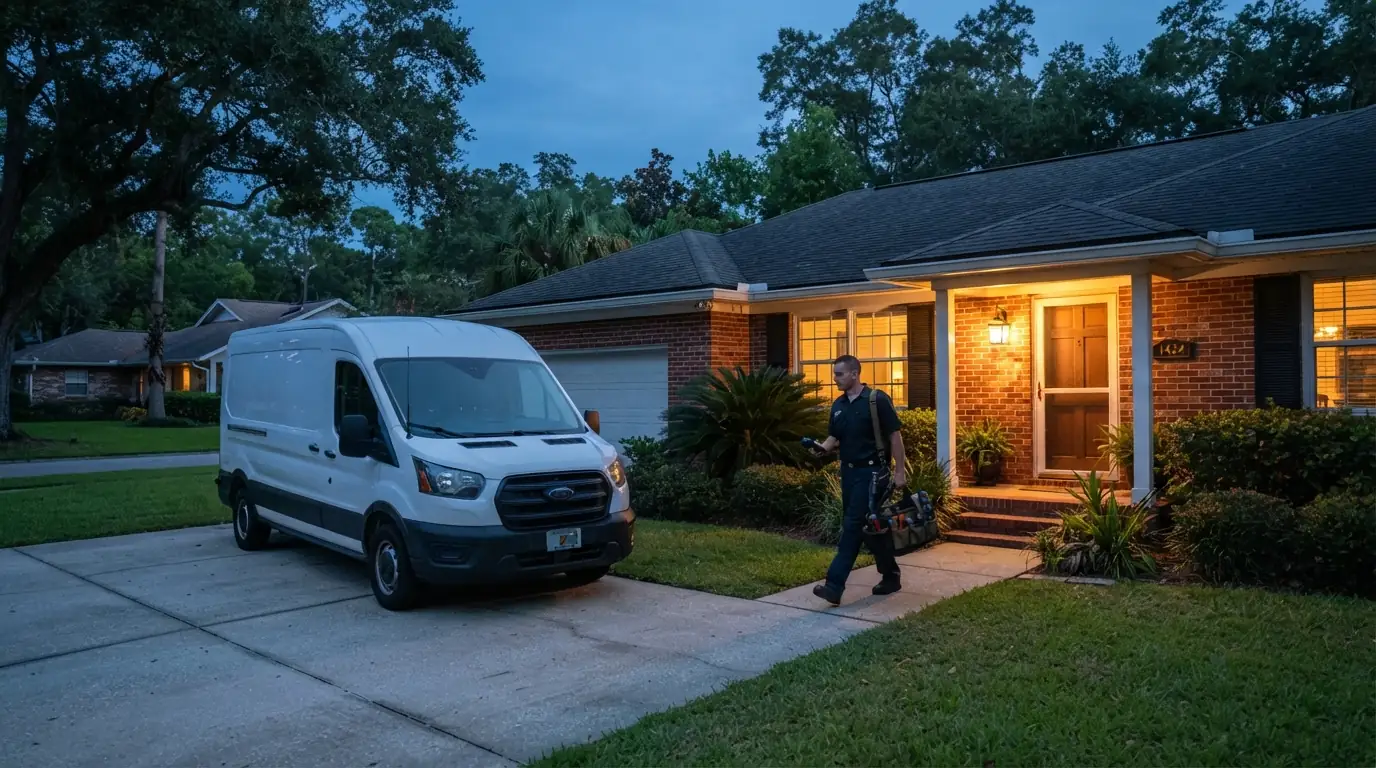
Planning cooling for an older home?
Call any hour. We'll plan head positions, routes and outdoor placement with you before any drilling.
Small-duct and conventional ducted systems
Where the attic has room, a ducted system is still possible. High-velocity small-duct systems use flexible tubes a couple of inches across that snake through walls and attics with small round outlets, which can suit homes with ornate ceilings. Conventional ducts work too, but only when the attic or crawl space can carry properly sized runs, and only when they're sealed, because attic heat in Jacksonville punishes leaky ductwork.
If the house already has old ducts, test them before reusing them. Ducts added decades ago are often undersized, disconnected or leaking, and a new system on bad ducts never performs the way it should.
Humidity in older houses
Older homes leak more air than new ones, which in a humid climate means more moisture coming in. A system that's oversized for the rooms it serves cools them quickly and shuts off before it has removed much water, leaving that damp, cool feeling. Sizing each zone properly and, where needed, adding a dehumidifier keeps the house dry, which also protects old wood floors and plaster.
Planning the job
Start with a load calculation for the house as it is, then decide where equipment can go: which rooms need heads or outlets, where line sets or ducts can run without cutting finishes, and where outdoor units can sit out of the street view. Then confirm whether the exterior parts need a Certificate of Appropriateness and allow time for it.
A careful installer protects floors, works around plaster and plans every penetration. Ask how line sets will be routed and how the outdoor unit will be screened before you sign.
Heating the same house
Heat pumps, including ductless heat pumps, heat as well as cool, which suits Jacksonville winters, when cold snaps are short. Older homes with original radiators or floor furnaces often switch to heat pump heating when the cooling system goes in, and the outdoor unit does both jobs.
FAQ
Questions readers ask
Do I need permission to install an AC condenser in Riverside or Avondale?
Exterior changes in the historic district need a Certificate of Appropriateness from the City of Jacksonville's Planning Department; check whether your property is inside the district first.
Is ductless the best option for a historic Jacksonville home?
Often, because it needs only small line sets, but small-duct and conventional systems can work where the attic allows.
Can old ductwork be reused in an older house?
Only after it's tested; old ducts are often undersized, disconnected or leaking.
Where should the outdoor unit go on a historic home?
Usually at the side or rear, screened from the street by landscaping or a fence.
What is a high-velocity small-duct system?
A ducted system using narrow flexible tubes and small round outlets that fit through walls and tight attics.
Why does my older house feel damp with the AC on?
Air leaks bring in humid air and oversized systems short-cycle; proper sizing and sometimes a dehumidifier fix it.
Can one system heat and cool an older home?
Yes, a heat pump or ductless heat pump does both, which suits Jacksonville's mild winters.
Keep reading
Related services and guides
Ductless Mini Split Installation
Heads and line sets planned around plaster, trim and the street view.
Learn moreWhy the house feels humid with the AC on
The reason a system can hit the setpoint and still leave the air damp, how to tell if it's happening, and the fixes in.
Learn moreHow an AC should be sized
Why the rule of thumb fails in a humid climate, what a Manual J load calculation actually measures, and the questions.
Learn moreAttic duct leaks
Why ducts in a hot attic matter so much here, the signs of leakage, and the difference between a real repair and a roll.
Learn moreCool the house without changing its character
Call any hour to book a visit and plan the system with you.