Jacksonville, FL guide
Heat pump or AC with heat strips: which fits a Jacksonville home?
How each system heats, why the climate here favors one of them, and the cases where the simpler option still makes sense.
By Glenn Milburn, HVAC Guides Editor Updated September 2026
Quick answer
Is a heat pump better than an AC with heat strips in Jacksonville, FL?
For most Jacksonville homes a heat pump is the better choice, because heating design temperatures here are roughly 27F to 32F, inside a standard heat pump's range, so it heats far more cheaply than resistance strips while cooling just as well. An AC with strips costs less up front but more to run on cold nights.
How each one makes heat
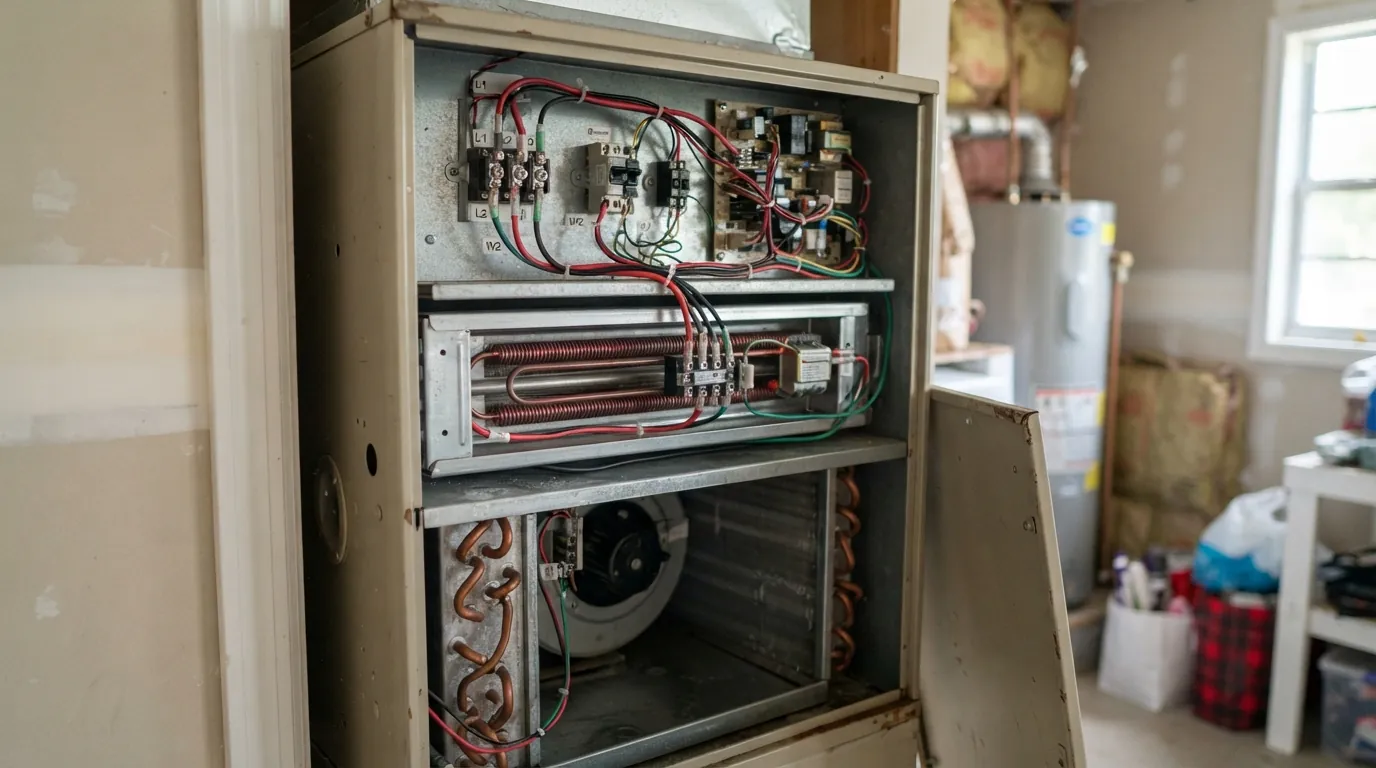
An AC with heat strips is two separate systems in one box. The air conditioner cools. When you call for heat, electric resistance coils in the air handler glow and warm the air passing over them, much like a toaster. It's simple and reliable, and every unit of electricity becomes one unit of heat.
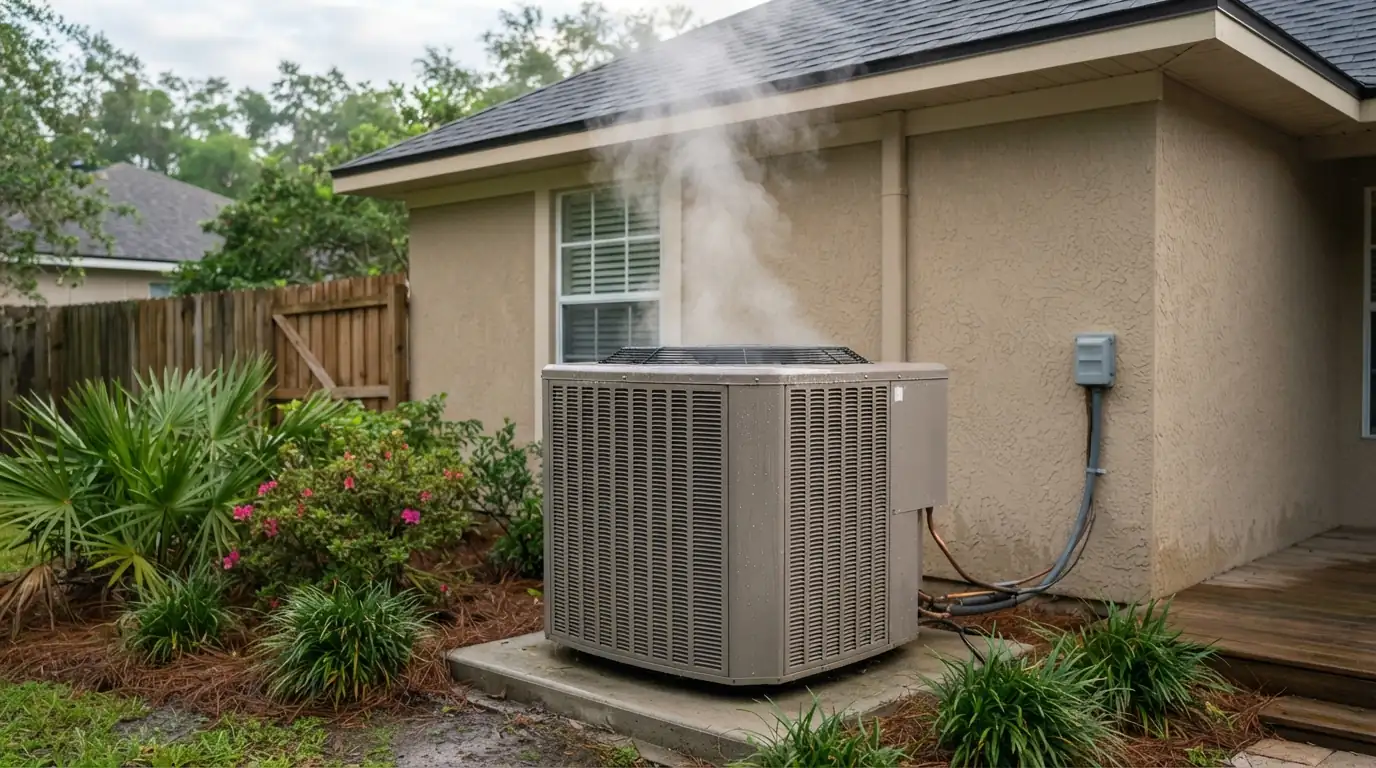
A heat pump runs the air conditioner in reverse. A reversing valve flips the refrigerant flow so the outdoor coil gathers heat from outside air and the indoor coil releases it. Moving heat takes less electricity than making it, so on a mild winter night a heat pump delivers two to three times as much heat per unit of electricity as strips.
Why the climate here favors a heat pump
Jacksonville sits in a cooling-dominant climate, with heating design temperatures around 27F to 32F. That's comfortably inside the operating range of a standard air-source heat pump. On the handful of nights that dip lower, a heat pump still has backup strips in the air handler to help.
Because the heat pump is also your air conditioner, the extra cost over an AC-only system is modest. You get one outdoor unit that cools for most of the year and heats efficiently for the rest.

Where an AC with strips still makes sense
In a small home or a rental where heat runs only a few days a year, the simpler system can be the right call. The up-front savings are real, and the extra running cost on those few cold nights may never add up to the difference.
It also makes sense when an existing air handler with strips is in good condition and only the outdoor AC has failed. Replacing the AC alone keeps the job smaller, though a matched heat pump system is usually the better long-term buy.

Deciding between the two?
Call any hour. We'll look at your house and price both options side by side.
The backup strips on a heat pump
Heat pumps here still carry electric strips as backup. The trick is making sure they only run when needed. A thermostat set up for a heat pump uses a compressor lockout and staging so the strips don't kick on just because the house is a degree behind on a 45F morning.
If your power bill jumps every January, strips running when they shouldn't is one of the first things to check. It's often a thermostat setting rather than a failed heat pump.
Running costs in plain terms
Resistance strips turn every unit of electricity into one unit of heat. A heat pump on a typical Jacksonville winter night moves two to three units of heat for each unit of electricity it uses. On a cold morning the gap narrows and the backup strips help, but across a winter the heat pump usually costs noticeably less to run.
Because winters here are short, the dollar difference is smaller than in colder cities. That's why the choice depends on how many heating hours your home actually needs and how long you plan to stay.
Maintenance differences
A heat pump works year-round, so its outdoor unit runs more hours and has a few extra parts: the reversing valve, a defrost control and the defrost sensor. A tune up on a heat pump includes a heating check to catch those before the first cold night. An AC with strips has fewer moving parts on the heating side, but strips and sequencers still fail after sitting idle all summer.
What about gas?
Some older Jacksonville homes have a gas furnace. In that case a dual fuel setup, a heat pump with the gas furnace as backup, lets the system use the heat pump nearly all the time and gas only on the coldest mornings. It makes sense while the furnace still has life in it.
If the furnace is near the end too, replacing both with a heat pump and electric backup is usually simpler and avoids maintaining a gas appliance for a few cold days a year.
FAQ
Questions readers ask
Will a heat pump keep my house warm in a cold snap?
Yes. Jacksonville's design temperatures are within a standard heat pump's range, with strips as backup.
Is a heat pump more expensive than an AC?
Slightly, up front. It usually costs less to run in winter.
Why does my heat pump have heat strips?
They're backup for the coldest nights and defrost cycles.
Does the JEA rebate cover heat pumps?
Yes, $200 for qualifying ENERGY STAR heat pumps meeting SEER2 and HSPF2 minimums.
Does a heat pump mean giving up a gas furnace?
Yes, as dual fuel backup, if it's in good condition.
Why is my January bill so high?
Often the backup strips running more than they should. A thermostat lockout setting may fix it.
Can I convert my AC and strips to a heat pump later?
Yes, when the outdoor unit is replaced, usually with a matched air handler.
Keep reading
Related services and guides
Heat Pump Installation
Standard, two-stage and variable speed heat pumps sized to the house.
Learn moreWhat an AC replacement costs
Published price ranges for the city, the five things that move a quote up or down, and the rebate and tax-credit facts.
Learn moreJEA HVAC rebates in 2026
The equipment rebate, the thermostat add-on, the tune-up rebate, the efficiency rules behind them, and the dates that.
Learn moreHow an AC should be sized
Why the rule of thumb fails in a humid climate, what a Manual J load calculation actually measures, and the questions.
Learn moreGet both options priced
Call any hour to book a visit and see a heat pump and an AC with strips quoted side by side.